We began Mystery Box Inquiry as a way of developing questioning skills with our students, which is an integral part of the Inquiry Process and one of the curriculum competencies for Science in Kindergarten in the Ministry of Education Curriculum Drafts.
(Many thanks to Lorraine Hartley, our friend and Kindergarten teacher colleague, who shared this wonderful idea at one of our Kindergarten teacher meetings.)
We would place an object inside the box, related to our current theme or area of study. We explained to the children they would have to ask ten questions about what might be inside, before they could make a guess, and then we would show them what was inside the Mystery Box. We would answer their questions to the best of our ability and from the information gathered, the children would be able to make an informed guess.
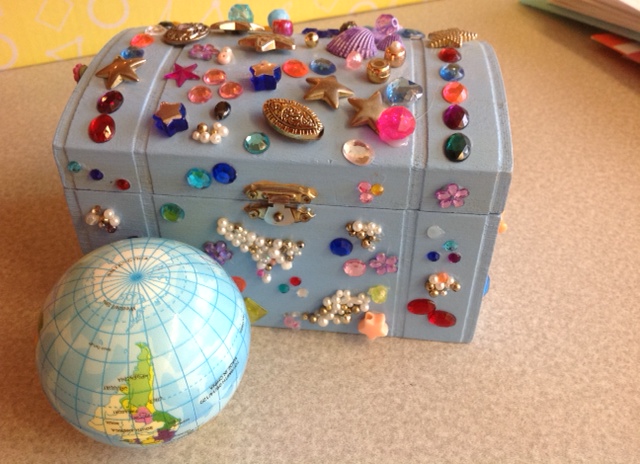
We took a simple wooden chest, decorated it, and designated it our “Mystery Box.” 
The Penguin Mystery Box Inquiry is actually part of a bigger project this year: creating digital books using the app, “Book Creator”, on the iPad with our Grade 7 Buddies. We discussed our Penguin digital literacy projects two weeks ago. Each object we placed in the Mystery Box was a clue to the topic we were going to research with our Buddies during our weekly Buddy Time.
We love penguins, so we chose the penguin life cycle as part of our Big Idea on Change for Kindergarten. Change affects all aspects of our lives from personal, physical and emotional changes for the Kindergarten, to our seasonal environmental changes, to our families, animals and even our own perspectives. It’s a Big Idea all Kindergarteners can understand as they not only experience change every day in the classroom, but they develop the valuable skills of flexibility and resilience as they learn to cope with change.
For the first Mystery Box Inquiry, we wanted to get a sense of the children’s questioning skills in a formal learning situation and establish a baseline. Many Kindergarten children are already learning to ask good questions; but we suspected they would be more likely to guess what’s inside the box as opposed to asking questions.
We recorded each question on an iPad as quickly as we could, to keep the momentum of our lesson going. Each question is a direct quote, not corrected for grammar, so this process remains authentic. We’ve provided just a sampling of questions.
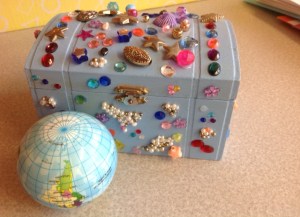 Mystery Box No. 1-Penguin Habitat (rubber ball globe to show where the Antarctic was located)
- Could it be a stuffed bunny?
- Is it a note?
- Is it silver?
We were really looking to teach our children that the frame of certain kinds of questions (Who, What, When, Where, Why?, or the 5 Ws) get a better response than a question such as “Is it a…?” where the answer is going to be either “yes” or “no.”
We wanted to show them that a well worded question would elicit a lot more information from the teacher! But then we got these little treasures …
- What colour is it?
- What shape is it?
- What does it sound like?
After the 10th question it was time to guess. We had a couple of guesses (“the sea,” “a village”) before one of the children guessed “the whole world.” It was really thrilling to hear that! We passed the globe ball around and everyone got to hold the whole world in their hands for a few moments.
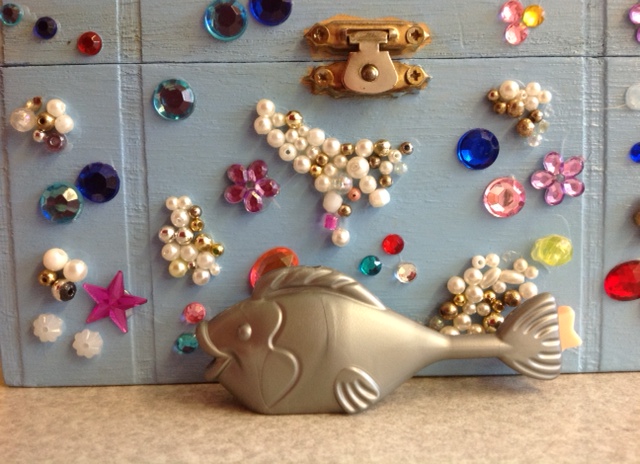
Mystery Box No. 2-Penguin Diet (Lego fish)
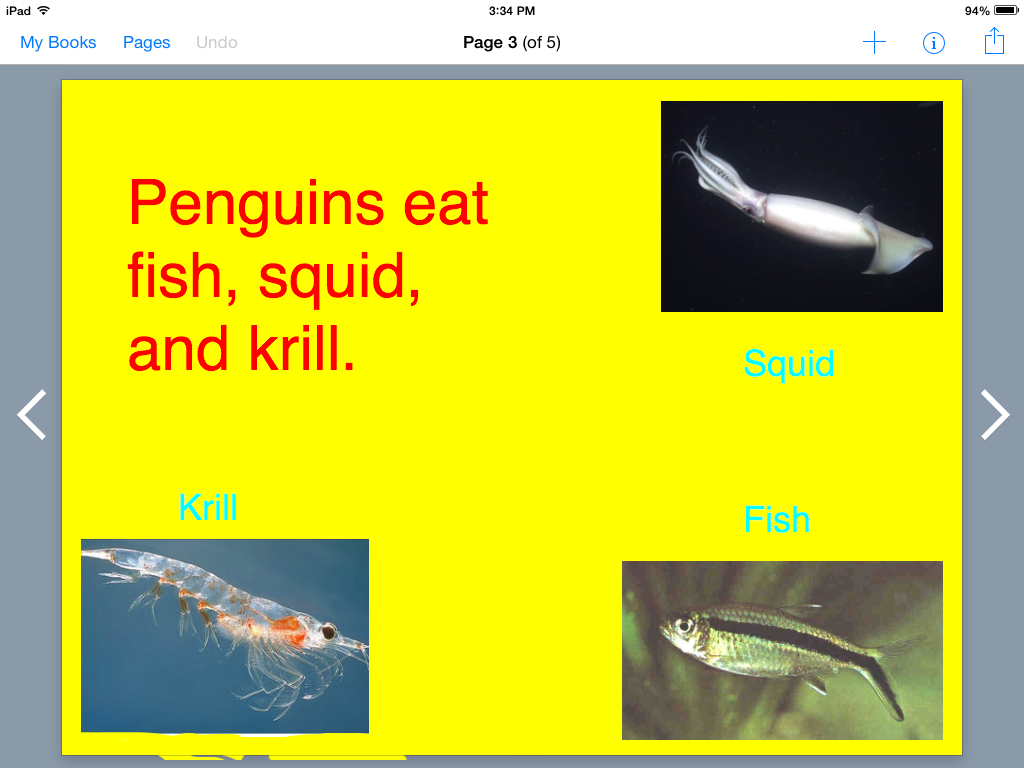
This Mystery Box Inquiry presented the immediate problem of what to use for an object, as fresh krill, squid or fish, which makes up the penguin diet, was not going to be an option. So we decided to use the fish from the Lego Table (it was clean and dry), and explained to the children that what was in the Mystery Box was not the real thing, but something that would represent it. We would answer any question as though the object inside the Mystery Box was real.
We decided to do two things to help the children this time: 1. reframe any question that was going to get a “yes” or “no” answer into a 5Ws question; and 2. scaffold each of the questions by going back and reviewing the previous questions.
We were getting a lot of repeat questions, and wanted to increase the variety of questions asked. Here’s a few examples.
- What colour is it?
- What part of the world does it live in?
- Is it a fish? (A guess which we deferred to the end of the questioning session, and we did come back to it when it was time to guess)
- What does it eat?
- What is it like? (Reframed to “What types of things does it do?”)
- What does it look like?
- Does it have a sound? (Reframed to “What kinds of sounds does it make?”)
The questions are really terrific, and you can see “What colour is it?” and “What part of the world does it live in?” stem directly from the first inquiry.
The children guessed right away it was a fish, and they were actually quite delighted to see it was Lego. As a matter of fact, amid the excited chatter as we were passing the fish around, one child was heard to say, “I wondered where that fish had gone!”
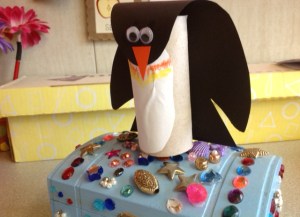 Mystery Box No. 3-Penguin Appearance (Paper Penguin Craft)
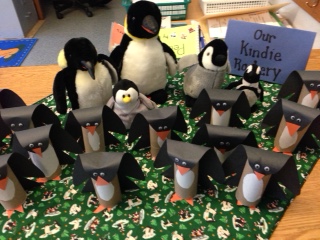
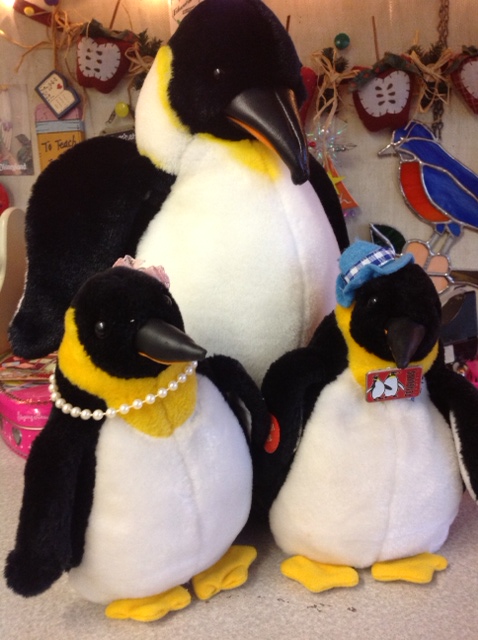
We have an adorable collection of stuffed penguins, but not one of them would fit in the Mystery Box! So we went with a paper penguin craft because it fit. Once again we answered the questions as though we had a real penguin. We’re still continuing to scaffold the children’s questions, and bringing their attention to any question that begins with one of the 5Ws.
We want to treat you to the entire list of questions. It’s truly incredible what the children are asking. We had our first “how” and “when” questions and it was exciting to be able to provide a thorough, and hopefully satisfactory, answer.
1. How does it move?
2. What colour is it?
3. What part of the world does it live in?
4. What does it live in?
5. What shape is it?
6. What does it look like?
7. What does it eat?
8. What penguin is it? (We had to defer this question until the end but how wonderful that this child was already aware of the many species of penguins).
9. When does it die?
10. What does it feel like?
One of the many reasons why we love teaching Kindergarten children is how they live in the moment, a valuable lesson for us all. After our guessing, and as we took the little craft penguin out of the Mystery Box, one of the children asked, “Is that the craft we’re going to make right now?” All thoughts of our Mystery Box, questioning and digital literacy projects were gone…replaced by a small toilet roll penguin.
By the time you read this, we will have completed the Mystery Box Inquiry: Penguin Edition. We had two more clues to present before we finished our digital literacy projects to show at our Student-Led Conferences. We were delighted with how far the children came in their questioning skills over the past five weeks, and their patience in waiting for us to record the questions, reframing and scaffolding every question along the way.
We’re looking forward to seeing how these inquisitive learners continue to deepen their learning by asking higher level questions and developing their critical thinking skills in the next Mystery Box Inquiry!

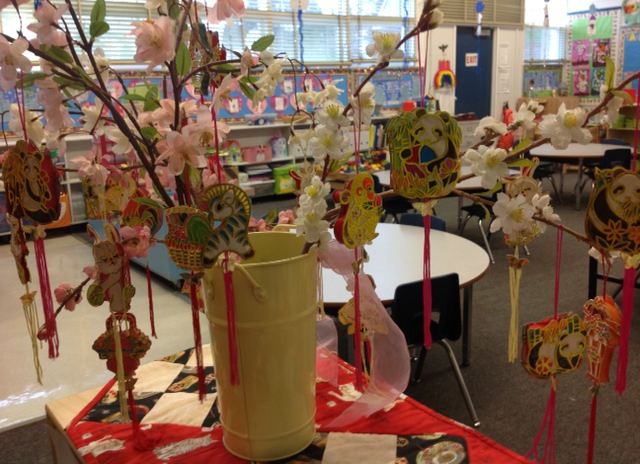
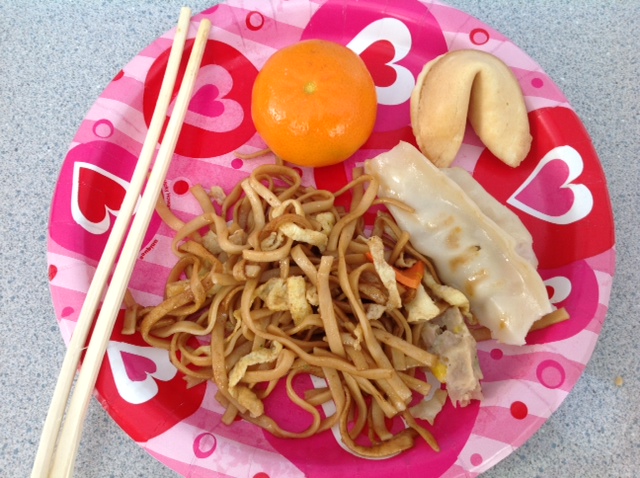
 Chinese banquet and received “lucky money” in red envelopes!
 Penguin Digital Literacy Project with our Grade 7 Buddies: using the app “Book Creator” on the iPad we’ve each made a digital book focusing on five aspects of penguins (habitat, appearance, diet, young, life cycle).
 and finishing up with our Lon Po Po painted panels.





 The Self-Regulated Teacher
