Self-Regulation Tool: Time Timer

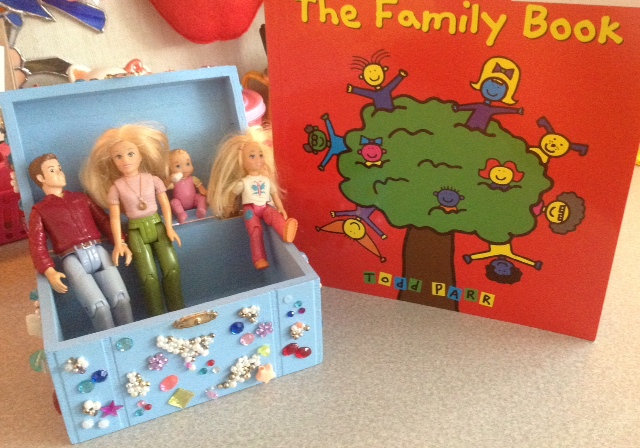
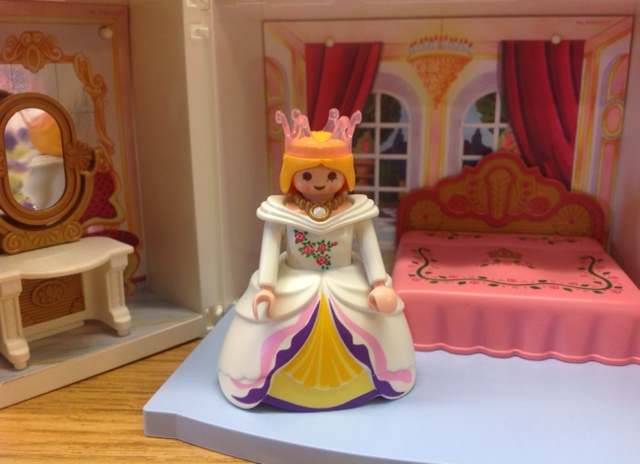
photo-9Well, we’re not sure what happened here, but it looks like everybody left for the weekend, lock, stock and barrel.  We can see we’re going to need some time to put this back together.

But we’ve got lots of other things to do on a Friday afternoon so we’re just going to allow ourselves a certain amount of time to locate the rest of the family and the furniture.  At home we might use our oven timer, but here at school, we’re fortunate enough to have a Time Timer.  Ours measures approximately 12 x 12 inches.


photo-8

The Kindergarten love the Time Timer.  They love it so much they’ll even remind us when we’ve forgotten to use it.

The Time Timer is a useful tool to help the children with their self-regulation, in much the same way as the visual schedule does, during our daily activities.  It’s a visual reminder for the Kindergarten to pace themselves during whatever activity they’re involved in, as they see the time ticking down.  Then the children know that we’re approaching a transition and it helps them to mentally prepare themselves for a change.

We like to make our day as predictable as possible to reduce any uncertainty or anxiety, so that the children can just enjoy learning and have fun with their friends.

We use the Time Timer in a variety of ways.

The first time we introduced the Timer was during the morning Activity Time.  When there’s a new Centre, such as new play dough, everybody wants a turn.  But there’s no way in 30 minutes of Activity Time that the whole class can each have a long enough turn to feel that they accomplished something.  So we started turns, or “shifts,” of 12-15 minutes.

When the quiet bell of the Time Timer rings, its a signal for all of us that the group’s turn is over and another one is about to begin.  A typical Activity Time has two shifts; we can accommodate eight children and we start a list of children who are interested in playing at the Centre for the next day.

Using the Timer was so successful in the morning playtime, we decided to also use it during the afternoon playtime as well.  Each afternoon we have a different focus, such as Literacy Centres, Puzzles or Construction Centres. Again, we might run two or three shifts, depending upon the rest of the day’s schedule.

An added benefit of the Timer is for the children who want to finish their work despite the fact Centre Time or the work period is over, and we’re transitioning to the next activity.  We like that it has removed the emotion that can come with our having to keep asking children to stop what they’re doing; instead, we can attribute it to the Timer’s bell signal that we all have to end the task.

We also use the Timer while the children eat during Snacktime  and Lunch hour.  It’s important that the children eat their food when they have the opportunity, to fuel their bodies so they have energy for the next part of the day.  Again, it’s a visual reminder about how much time they have left to eat before they go outside to play.

You can learn more about the Time Timer here.

We’re going to begin transitioning our classroom newsletter from paper to online for our Friday blog posts during the month of June.  We’re going to start exploring some different formats.  If you see something you like, and as importantly, what you don’t like, please let us know.  You can make a suggestion in the comment box below or just speak to us at school.  Thank you for your feedback!
Fairy Tale Booklist and Royal Kinder Portraits

photo-5We told you last week that we had something very royal to show you.  But before we do, we wanted to share our growing Fairy Tale Booklist.  We’ve read some of these stories already, with more still to come.  We thought you might want to know some of the titles we’ve read up to this point, in case you wished to discuss them with your child.

Rumpelstiltskin (retold by John Cech and illustrated Martin Hargreaves)

The Princess and the Pea (retold by John Cech, illustrated by Bernhard Oberdieck)

Yummy : Eight Favourite Fairy Tales (Lucy Cousins)

The Balloon Tree (written and illustrated by Phoebe Gilman)

Chicken Little (Sally Hobson)

Once Upon a Golden Apple (written by Jean Little and Maggie De Vries, illustrated by Phoebe Gilman)

The Kissed That Missed (David Melling)

Cinderella Penguin or The Little Glass Flipper (Janet Perlman)

Aladdin and the Wonderful Lamp (Random House)

Hansel and Gretel (Random House)

Somebody and the Three Blairs (written by Marilyn Tolhurst, illustrated by Simone Abel)

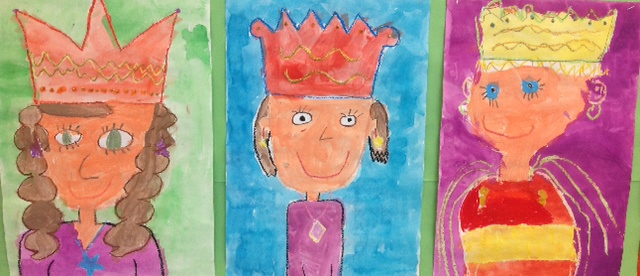
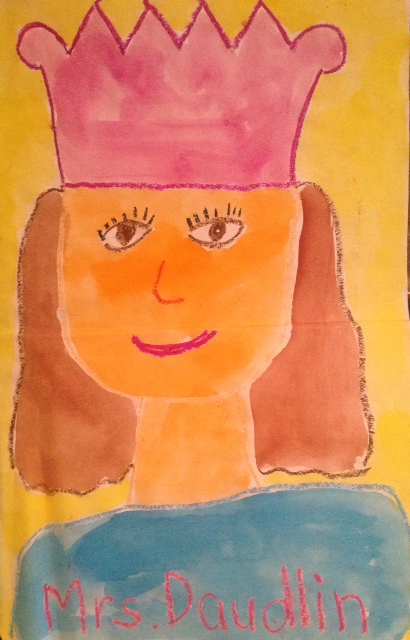
We’ll leave you here with what you’ve been waiting for…the gorgeous gallery of Fairy Tale Kinder Portraits.

From Deep Space Sparkle...

From Deep Space Sparkle…

Fairy Tale Royal Kinder Portraits

Fairy Tale Royal Kinder Portraits

Victoria Day

Our class began a new art project this week.  We started our theme on Fairy Tales and what better way to decorate our castle…uh, classroom, than with Fairy Tale Royal Kinder Portraits.   The children’s work is in progress and in a few days we should have something very royal to show you.

photo-4

photo-3


Fairy Tale Royal Kinder Portraits from Deep Space Sparkle

So from our castle to yours, enjoy your May long weekend.  Happy Victoria Day!

Kindergarten Art Auction Preview

Our Kindergarten classes have created some exceptional art pieces over the past few weeks.  This artwork has been specifically commissioned and designed for the Ridgeview Casino Night Fundraiser, a gala event for Ridgeview parents, and will be coming up for sale on Saturday, May 23, 2015.

Our paintings will be part of the Live Auction, along with artwork created by the other classes at our school.  Classroom parents will have an opportunity to bid on their child’s class’ artwork at this time.

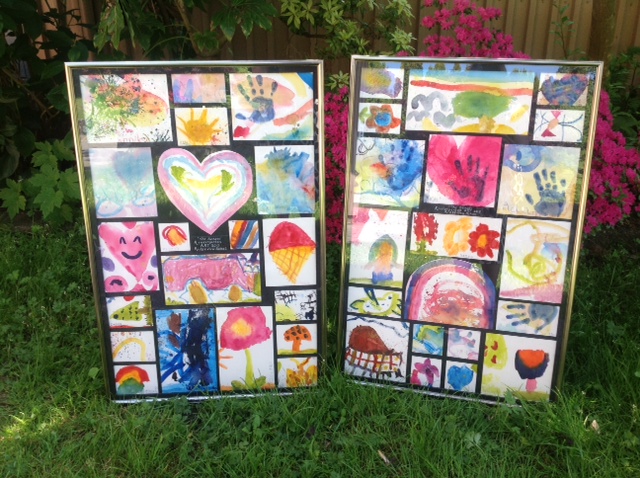
We thought you might enjoy a preview of your child’s collaborative artistic creations.

photo-2

“Kinder Garden” by Division 16

Estimate:  Priceless

The term Kindergarten has a charming origin from the German educator, Friedrich Froebel (1782-1852).  Kinder means “children” and garten is “garden.”  Kindergarten can be literally translated to mean “children’s garden.”   Froebel took the term and used it to mean “a garden of children” and it was how he referred to young children as learners.

Froebel believed that each child was to be carefully nurtured, much like gardeners treat their plants.  Plants need to be placed in the right spot in the garden, with attention to soil, water, food and other environmental conditions.  Growing a strong and healthy plant is often a result of “the right plant in the right place,” an old gardeners’ saying. 

In the same way, in order to “grow” strong and healthy Kindergarten children, teachers work to create a calm, caring and supportive classroom environment for their young students.  We try to ensure we are giving them the time for play, positive attention, intellectual and creative stimulation, and the love they need in order to thrive.

So it is fitting that with parent helpers we were able to create our own “Kinder Garden.”  A classroom Mom sketched her design in pencil on a 14″ x 29″ canvas (measurements are approximate) and mixed colours for us using Artist’s Loft Acrylic Paints.

Our children were given specific sections to fingerprint.  We made a key with the names and fingerprints of every child so we know who painted each part of our painting.

We’re delighted with our efforts, and grateful to our volunteer parents who were able to help us create this gorgeous piece of art.  Our Kinder Garden is able to grow and flourish with support from our wonderful Ridgeview families.

photo 5

“The Senses” by Division 15 

Estimate:  Priceless

Our artist facilitator was a classroom Grandma!  We’d like to take this opportunity to “thank you” for her involvement in this very inspirational project.  Here is an excerpt from her description of “The Senses.”

“Our hope is that this work will remind the viewers to appreciate their senses and see the joy the children have in their expressions.

This Group Fine Art Watercolour Painting Collage was inspired by the class study of the five senses they use to interpret the world around them.

Each child was offered artist quality watercolour materials, instruction of various techniques, colour theory and an introduction to the concepts of the theme on two different weeks.  They spontaneously grasped the concepts of translating their personal experiences with taste, smell, touch, sight and hearing onto the paper….

A challenging process of editing and cropping their work to represent each student’s efforts was then channeled into these two pieces…..Each child has a large and a small painting, one in each frame so the whole class is represented in each.  There are twenty paintings in each frame, ten large and ten small with the opposite complement in the other frame.”

Please join us for this special night!

Ridgeview Parent Advisory Council presents:

Ridgeview Elementary Casino Night Fundraiser

Saturday, May 23, 2015, 7-11 pm

Ridgeview Elementary School

Tickets are $75 available at www.munchalunch.com

Email:  ridgeviewfundraiser.gmail.com

All proceeds directly benefit the children at Ridgeview Elementary School

Safety Week in the Kindergarten

IMG_3809We’ve been practising safety of all kinds this week at school.

Elmer the Elephant and Bicycle Safety

On Wednesday we welcomed Elmer the Elephant and Ruff the Dog.  Elmer and Ruff come to us from the North Shore Safety Council.  They are puppets, voiced by the amazing Mrs. Young.  The children are enchanted with these delightful and endearing puppets.

Elmer spoke to us about bicycle safety.  An important reminder is

And here's Ruff!

And here’s Ruff!

that the children should go shopping with you to purchase their new bike and helmet to ensure everything fits perfectly.  Although it’s a wonderful surprise to bring home a special bike for your child, it’s necessary to get a bike that is the right size.  A helmet must fit correctly, with the front edge above the eyebrows.  The strap should always be fastened under the chin.

Here are some of the highlights from Elmer’s talk:

  • Slow down and stop your bike, if necessary, for pedestrians if you are riding on the sidewalk.
  • Stop and check before crossing a driveway to see if a car is backing up.
  • Ride in a single file line; a sidewalk is for sharing.
  • Stop your bike at the crosswalk.  You get off your bike and walk it across.  It is much safer than riding because you do not want to fall down in the middle of the street.
  • Taking a break is ok in the middle of your ride.  You could be tired, or there could a lot going on around you such as construction.  Elmer emphasized to the children that learning to know their limits is part of learning to look after themselves.
  • Look in both directions before you cross the street, and look behind you to see if a car is coming up on your left.
  • A bike carrier or backpack is necessary to carry your things.  Ruff explained that the children need to balance and steer their bike with two hands so they need somewhere to store their belongings.
  • Bike storage must be dry and safeWe repeated these words after Elmer: “My bike ride isn’t over until my bike is put away.”


Earthquake Preparedness :  The Emergency Release Drill

Drop, Cover and Hold!

Drop, Cover and Hold!

We had our first Emergency Release Drill yesterday.  It can be a little worrisome for the Kindergarten because they’ve never done this before at Ridgeview, so we tell our children exactly what will happen during the process in the days leading up.  An

Emergency Release can be used in any type of emergency, and this week our school was practising it in conjunction with a simulated Earthquake drill.

Although the Kindergarten children are used to listening to follow our directions and instructions for things like class work, lining up or dividing into small groups for PE stations, an Earthquake or Fire Drill is different.  This is a emergency situation where the children need to be able follow the teacher’s directions quickly; we tell them that our explanations will be quite abbreviated.   We teach the children that we will have to move quickly; we won’t have time to wait for them to finish whatever they might be working on.  When it’s time to go, we must go.

We have these drills to practise as a school in the event of a real emergency but it also gives us an opportunity to see who can quickly follow our commands in a new situation.

We can see how well we have taught our students to listen, follow instructions and focus on what we’re trying to accomplish as a group (get out of the building) instead of our individual needs.

When we heard the signal (rumbling earthquake noises) over the public address system (PA) the children immediately ceased what they were doing to follow our directions of “Duck, Cover and Hold” under the classroom tables.  We walked quickly to the tables, mindfully pulled the chairs out and kneeled down under the tables, fingers intertwined and over the back of our necks, elbows covering our ears.

We count to 60 as a class, as most earthquakes don’t last more than a minute.  Then, we carefully came out from under the tables.  Sometimes there might be a few more earthquake noises coming from the PA so we would quickly go back under the tables and begin counting again.  We had already taught the children that there can be aftershocks, and to be prepared for a second round of counting.

Our Principal, Mrs. Brady, spoke on the PA to ask us to prepare to exit the building.  The teacher brings the emergency backpack which is filled with supplies and the children line up behind us.  Before we leave our classroom, we place a green “OK” sign in the window so if this was a real emergency situation, staff members would know we were all safe and had left our classroom.

Our school population gathers on the gravel field.  We complete our attendance and wait to hear if the building is deemed safe by our Damage Assessment Team.  In this instance our school was declared safe, and students were allowed to return to the classrooms.  Once we were settled, we waited for Student Runners to come and collect the children after their parents had checked in at the Student Release Centre/Parent and Student Reunion Area.

We were really proud of the Kindergarten students; they did a fantastic job from the way they walked carefully down to the gravel field, waited patiently for the Damage Assessment Team to finish their survey to staying calm and focused throughout the entire drill.

We know that it’s not “if,” but “when” the Big One will come.  And when it happens, our practise and preparation with our students means we will be ready.

Self-Regulation Tool: Todd Parr Feelings Flashcards

photo 3We find the state of the dollhouse can be indicative of how we’re doing.  From the looks of things, it appears we’re having a complete overhaul.

We’re having a renovation at school right now, across the hall from one of our classrooms.  Both divisions are affected as the playground area between our two classes is filled with work trucks and a cordoned off worksite.


But…we’re heading into Week 2 now of the renovation, and the Kindergarten teachers’ nerves are just about frayed.

There’s nothing quite like story time with the whirring of a table saw as your background.  Or teaching the sound for “y” (the letter of the week) to the echo of rapid fire from a nail gun.  We were heading outside for PE and as we opened our back classroom door, one of the students said, “Hey, there’s four trucks out here!”  So much for bringing out the playground balls.

We think it’s time for some self-regulation….

You all might have guessed we’re huge Todd Parr fans by now.  We refer to his books often.  At a district Professional Day last year, we were introduced to the Todd Parr Feelings Flashcards by the Learning Support Team from Westcot Elementary in West Vancouver.

photo 1

We’ve been using these cards weekly with our classes as one of our HACE (Health and Career) resources.   Both sides of each card are labelled and gorgeously illustrated with a different feeling.  At the start of the year, we taught each feelings card, beginning with “happy,” “sad,” “angry” and “disappointed,” as those emotional descriptors we felt many of the children would know and already understand.

photo 2

Sometimes things happen in class; it’s a teaching and learning opportunity, so we gather together at meeting time and pull out the appropriate feelings card to generate a discussion.  We’ve talked about what it means to feel “left out” and “shy.”  The children are very serious and open about their feelings, and want to share their personal experiences about a specific emotion, particularly if we’re trying to solve a problem.  It’s important to talk about our feelings, and we connect those descriptors back to the Zones of Regulation and try to tie together how we feel with the actions we sometimes take, as a result.

With the on-going renovation this week, the teachers have made excessive use of the “calm” flashcard.  We’ve explained that exciting as it is to have a renovation at our school, it’s also frustrating for us as our environment is noisy and it’s difficult to teach. We want to feel calm; that is the optimal zone for both learning and teaching.  The children are making good suggestions for us to “down-regulate,” and bring our emotional state down from the frustrated feeling of the Yellow Zone to the calmness of the Green Zone.  We’re doing a lot of deep breathing, counting backwards from 10 and listening to quiet music, and the children are happily leading us.

The children are aware of, and beginning to articulate, their emotions while demonstrating empathy for how others feel.  They are very sophisticated in their ability to self-regulate.

We were able to order The Todd Parr Feelings Flashcards from Vancouver Kidsbooks or you can purchase them directly through Amazon.

Be Full of the Joys of Spring

FullSizeRenderBe full of the joys of Spring…feeling happy, full of energy and enthusiasm. We’d say that pretty much describes the Kindergarten!


We’ve been, at least until the end of this week, enjoying some wonderful Spring weather in West Vancouver.  Here’s some of the fun things we’ve been doing in class over the past few weeks.

Earth Day

It was Earth Day on Wednesday, so we started our celebrations with some energy saving measures.  We kept the lights turned off all day (including our twinkle lights) and were diligent about turning off the tap quickly after washing our hands in the classroom.

photo 1-9We read another book by the amazing Todd Parr, The Earth Book, recalled the main ideas of how to look after our Earth better and added on a few of our own, such as “Looking after our people and animals friends.”  We each made a page for our class book to enjoy for the rest of the year.

Christy and I recently attended a BC Hydro sponsored workshop in

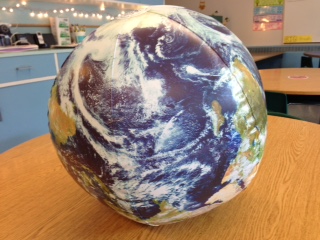
IMG_3780 our school district called “Energy Explorers” to learn about some new and exciting ideas about energy use and conservation for Kindergarten learners.  We received a lot of great stuff such as a teacher’s guide, big book and student resource books, but it was this fabulous earth ball that had the Kindergarten really intrigued.  The children were fascinated watching us blow it up (it’s quite big).  At the end of the day, after all of our discussions and what we could do to conserve our Earth’s limited resources, we passed around the “Earth” and each child stated what he or she would personally try to improve.  We had a number of children say they would try “to not waste food and eat the leftovers….”  Isn’t that awesome?

Signs of Spring Sharing

For Sharing and Special Helper this month, the children have been bringing in a “Sign of Spring” sharing.  We’ve been treated to many wonderful items, including photos of our children in their gardens at home, drawings, plants and bouquets, and the children’s gardening tools like sweet little gloves and watering cans.

Zucchini Sharing!

Zucchini Sharing!

Watering Can Sharing!

Watering Can Sharing!


Spring Books

photo 3-7As always, we have some wonderful books about Spring and the seasons that we’ve been reading aloud to our classes.


  • Spring (The Seasons) (Barron’s)
  • Waiting for Wings (Lois Ehlert)
  • I See Spring (Charles Ghigna, Ag Jatkowska)
  • My Favourite Time of Year (Susan Pearson, illustrated by John Wallner)
  • A Book of Seasons (Alice and Martin Provenson)
  • The Year at Maple Hill Farm (Alice and Martin Provenson)
  • Spring (Sian Smith)

Spring Crafts

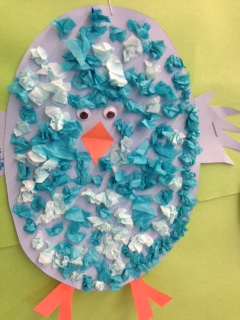
We’ve made more wonderful Spring crafts to decorate our classrooms.  We’ve said it before, but one of the things we love about creating art or crafts is breaking down the steps over a few days so we can all really enjoy each step of the process.  It gives us a natural way to delay gratification and creates anticipation for when we get to work on a particular project again. Blue Chicks: We made our blue chicks by crushing single squares of tissue and gluing them on with liquid glue to a construction paper backing.  We’re always looking for activities that allow our children to develop their fine motor skills and this one was great as the children had to pick up the tissue paper squares, rub them together to separate the layers and then individually crush each one to glue it on.  We took about three art classes to finish.  Working with our hands while listening to great music is a calming activity and very satisfying for our classes.

IMG_3781


Robins:
photo 2-8These cute robins were cut out earlier by ourselves and the children followed our direct instructions to draw in the eye, tummy and feathers as a class.  Later that week, in small groups, the children were very interested in watching us make a cut in the bird, using an exacto knife, for the wings.  The wings are a square piece of crepe paper which the children folded as a fan and we slipped through the cut.  They look really adorable hanging from the ceiling, fluttering in the spring breeze when our windows are open.

It’s hard to believe we’re almost at the end of April. We’re enjoying this time in the school year so very much with our students.

Be full of the joys of Kindergarten.

The Parent Appreciation Tea

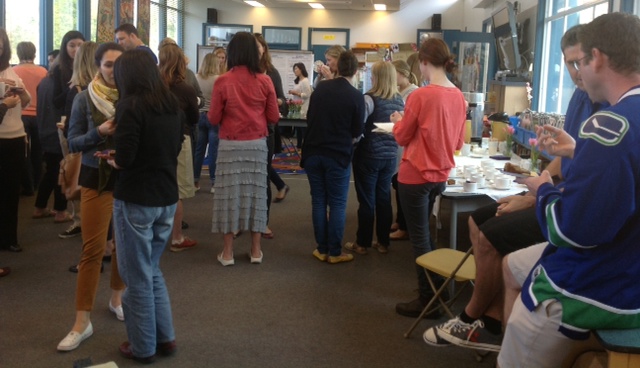
photo-2Today is a Special Day.  Today our staff celebrated our Ridgeview parents with a Parent Appreciation Tea.  We have a very involved and active parent group at our school.

Our Ridgeview Parent Advisory Council (RPAC) organizes many fundraisers and fun events for Ridgeview students and their parents, including:

  • Hot Lunch and Booster Juice Programs
  • Ridgeview’s Parent Gala
  • Ridgeview’s Mayfair (alternate years with the Gala)
  • Purdy’s Chocolates Sale
  • Christmas Poinsettia Sale
  • Spring Plant Sale
  • Bingo Night
  • Halloween Skate
  • EduPac School Supplies
  • Ridgeview Sportswear

This year, through their fundraising, our RPAC has already generously sponsored our school’s Cultural Events (such as “Axe Capoeira” which we saw at the end of March) and the “HighTouch HighTech” Science programs.  They are also subsidizing the Hip Hop Dance program Ridgeview students are receiving this week.

As classroom teachers, we receive annual funds from the RPAC to use for stickers, toys and games, books, decorations and special Science and craft supplies. We’re grateful and appreciative of our PAC’s generosity, as our students are able to enjoy participating in activities, and we are able to supply our classrooms, in a manner that otherwise may not have been possible.

We also want to express our appreciation to our classroom parents.  In the Kindergarten, and most other classes, the teacher has asked one or two parents to be the “room parent(s).”  These parents may assist the classroom teacher to organize parent volunteers for crafting activities, field trips or prepare food for a class party.  This year we’ve had many parent volunteers help us with these fun activities, which we would be unable to run without their participation:

So to all our parents, we say “thank you.”  We appreciate not only the time you volunteer at our school as part of the PAC and helping out in our classrooms, but also all the unspoken hours at home supporting and guiding your children to become the best learners they can be.  It is a privilege to be able to teach your children in Kindergarten, and a pleasure to work with you as a partner in your children’s education.  We truly appreciate you!

My Family: Kindergarten Social Studies

photo 1-1Last weekend we celebrated Easter.  We enjoyed this time with our families, relaxing, working in the garden and catching up on our busy week.  With the extra holiday days we were able to see our extended family members as well, over a family dinner.  This time spent with cousins, grandparents, aunts and uncles is truly a precious opportunity for our children to see the strength and love of the family connection,


It seems timely, then, to talk about our current Social Studies unit on My Family.  We want to preface this post by saying how much we appreciate everything you’ve done as parents to nurture your children’s sensitivity when talking about serious ideas.  We’ll explain below.

We love listening to our children share about their families.  The Kindergarten children really cannot wait to tell us about the most important people in their lives: their parents, brothers and sisters.

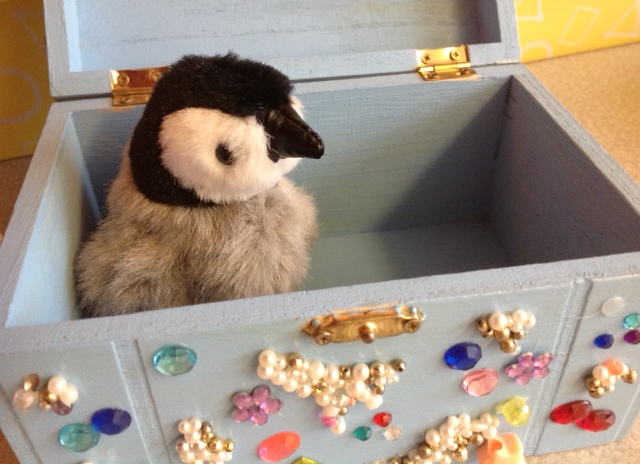
We introduced the concept of Family through a Mystery Box Inquiry.  As always, our children asked the most thoughtful questions and we tried to answer them honestly, as though there was a live family in the Mystery Box.  Here’s a sampling:

  • How does it move?
  • What does it eat?
  • What shape is it?
  • Where does it live?
  • At what age does it die?

We have admit, that last question caught us off guard.  The class became quite still, aware of the depth of this question.  We weren’t expecting anything so sophisticated, and there was definitely a pause as the adults in the classroom looked at each other and pondered what to say.

We looked at those innocent eyes and gently said, “Most of the time, it lives a long and healthy life….”  The children looked thoughtful as we waited for their response, but they seemed to accept what we said and we moved on.

We read the beautifully written book, The Family Book (2003), by Todd Parr.  Todd’s book tells of many different kinds of families, big families, small families, families of different colours, but his main message is that all families are unique and because of that, each family is special.

One important idea that came up for discussion is who stepbrothers and stepsisters are in a family.  Indeed, the blended family is very special, and the children of blended families in our classrooms were able to clearly articulate the role of each family member.  Charmingly, they made the comparison to Cinderella and the stepmother and stepsisters to help their classmates understand.  We also talked about being adopted and what that meant. One of the children brought up what it means to be an orphan and how an orphaned child would need a new family. We’re delighted with the the amazing connections our little learners make as they relate what they know, and the experiences they’ve had, to what we are learning about at school.

We brainstormed about family members, and it was fun to hear about the children’s stories (“My dad’s brother lives in an apartment!”).  Our students really love the time they spend with their extended family members, as they spoke enthusiastically of holiday meals, shared vacations and big family outings.

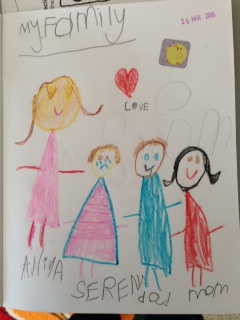
Following our discussion, we thought it was time for a family portrait.  The children started with

My Family Drawing

My Family Drawing

drawing themselves, “Me,” and from there we added our Moms, Dads and brothers and sisters.  We were amazed with how many children knew how to spell their brothers’ and sisters’ names already, or were able to figure out most of the letters from their knowledge of alphabet sounds!  Wow!

My Family Drawing

My Family Drawing

Although we’re focusing specifically on the topic of Family now as part of the Kindergarten Social Studies curriculum, we’ve tried to weave in learning about our families at other times of the year.


In December, we shared our family’s Christmas traditions and special decorations.  This past January we brought photos of our families to school, and shared our families’ favourite activities to do together.  We’ve also been learning about families during our Library time.

We’re going to be learning about Family Homes next, and then a Family’s Needs and

Wants.  We’ve started some preliminary discussions about these topics already,

We cannot underestimate, as a teacher or parent, how deeply you can be moved by the depth of understanding and language of a young child.  Even after our many years of teaching, events happen and things are said in your classroom that you are never fully prepared for.  That is probably one of the greatest joys in teaching.  You’re always learning life lessons from the best teachers you ever had:  your students.


The Self-Regulated Teacher’s Top 5 Posts for Term Two

Thank you to all the readers (and lurkers) for taking the time to visit The Self-Regulated Teacher this term. We really appreciate the invaluable feedback we’ve received from so many of you, classroom parents, friends and colleagues.  Thanks to everyone for the retweets, the comments, the “likes,” and for following us on our website and twitter (@selfregteacher).

We want to give a special thank you to our own West Vancouver School Superintendent, Chris Kennedy (cultureofyes.ca @chrkennedy) for his continued support in faithfully reading our blog and retweeting many of our posts which brings traffic to our site from educators near and far.  Thank you, Chris!  We very much appreciate the time you spend in reading our stories.

________________________________________________________

images-1The Spring Break holiday has officially begun and we’re dreaming about blue skies and sunshine.   Looking for some good reading?

In case you missed them, here are the top five most read posts from The Self-Regulated Teacher during our second term in school.  We’re giving you the SparkNotes version.  Click on the link for the original post.

Your Kindergarten Child’s Good Healthphoto 2-2

You Kindergarten Child’s good health affects us all.  When your children are feeling healthy they are better able to self-regulate their emotions and behaviour, making it easier for them to focus on playing and learning in the classroom.  When your children are feeling sick, they find it difficult to cope at school.  As adults, we can manage a runny nose, a cough and a general feeling of malaise at work; your children cannot manage these symptoms at school.  When your children are feeling poorly, they need to stay at home with their parents, and get better.  (Full Version)

About Us

Christy and I are Kindergarten teachers in the West Vancouver School District.  We’ve been friends, colleagues and teaching partners for over 20 years.  We have both taught everything from Kindergarten up to and including Grade 4, and Learning Assistance.  We also lead full and busy lives with our husbands and families.  We each have two teenagers still in school.  We’ve been asked how we find the time to write for our website and here’s the thing:  with our kids being older and more independent, we find that we have more time to pursue our professional passions:  teaching Kindergarten children and parent education. (Full version)

Let’s Get to School on Time

One of the most important ways to be involved in your child’s education is to bring your child to school on time.  Arriving on time allows your children to be present for all the morning routines your child’s teacher has established to help set the tone for the day.

Being on time is a life skill that affects all of us, whether we’re in school or reporting for work.  It shows respect for your child’s teacher and the other students who arrive on time, ready to learn; and demonstrates to your child that you, too, value punctuality and reliability as important character traits. (Full Version)

A Typical Day in Kindergarten

Our Kindergarten day officially starts at 8:50 am.  Our students line-up to wait quietly and patiently, under parent supervision, for the teacher to open the classroom door.  Following the second bell we join the rest of school in singing “O Canada”; the daily announcements and attendance follow and then we can proceed to Activity Time, our first playtime of the day, with our friends.  (Full Version)

photo 3-2Digital Literacy in Kindergarten

Our Penguin Digital Literacy Projects was our first foray into technology with the Kindergarten this year.  Supported by our Grade 7 Big Buddies, we researched a variety of topics about Penguins and created a page for each one using the app “Book Creator” on the iPad.  Each lesson was introduced with a Mystery Box Inquiry and we represented our learning through our e-book creations.  (Full Version)