Easter Fun

Easter is so much fun in the Kindergarten.  It’s such a lovely time, full of hope and anticipation about photo 2-3everything that’s new and growing.  It’s a lot like how we see our Kindergarten children:  we are so full of hope for them as we anticipate their growth and maturity, and we head into our final term together.

We had just a short turnaround from Spring Break to get ready for Easter at school.


We created some wonderful art:

We completed our monthly self-portraits with an Easter theme.

We completed our monthly self-portraits with an Easter theme.


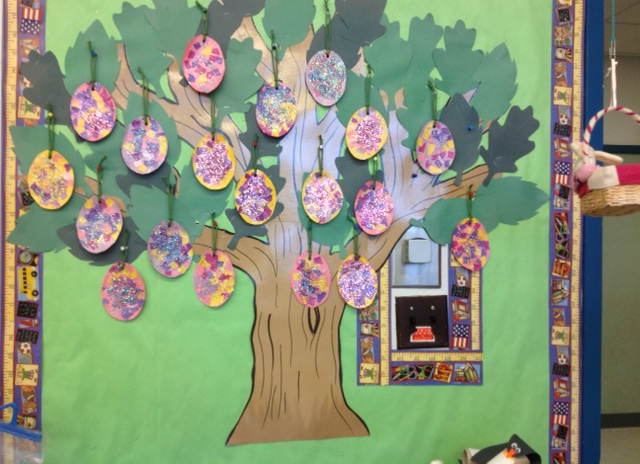
We made glitter torn paper eggs for our classroom tree.


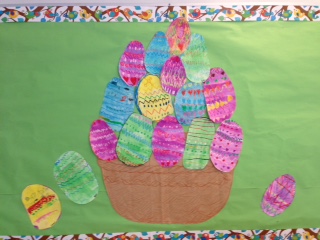
We used pastels to pattern our eggs, and then we gave them a watercolour wash.

We used pastels to pattern our eggs, and then we gave them a watercolour wash.


We made bunny baskets with our Grade 7 Buddies.

We made bunny baskets with our Grade 7 Buddies.


photo 3-1


And we just had a fun Easter egg hunt where we each looked for one special egg, filled with alphabet letters and chocolate mini eggs. We demonstrated excellent self-regulation, remaining calm and quiet on the carpet as we waited for our friends to find their egg. We didn’t open our eggs until we all returned to the tables.


photo 4-1

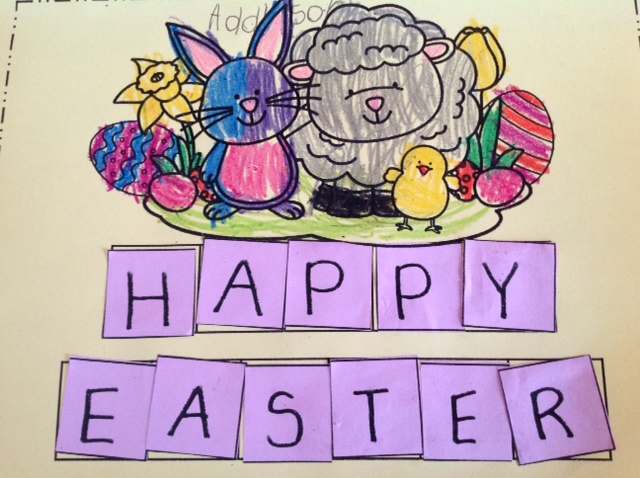
Then we glued the alphabet letters onto an Easter word puzzle to spell a special message.


Of course, we read Easter stories from some of our favourite authors:

  • The Easter Egg (Jan Brett)photo 4-2
  • The Chocolate Rabbit (Maria Claret)
  • Quiet Bunny’s Many Colours ((Lisa McCue)
  • Max’s Chocolate Chicken (Rosemary Wells)
  • The Bunny Who Found Easter (Charlotte Zolotow, illustrated by Helen Craig)

We wish you a Happy Easter and hope that all your Chocolate dreams come true!

Waste Management, Kindergarten Style


We’ve had a pretty big shift recently at our school.  And it’s all to do with garbage.  Yes, we’ve completely changed how we deal with garbage at our school.

Now we call it Waste Management.

When we returned to school this fall, we were aware that change was afoot.  West Vancouver Municipality, like the rest of Metro Vancouver, had declared anything from plants and animals (and biodegradable) to be considered as organic waste and not garbage.  Therefore, organic waste must be separated from the regular garbage collection.

With 21 students in each of our Kindergarten classrooms, eating two to three times a day, and packaged hot lunches four times a week, we create a fair amount of waste.

As experienced teachers, we know that how we start off in September is going to affect us, and our students, for the remainder of the school year.  So although these changes were not going to become official until January 2015, we did not want to start routines, especially ones for an idea as big as waste management, and have to change them mid-year.  There’s been some gentle tweaking here and there, but for the most part the the routines and systems we’ve establish since the fall have been our modus operandi.  For more on the importance of Kindergarten classroom routines, click here.

It is an expectation that our entire student body at Ridgeview, from Kindergarten to Grade 7, learn to separate organics, dry paper recyclables, and garbage/waste items at school this year.

Under our Principal’s leadership, our school has implemented three main systems in our classrooms:  an Organic Waste can, the blue Recycling Bin and a Pack In/Pack Out Initiative for recess and lunch.

In our classroom there are two sorting bins:

Organic Waste Canphoto 1-2

In the Organic Waste can, only four items can be thrown in:

  • Paper towels
  • Wet paper
  • Pencil shavings
  • Tissue


We don’t have a monitor for our Organics Garbage Can, as our children are typically checking with us first if something can go in.  They are learning this routine well, developing independence and looking to the other students if they are uncertain about what to do.


photo 2-2Blue Recycling Bin for Mixed Paper

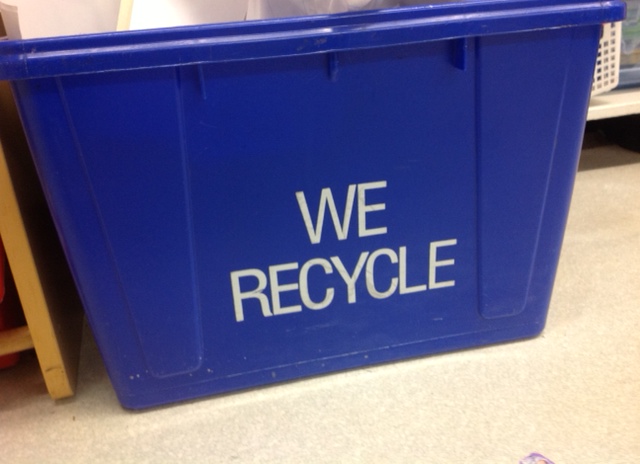
We’ve noticed the children are very used to the blue recycling bin.  So much so that they are often asking if they can put plastic containers in it like they must do at home.  Unfortunately, we cannot do that at school.  It’s only for dry paper, paper scraps, and charts we’ve finished using in class.

Recess and Lunch–Pack In/Pack Out Initiative

This has been the most challenging of all the waste management initiatives.

This year, students are learning that they are responsible for all food items that they bring into Ridgeview. 

Essentially, any waste our students create from the food they’ve packed in to school (food packaging, peelings and cores, napkins, leftover food) must be packed out at the end of each school day.  All waste must go home to be sorted.

We need you, the children’s parents, to support your child (and the classroom and school routines) by sending a ziploc, or plastic bag, everyday to school for your child’s pack out.  

Some parents have arranged with their children to simply put the food waste and packaging from the day’s food loose in the lunch kit and so far, that seems to going well.  If you do not send a lunch kit to school with your child, then you must send a ziploc or plastic bag for the food waste.


photo 2-3Other parents send snacks and lunch in reusable containers, thereby eliminating the food packaging, and any uneaten food stays in the container.


photo 1-3


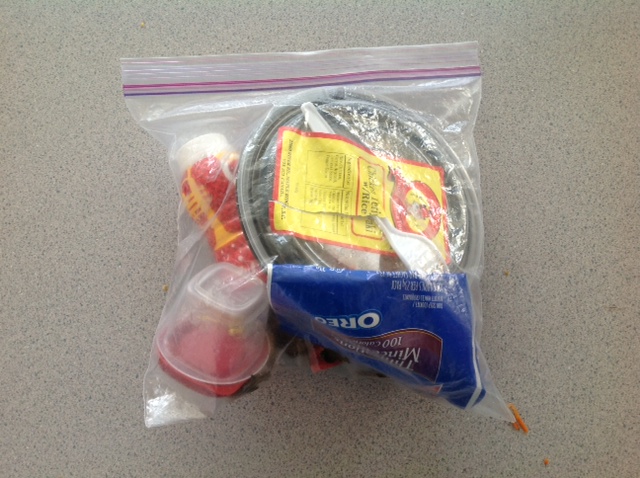
Here’s what your children are doing with the pack out of the food waste and packaging.


We have to say that the Kindergarten children have taken quickly to this system and are very proficient at getting their food and packaging waste into the ziploc.  They have shown considerable improvement at getting the bags “zipped” closed.

Hot Lunch

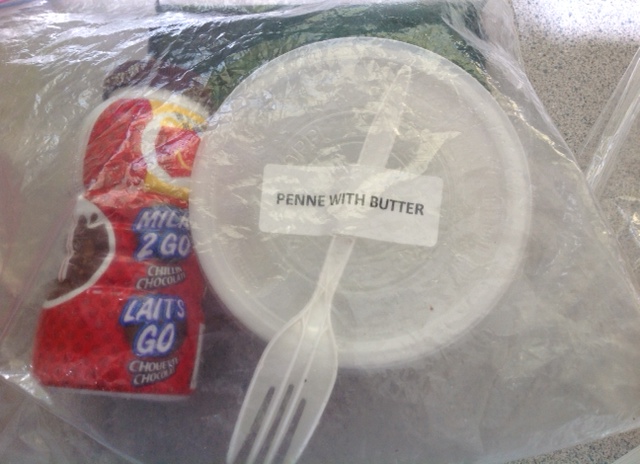
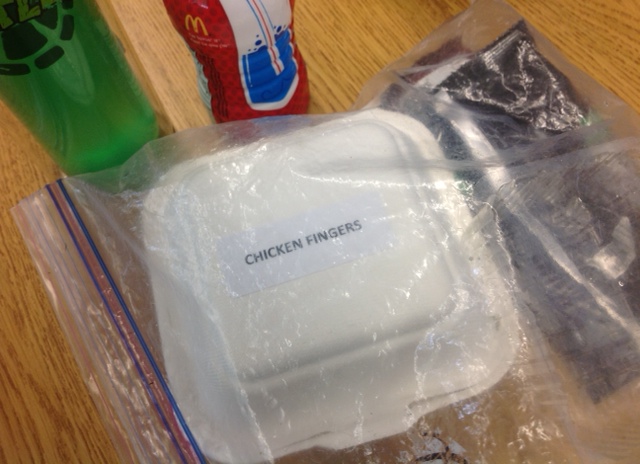
The Hot Lunch days have proven to be trickier.  There is a lot of packaging associated with this program.  Here’s what we’re doing for each day.

photo 1-4


Pasta Day Monday


photo 2-4


Sushi Tuesday


photo 4-2Pizza Thursdays. The Pizza company takes away the boxes to be recycled, and the children can take their leftovers home in their ziploc.


photo 5-1


Wrap and Sandwich Friday


As you can see, sending your child with a large ziploc is better if he or she receives a hot lunch.


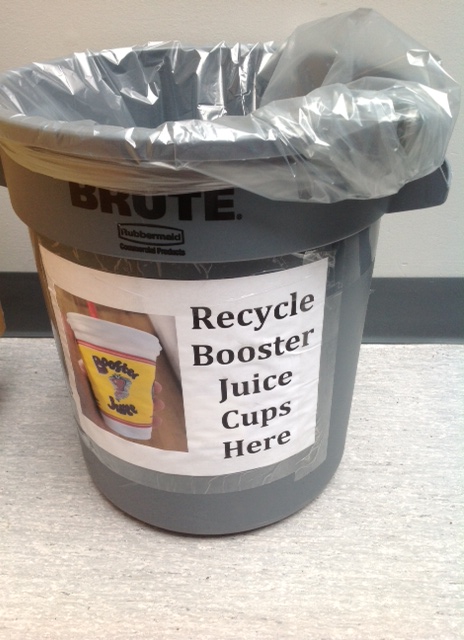
photo 3-3Booster Juice Wednesdays (every second Wednesday).  After the children have finished their drinks, the cups must be rinsed out and the cup, lid and straw are thrown into a special can designated for Booster Juice recycling.  Our Grade 7 monitors help us with this task.


We’re extremely proud of the Kindergarten.  The children know these routines well; they know them as the only way to manage their food waste at school. The Kindergarten is also the only grade in the entire school which does not have to change habits of old.

Change is healthy, but we all know change can be hard as well.  Therefore….we won’t comment specifically on how the teaching staff is coping with food waste and sorting in the staffroom, but let’s just say that old dogs can learn new tricks….

Library Visit – March 23-27, 2015

We’re delighted to be back at school, with all of our Kindergarten children who have grown so tall since the holiday and who are maturing so beautifully… Grade One’s in training, that’s who they are now!  We see all the benefits of our collective hard work in our classrooms, teachers, parents and children working together, and we look forward to an exciting third term with our little people.

We also wanted to say “Hi!” (we’re waving and smiling at you!) to all the UBC Teacher Candidates who followed us on twitter (@selfregteacher) over the Spring Break.  Welcome to The Self-Regulated Teacher and our Kindergarten classrooms!

—————————————————————————————————

Spring is in the Air in the Kindergarten!  We’re enjoying the warm weather, playing outside without our coats at recess and knowing that Easter celebrations are around the corner.

photo 5


Mrs. Kennedy, our Teacher-Librarian, kicked off Spring activities by reading, Fletcher and the Springtime Blossoms, by Julia Rawlinson, to our classes this week.  This is the third Fletcher story we’ve read this year.  We love this adorable little fox!


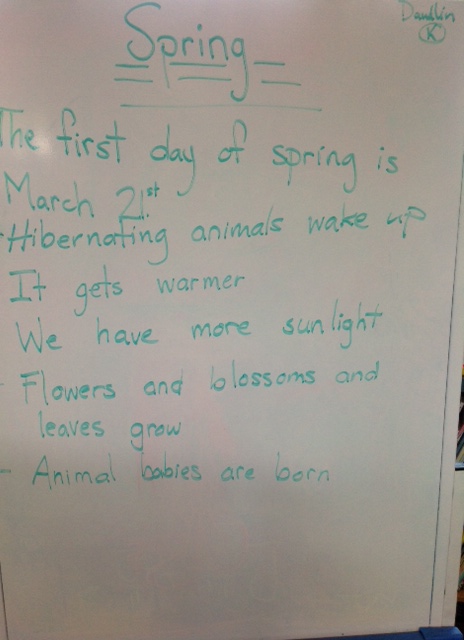
The children shared what they know about Spring, and this provides us an photo 4-1excellent starting point for us to talk about the seasonal changes from Winter to Spring next week.

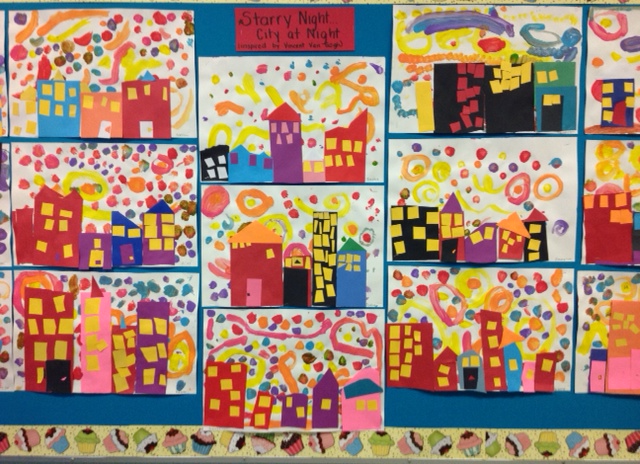
Before the Spring Break, we got a little head start on a gorgeous Spring art project.  We just hung them up this week.

We call our paintings “Starry Night…City at Night,” as these were inspired by Vincent Van Gogh’s “The Starry Night.”  But look at the beautiful Spring colours we used for our whirls and swirls background!


photo 3-2

We have to credit Patty Palmer at Deep Space Sparkle, for another fabulous Kindergarten art idea!  Thank you, Patty!

The Self-Regulated Teacher’s Top 5 Posts for Term Two

Thank you to all the readers (and lurkers) for taking the time to visit The Self-Regulated Teacher this term. We really appreciate the invaluable feedback we’ve received from so many of you, classroom parents, friends and colleagues.  Thanks to everyone for the retweets, the comments, the “likes,” and for following us on our website and twitter (@selfregteacher).

We want to give a special thank you to our own West Vancouver School Superintendent, Chris Kennedy (cultureofyes.ca @chrkennedy) for his continued support in faithfully reading our blog and retweeting many of our posts which brings traffic to our site from educators near and far.  Thank you, Chris!  We very much appreciate the time you spend in reading our stories.

________________________________________________________

images-1The Spring Break holiday has officially begun and we’re dreaming about blue skies and sunshine.   Looking for some good reading?

In case you missed them, here are the top five most read posts from The Self-Regulated Teacher during our second term in school.  We’re giving you the SparkNotes version.  Click on the link for the original post.

Your Kindergarten Child’s Good Healthphoto 2-2

You Kindergarten Child’s good health affects us all.  When your children are feeling healthy they are better able to self-regulate their emotions and behaviour, making it easier for them to focus on playing and learning in the classroom.  When your children are feeling sick, they find it difficult to cope at school.  As adults, we can manage a runny nose, a cough and a general feeling of malaise at work; your children cannot manage these symptoms at school.  When your children are feeling poorly, they need to stay at home with their parents, and get better.  (Full Version)

About Us

Christy and I are Kindergarten teachers in the West Vancouver School District.  We’ve been friends, colleagues and teaching partners for over 20 years.  We have both taught everything from Kindergarten up to and including Grade 4, and Learning Assistance.  We also lead full and busy lives with our husbands and families.  We each have two teenagers still in school.  We’ve been asked how we find the time to write for our website and here’s the thing:  with our kids being older and more independent, we find that we have more time to pursue our professional passions:  teaching Kindergarten children and parent education. (Full version)

Let’s Get to School on Time

One of the most important ways to be involved in your child’s education is to bring your child to school on time.  Arriving on time allows your children to be present for all the morning routines your child’s teacher has established to help set the tone for the day.

Being on time is a life skill that affects all of us, whether we’re in school or reporting for work.  It shows respect for your child’s teacher and the other students who arrive on time, ready to learn; and demonstrates to your child that you, too, value punctuality and reliability as important character traits. (Full Version)

A Typical Day in Kindergarten

Our Kindergarten day officially starts at 8:50 am.  Our students line-up to wait quietly and patiently, under parent supervision, for the teacher to open the classroom door.  Following the second bell we join the rest of school in singing “O Canada”; the daily announcements and attendance follow and then we can proceed to Activity Time, our first playtime of the day, with our friends.  (Full Version)

photo 3-2Digital Literacy in Kindergarten

Our Penguin Digital Literacy Projects was our first foray into technology with the Kindergarten this year.  Supported by our Grade 7 Big Buddies, we researched a variety of topics about Penguins and created a page for each one using the app “Book Creator” on the iPad.  Each lesson was introduced with a Mystery Box Inquiry and we represented our learning through our e-book creations.  (Full Version)


Celebrating the End of Term Two

Today is the end of term and a time to celebrate our learning!IMG_3550

Here are some of the highlights of the second term:

Alphabet Letters:  we learned the names, sounds and correct formation of alphabet letters up to S.  We’ll finish up the rest of our letters in the coming term.


IMG_3504


Numbers:  we’re developing number concepts <10, printing the correct formation and counting through a variety of math centres.


Valentine’s Day Party:  we exchanged Valentine cards with our friends and had a sweet party as well!

Chinese New Year Celebrations:  we made Chinese dragons, ate a photo 1-1Chinese banquet and received “lucky money” in red envelopes!

Winter Sports–Ice-skating:  we worked on our ice-skating skills in group lessons with our Kindergarten friends.

Pink Day:  we stood together as a community and focused on kind, friendly and helpful behaviours.


IMG_3497Penguin Digital Literacy Project with our Grade 7 Buddies:  using the app “Book Creator” on the iPad we’ve each made a digital book focusing on five aspects of penguins (habitat, appearance, diet, young, life cycle).


Art:  we’ve created amazing Art this term, from penguin and snowmen crafts, to painted  owls

IMG_3548and finishing up with our Lon Po Po painted panels.


Student-Led Conferences:  an opportunity to share with our parents the learning we’ve done this term, where we took the lead to show them the amazing work we’ve completed in our Alphabet Books, scrapbooks and more.

What an amazing group of Kindergarten children we teach.  They’ve learned so much, and our Student-Led Conferences were a fitting end to a power packed term.

Sunday, March 8, will be the last blog post for the term, and then we’ll be back for Term 3.

Mystery Box Inquiry: Penguin Edition

We began Mystery Box Inquiry as a way of developing questioning skills with our students, which is an integral part of the Inquiry Process and one of the curriculum competencies for Science in Kindergarten in the Ministry of Education Curriculum Drafts.

(Many thanks to Lorraine Hartley, our friend and Kindergarten teacher colleague, who shared this wonderful idea at one of our Kindergarten teacher meetings.)

We would place an object inside the box, related to our current theme or area of study.  We explained to the children they would have to ask ten questions about what might be inside, before they could make a guess, and then we would show them what was inside the Mystery Box.  We would answer their questions to the best of our ability and from the information gathered, the children would be able to make an informed guess.

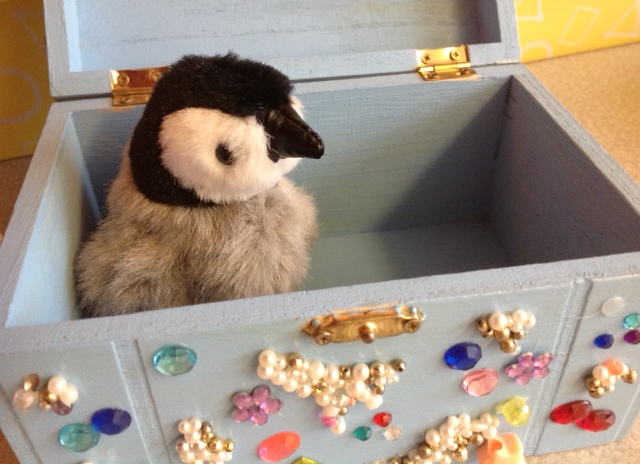
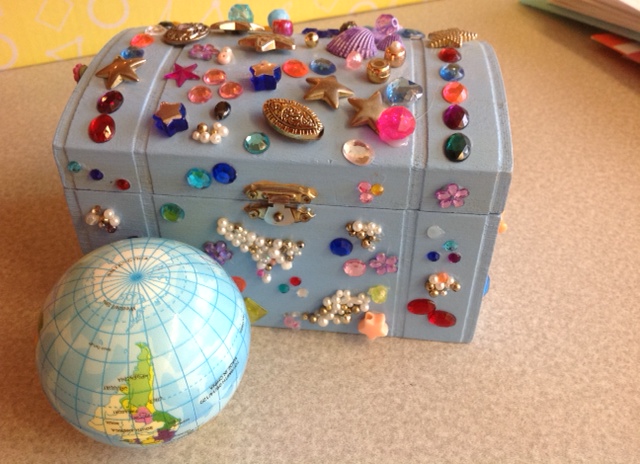
We took a simple wooden chest, decorated it, and designated it our “Mystery Box.”   photo 1

The Penguin Mystery Box Inquiry is actually part of a bigger project this year:  creating digital books using the app, “Book Creator”, on the iPad with our Grade 7 Buddies.  We discussed our Penguin digital literacy projects two weeks ago.  Each object we placed in the Mystery Box was a clue to the topic we were going to research with our Buddies during our weekly Buddy Time.

We love penguins, so we chose the penguin life cycle as part of our Big Idea on Change for Kindergarten.  Change affects all aspects of our lives from personal, physical and emotional changes for the Kindergarten, to our seasonal environmental changes, to our families, animals and even our own perspectives.  It’s a Big Idea all Kindergarteners can understand as they not only experience change every day in the classroom, but they develop the valuable skills of flexibility and resilience as they learn to cope with change.

For the first Mystery Box Inquiry, we wanted to get a sense of the children’s questioning skills in a formal learning situation and establish a baseline.  Many Kindergarten children are already learning to ask good questions; but we suspected they would be more likely to guess what’s inside the box as opposed to asking questions.

We recorded each question on an iPad as quickly as we could, to keep the momentum of our lesson going.  Each question is a direct quote, not corrected for grammar, so this process remains authentic.  We’ve provided just a sampling of questions.
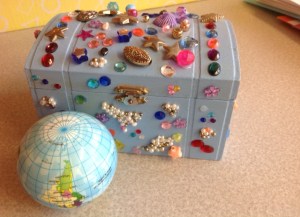
photo 2Mystery Box No. 1-Penguin Habitat (rubber ball globe to show where the Antarctic was located)

  • Could it be a stuffed bunny?
  • Is it a note?
  • Is it silver?

We were really looking to teach our children that the frame of certain kinds of questions (Who, What, When, Where, Why?, or the 5 Ws) get a better response than a question  such as “Is it a…?” where the answer is going to be either “yes” or “no.”

We wanted to show them that a well worded question would elicit a lot more information from the teacher!  But then we got these little treasures …

  • What colour is it?
  • What shape is it?
  • What does it sound like?

After the 10th question it was time to guess.  We had a couple of guesses (“the sea,” “a village”) before one of the children guessed “the whole world.”  It was really thrilling to hear that!  We passed the globe ball around and everyone got to hold the whole world in their hands for a few moments.

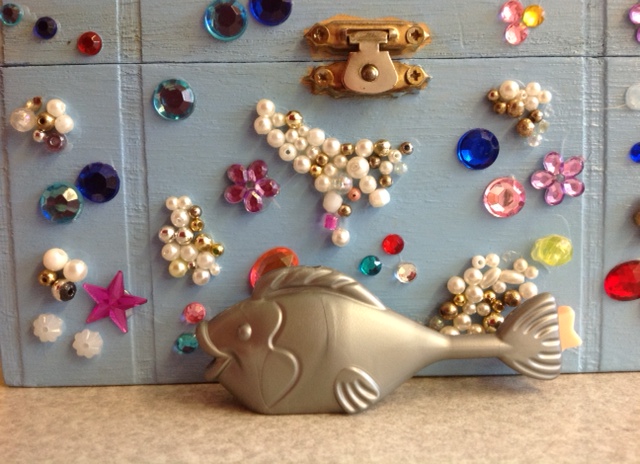
Mystery Box No. 2-Penguin Diet (Lego fish)photo 4

This Mystery Box Inquiry presented the immediate problem of what to use for an object, as fresh krill, squid or fish, which makes up the penguin diet, was not going to be an option.  So we decided to use the fish from the Lego Table (it was clean and dry), and explained to the children that what was in the Mystery Box was not the real thing, but something that would represent it.  We would answer any question as though the object inside the Mystery Box was real.

We decided to do two things to help the children this time:  1.  reframe any question that was going to get a “yes” or “no” answer into a 5Ws question; and 2. scaffold each of the questions by going back and reviewing the previous questions.

We were getting a lot of repeat questions, and wanted to increase the variety of questions asked.  Here’s a few examples.

  • What colour is it?
  • What part of the world does it live in?
  • Is it a fish? (A guess which we deferred to the end of the questioning session, and we did come back to it when it was time to guess)
  • What does it eat?
  • What is it like? (Reframed to “What types of things does it do?”)
  • What does it look like?
  • Does it have a sound? (Reframed to “What kinds of sounds does it make?”)

The questions are really terrific, and you can see “What colour is it?” and “What part of the world does it live in?” stem directly from the first inquiry.

The children guessed right away it was a fish, and they were actually quite delighted to see it was Lego.  As a matter of fact, amid the excited chatter as we were passing the fish around, one child was heard to say, “I wondered where that fish had gone!”
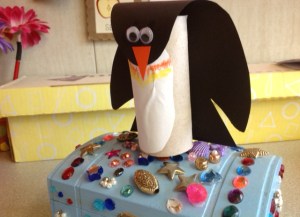
photo 3Mystery Box No. 3-Penguin Appearance (Paper Penguin Craft)

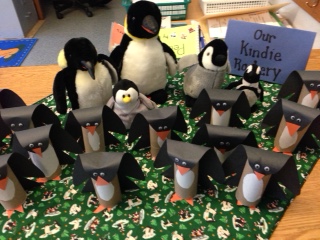
We have an adorable collection of stuffed penguins, but not one of them would fit in the Mystery Box!  So we went with a paper penguin craft because it fit.  Once again we answered the questions as though we had a real penguin.  We’re still continuing to scaffold the children’s questions, and bringing their attention to any question that begins with one of the 5Ws.

We want to treat you to the entire list of questions.  It’s truly incredible what the children are asking.  We had our first “how” and “when” questions and it was exciting to be able to provide a thorough, and hopefully satisfactory, answer.

1.  How does it move?

2.  What colour is it?

3.  What part of the world does it live in?

4.  What does it live in?

5.  What shape is it?

6.  What does it look like?

7.  What does it eat?

8.  What penguin is it? (We had to defer this question until the end but how wonderful that this child was already aware of the many species of penguins).

9.  When does it die?

10. What does it feel like?

One of the many reasons why we love teaching Kindergarten children is how they live in the moment, a valuable lesson for us all.  After our guessing, and as we took the little craft penguin out of the Mystery Box, one of the children asked, “Is that the craft we’re going to make right now?”  All thoughts of our Mystery Box, questioning and digital literacy projects were gone…replaced by a small toilet roll penguin.

By the time you read this, we will have completed the Mystery Box Inquiry:  Penguin Edition.photo-7  We had two more clues to present before we finished our digital literacy projects to show at our Student-Led Conferences.  We were delighted with how far the children came in their questioning skills over the past five weeks, and their patience in waiting for us to record the questions, reframing and scaffolding every question along the way.

We’re looking forward to seeing how these inquisitive learners continue to deepen their learning by asking higher level questions and developing their critical thinking skills in the next Mystery Box Inquiry!
Self-Regulation Tool: The Breathing Ball

photo%202[1]

We have a lot going on right now so we’re taking our own advice and having a self-regulatory moment…..

This little beauty came to us from one of our amazing school counselors.  Although it’s called the “Hoberman Sphere,” we call it the “breathing ball” in class.  We ordered it from amazon.ca.

photo%201[1]

We try to use the breathing ball everyday, as deep breathing is a strategy we practice as part of our self-regulation to help us stay calm and focused.  The breathing ball is just a means by which to show the children an interesting visual to get them focused on their breath.

We talk a lot about deep breathing and how it can calm us.  It’s important to us that we are providing the children with strategies they can use outside of the classroom, and deep breathing is definitely the best:  you always have it with you.

We often find ourselves deep breathing for self-regulation:  while driving, shopping at busy times of the day, or simply to bring ourselves back to the “patience zone” when dealing with a tricky situation at school.

In class, we begin with sitting cross-legged, palms facing up or down, and focusing on the ball.  We always breathe in through our nose, then gently release our breath through our mouth.  As we’ve improved, we now ask the children to hold their breath for one or two seconds, then to breathe out softly.  “Holding our breath” is to help train ourselves, and our brains, to focus on just that one thing.

photo%203[1]As we breathe in, we expand the breathing ball, and as we breathe out, we collapse it.

We usually deep breathe three times, and it really does make a difference to the reduction of energy in the class.  We feel centred, calm and ready to go on with learning.

Please excuse us, while we get back to focusing on our breath….

Student-Led Conferences

photo-5There are three formal and two informal reporting periods each school year.   Our Kindergarten students receive their formal written report cards at the end of each term.  Students received their first report card last December, the second report card will be given out on March 6, and the third report will be distributed at the end of June.

This year, the two informal reporting periods are a parent-teacher interview, held last fall, and the Student-Led Conference.

A Student-Led Conference is exactly that–a conference or interview for you and your child, led by your child.  During the Conference, students assume the ownership for reporting and demonstrating to their parents what they are learning about in school.  The teacher, who has supported the students in the selection of student work and practiced the conference with them, stays in the background during the actual Conferences.

During the years we taught from Grades One to Four, our students participated in a teacher-led discussion about the student work they would like to present at the

Student-Led Conference.  A brainstorming session of possibilities would ensue.  There would be suggestions such as a polished piece of writing, the latest math test or a Science notebook; the class would vote on the ideas they liked best and those selections were included in their Student-Led Conference folder.

Depending upon the grade, sometimes we had a combination of “must-have” work and some student choices.  An “art walk” around the school hallways, the latest digital learning project and a mini music performance were other fun choices to round out a Student-Led Conference.

A week or two before the Conference we had our older students write a letter inviting their parents to attend.  The letter would highlight the learning and personal achievements students wanted their parents to particularly notice.  This was a wonderful opportunity for student self-reflection of his or her successes.

For our Kindergarten students we organize our Student-Led Conferences by Centres.  It’s a system the children are familiar with, and one in which we’ve used successfully with this age group.

In the weeks prior to the Student-Led Conference, we review with your children the activities they enjoy most in our day and want to share with you.  We also initiate some discussion on the learning we think you would enjoy seeing as their parents.

We typically include a Language Arts Centre which focuses on the children’s Alphabet and photoWriting Books; a Math Centre to create math patterns and showcase their Math Books; and a Scrapbook Centre to see some of the best work we’ve completed in Kindergarten this year, in the children’s individual scrapbooks.  With the children’s help, we form an “Agenda” of the Centres the children will lead you through.

When you arrive with your child at our classrooms, your child will be given a personal copy of the Agenda and he or she will mark each activity with a sticker as it is finished.  The Centres do not need to be completed in any particular order, but each one must be visited.  We explain to the children that if they see there are many families at one Centre, then they should choose another until it’s less crowded.

During your child’s Conference, parents are able to enjoy looking at their child’s schoolwork and participate in the activities he or she has selected for you.  As parents, giving specific praise and support recognizes your child’s efforts at school.  It is through your comments that you model what you value about your child’s learning.

This is a time for positive comments only to your child.

photo-4At the end of the Student-Led Conference we ask our parents to sign the Guest Book.  It’s important for us to have a record of parent attendance and receive feedback every year.  Over the years parents have always enjoyed the Conferences so it’s very rewarding to have the appreciation of your children’s, and our, efforts.

This year the Kindergarten Student-Led Conferences will be held on Tuesday, March 3 and Thursday, March 5.

All Ridgeview students will be dismissed at 1:50 pm on Tuesday only, and the Conferences will begin at 2 pm.  You will have a 25 minute time slot with your child.  A maximum of four-six Conferences will be held at once so families need to be prepared to speak softly.  At the appointed time, we will ring a bell to signal the end of the Conference so that we may prepare for the next group.

Over the years, a few parents have asked why they cannot have an interview with the teacher instead.

To put it simply, the reason why you’re having a Student-Led Conference is because it’s an incredible opportunity and privilege to share in the learning of your child.

You will hear about your child’s learning from your child’s perspective, and have that deep insight into your child’s thinking, motivations and achievements.  You will be engaged in a dialogue rich with the language of a young learner, share the joy of a job well done, and a sense of pride with every printed letter and cut out shape.  And you’ll be able to share in the delight of your Kindergarten child as he or she begins the journey as a life-long learner.

Student-Led Conferences are one of our favourite days of the entire school year. From a teacher’s perspective, we couldn’t be any more proud of our students as they beam with pride at leading their mom and dad into their classroom to share the fabulous work they’ve completed at this point in the school year.

Please make arrangements for siblings so that your Kindergarten child can have your full attention during his or her Conference.

You can sign-up for your Student Led Conference starting Monday, February 23 at 3 pm.

Winter Celebrations in the Kindergarten

There’s no doubt we’ve been super busy this month.

We’re ice-skating on Wednesdays, our school had Crazy Hat and Hair Day this week and we’ve just had two fun Winter celebrations in our class, Valentine’s Day and Chinese New Year.

Valentine’s Day

photo 1-1Valentine’s Day generated a lot of excitement this year in our classes.  We made some crafts, read a few Valentine stories and held a Valentine card exchange.

We made Valentine card holders out of paper bags and decorated them.  In the days leading up to Valentine’s Day the children brought their Valentines for each other and placed them into the appropriate bags.  Our only restriction is that each student, if he or she wishes to give out the Valentines, gives to all the girls, or all the boys, or everyone.  We stapled up the bags to send home as many of the cards had sweets attached to them.  As each family has their own rules for the consumption of candy, we thought it best to let moms and dads decide with their children.

In our class, Valentine’s Day is all about Friendship, and that is illustrated so well in the book Franklin’s Valentine by Paulette Bourgeois.  Franklin’s Valentines fall out of his unbuckled backpack and he’s sad and disappointed, thinking his friends won’t give him a Valentine if doesn’t have any to exchange.  Franklin’s friends all have special cards for him, and he learns that friendship is not about the cards, but the caring and kindness of others.

We had a small party and enjoyed a delicious snack of fruit and veggie trays and cupcakes and cookies, all supplied by our generous parent group.

Valentine Books We’ve Read

  • Franklin’s Valentine (Paulette Bourgeois, illustrated by Brenda Clark)
  • My Heart is Like a Zoo (Michael Hall)
  • I Spy Little Hearts (Jean Marzollo, photographs by Walter Wick)
  • Mouse’s First Valentine (Lauren Thompson, illustrated by Buket Ergogan)

photo 2-1Chinese New Year

Gung Hay Fat Choy!  It’s the Year of the Goat (or Sheep, depending upon your calendar).

We’ve enjoyed sharing some excellent books about Chinese New Year with our students, which have focused on the traditions and symbols of this special time spent with our families and friends.


  • Sam and the Lucky Money (Kevin Chinn, illustrated by Cornelius Van Wright)photo 1-2
  • D is for Dragon (Ying Chang Compestine, illustrated by Yongsheng Xuan)
  • The Runaway Wok (Ying Chang Compestine, illustrated by Sebastia Serra)
  • Dragon Dance (Joan Holub, illustrated by Benrei Huang)
  • My First Chinese New Year  (Karen Katz)
  • Chinese New Year (David F. Marx)
  • Lon Po Po (A Red Riding Hood Story from China) (Ed Young)


We kicked off our celebrations on Chinese New Year’s Eve with oranges and “ly-cee” bags, the special red envelopes, donated from one of our families.

Mrs. Kennedy, our teacher-librarian, started reading The Runaway Wok with the Kindergarten and will finish our story next week.

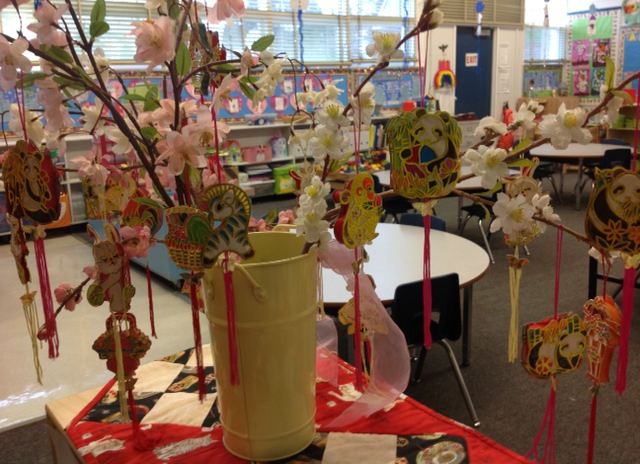
We decorated some pretty flowering branches to symbolize the upcoming spring and all things new and growing.

We made Chinese dragons in Art, like the dragons in the Chinese Dragon Dance.

photo 3-1

We celebrated Chinese New Year’s in our classes on Friday.  We read the amazing book, Lon Po Po, by Ed Young.  It is similar to the fairy tale, Little Red Riding Hood, but set in China.  We illustrated our favourite part of the story in pastel, and we’ll give our pictures a watercolour wash next week.  Then we’ll cut the pictures into panels and back them onto construction paper.  This Chinese art form will be similar to the pictures in Lon Po Po, where the illustrations are featured as panels.

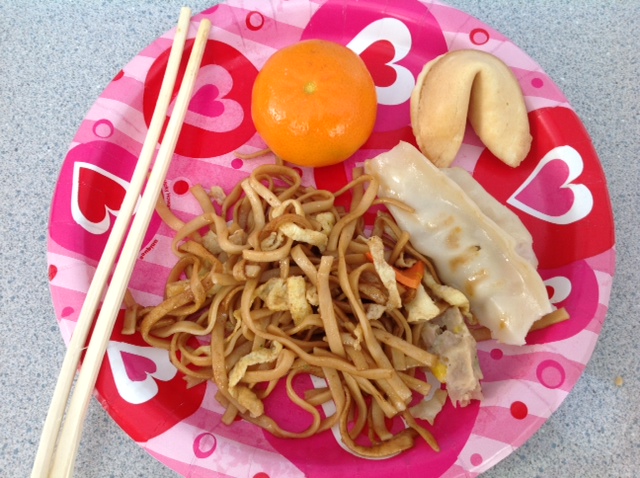
The Chinese New Year banquet is of great importance, as food is in all of our great cultural celebrations.  For the Kindergarten, we ate a delicious Chinese New Year’s “snack” provided by our wonderful parents.

We ate noodles for a healthy, long life, and dumplings.photo 4

We ate oranges, which stand for prosperity and good luck.

And of course, what makes a Chinese meal for the children?  Fortune cookies!

And we had “ly-cee,” the special red envelopes which symbolize prosperity, filled with a special candy.

Thank you so very much to all of the families who donated food and their time to support our Kindergarten program.

Gung Hay Fat Choy to all of you, good health, good luck and prosperity in the New Year!

photo-13


Start the Kindergarten Day Off Right!


photo 2Last week we talked about how we establish routines  for our Kindergarten class and why they are so important for your child’s sense of security and familiarity at school.

Parents are always so pleased to hear how well their children are managing in Kindergarten.  We attribute that to the classroom routines.  Because the children are so successful with them at school, if you haven’t already set up your routines, here are some you might consider for home.

Preparing for School the Day Before

We’ve learned not only for ourselves, but for our own kids, the importance of starting to prepare for school the afternoon or evening before.  Although this may not seem as relevant right now with a Kindergarten child, as your children move through the grades it will make a huge difference to them (and you).

When your children are leaving for early morning classes, and have a sports team practice or club meeting after school, they will need a lot of things to bring with them on a daily basis.  It’s more than just their lunch:  it’s homework, uniforms, text books…the list could go on and on.

Helping your children while they are young to review their next day’s schedule, and to gather all the belongings they need the night before, is teaching them how to plan and to be prepared.  Together, you are creating a foundation of good habits and organization so that one day your children can be independent and do this for themselves.

For your Kindergarten child, the late afternoon or evening routine might look like this:

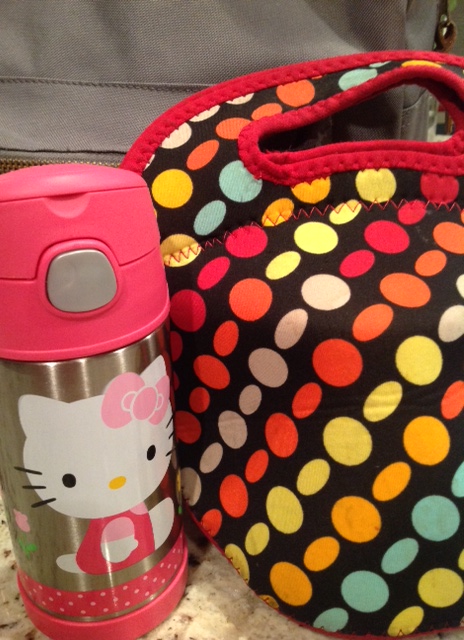
Lunch preparation photo 1

  • you, or you and your child, prepare the next day’s snacks and lunch together
  • your Kindergarten child can help to select the snacks, wash the fruit or veggies, butter the bread for a sandwich
  • pack food that does not need to be refrigerated, and any utensils, in the lunch kit
  • water bottle is clean and ready to be filled

Backpack organization

  • library book
  • forms to be returned
  • homework calendar
  • sharing (if it’s your turn)
  • popcorn money
  • extra change of clothes
  • indoor runners if it’s raining
  • ice-skating with your class?  You’ll need you skates, snow pants, gloves and helmet packed in a separate bag, and a pocket snack

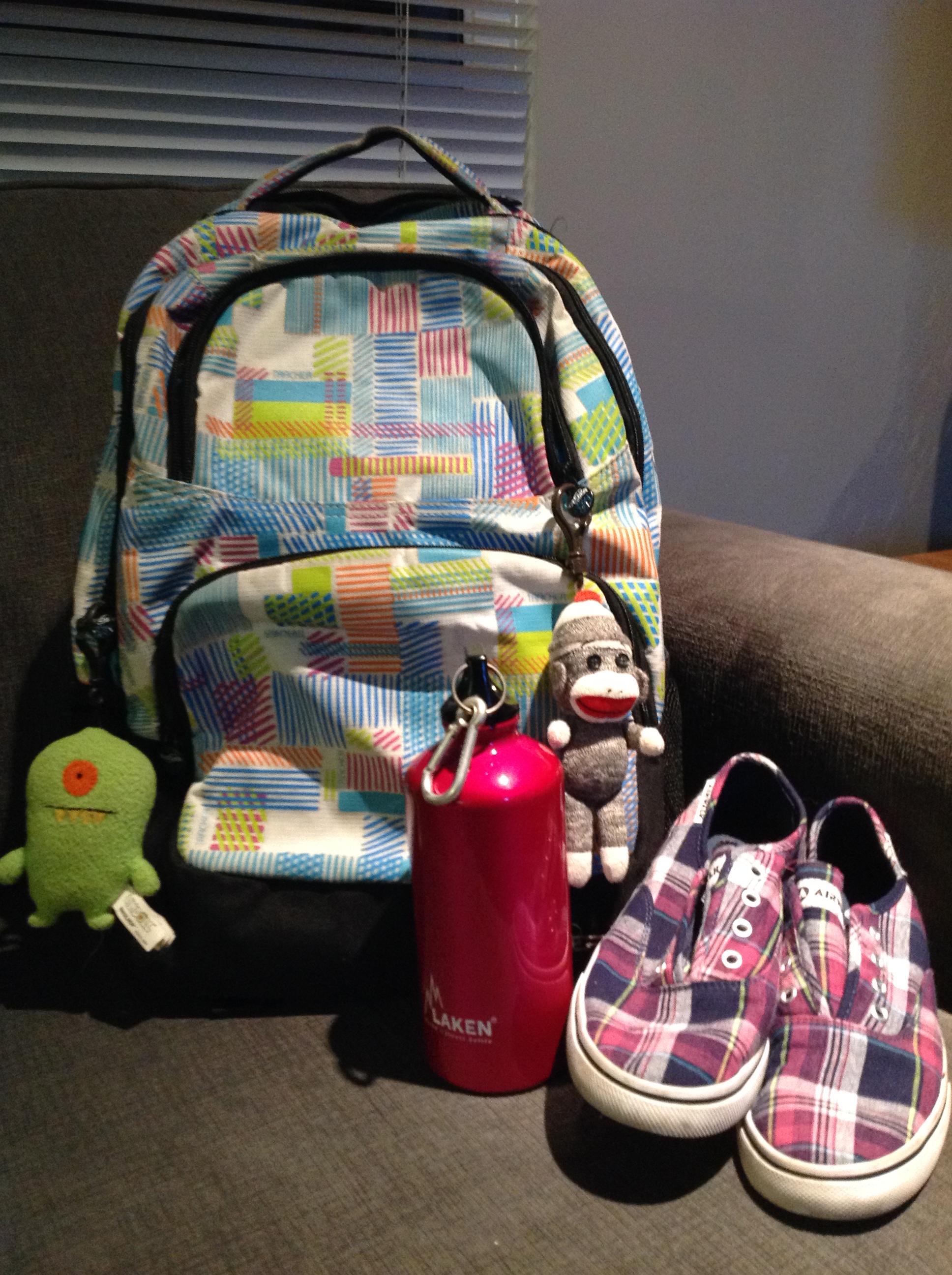
You can show your child how to neatly organize all of the items needed for the next day in his or her backpack; take advantage of the multiple compartments and pack food items separately from papers and books.  Who doesn’t love a well-organized bag to take to work or school?  Then, place the backpack beside the door so all that’s left to do is add your child’s lunch and water bottle in the morning.

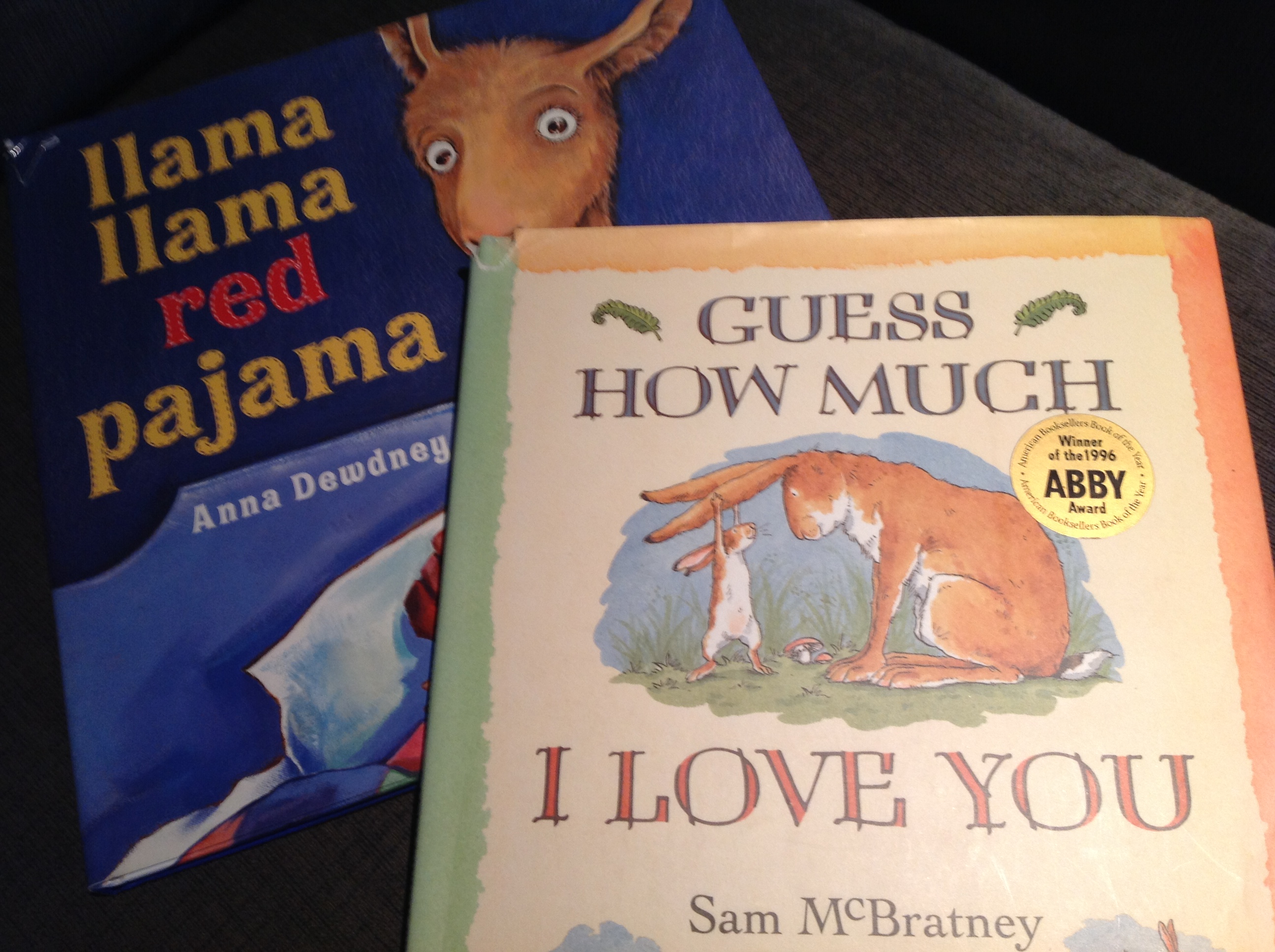
Bedtime Routinesphoto 3

Establishing the bedtime routine is important:  the children need to get enough rest each night to stay healthy.   When the children are sleeping they are growing, and when they have enough sleep they awake feeling fresh and ready for school the next day.

As parents, we all want and need our own time to relax.  However, it is a commitment upon us, as parents, to be consistent with the bedtime routine.  Sometimes, we may need to delay our own gratification of the things we wish to do, so that we can be at home and putting our children to bed on time.

For your Kindergarten child, the bedtime routine might look like this:

  • bathe children
  • choose clothes for the next day
  • sometimes another small snack
  • teeth brushing
  • bedtime read aloud (parents reading to the children) and cuddles (lots)
  • time for bed–the children, that is!

Morning Preparations

The morning start, even on a school day, can be a relaxed and easy affair with the right amount of preparation from the prior evening.

There is no doubt you will need to supervise the morning routine.  Let’s face it:  the children are five or six-years old, and we are all distractible in our own way.  Left to their own devices the children could have decided, while still in their pyjamas, to start the greatest Lego castle ever but that doesn’t help with getting to school on time.

For your Kindergarten child, the morning routine may look like this:

  • breakfast
  • change into school clothes
  • brush teeth, wash face and brush hair
  • put lunch kit and water bottle into backpack
  • coat and shoes to head out the door

The last point to consider is this: what do the children do if they are ready early, and waiting to leave home for school?

A transition activity from the time of getting ready to heading out the door might be something to think about.  Each child is different, so activities could range from reading a book to shooting pucks into a net in the basement.  The most important factor would be that the children know that when it’s time to leave, they must stop what they are doing.

The key to creating and establishing routines is time, practice, consistency and persistence.  Every family develops their own routines, and adjusts them as the children grow older.  For the Kindergarten child, and for ourselves as professionals in the workplace, a smooth start in the morning sets the tone for a good day at school.