The Classroom Newsletter: “This Week in Our Room” and the Importance of Modelling Writing for Our Kindergarten Children

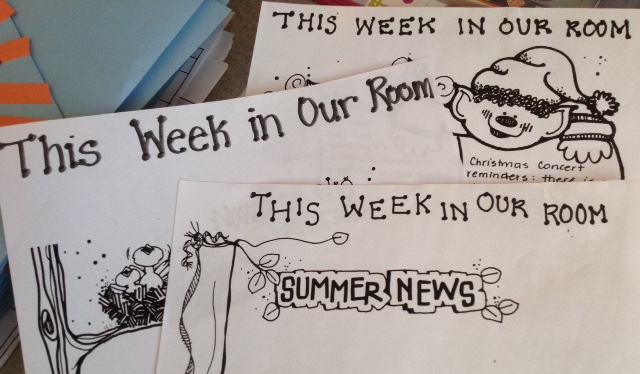
FullSizeRender-3We officially retired our “This Week in Our Room” paper newsletter last week.  We’ve now started an online newsletter that we will write and post on this website on Fridays.  We’ll try to write about one or two topics of interest from the classroom, in addition to the usual wrap-up of the week, upcoming events and reminders.

We’ve been writing a classroom newsletter every Friday, every school year, since we started teaching.  For me, that means since September 1987 (although I missed one year while I was teaching Learning Support).  Christy has been teaching in the classroom (mixed in with Learning Support, as well) since March 1994, so we’ve written many newsletters between us.  It’s been part of our weekly routine, and one that signalled the completion of a week’s worth of work, well done.

We began writing the weekly newsletter as student teachers.  Our supervising teachers sent one out on Fridays, and it was part of our teaching responsibilities to write the newsletter every week during the final practicum.  You certainly feel like you are the classroom teacher when you’re responsible for the main communication line between home and school.

But times are a-changing and there’s a lot of pressure from everywhere to send out newsletters and bulletins electronically to reduce paper and be more environmentally responsible.  It’s a good thing and makes a lot of sense.

In my class, I wrote the weekly newsletter during Friday lunch.  I often sit at a table with the children while they’re eating and they are always amazed to see me filling in the page with print.  They can’t believe I write a newsletter every week (“Didn’t you write that last week?”) and they sometimes think it’s a lot of work.  But I always explain to them the newsletter is for their moms and dads so that they know what’s happening at school.  They love to know what I’m writing, so I always read it aloud to them.

We know that modelling writing is imperative to encourage children to begin writing themselves.  They need to see how much we value this process, similar to reading.  For some light lunch conversation, I would ask my little table group for ideas I might write about in the newsletter; they were delighted to make suggestions, watch me write, and read it back for their approval.  Children really want to know what the words say.

It’s also fun when I’ve already written up an idea they had.  It shows we’re all thinking the same things are important. The children are learning a sense of ownership from participating in the writing process, even just at the idea stage.

Our classes love writing so much because they see us writing all the time.  With the paper newsletter, the children were learning firsthand the newsletter was purposeful communication to be read by a specific audience, their parents.  We were modelling that for them every step of the way, as we wrote it, and handed out the copies for them to take home “for your parents to read.”

They haven’t seen us writing yet on the iPad (we’re currently using Pages for writing all the posts on The Self-Regulated Teacher, but will probably switch to Google Docs soon) since we’ve transitioned to our online newsletter, but that time is coming and we’re sure an interesting conversation will revolve around it.

With the advent of summer, here are a few things you can do to develop and maintain your child’s fine motor skills and interest in writing:

  • Have a supply of pencils, crayons, pencil crayons and felt pens available for your child to write and draw
  • We love to use oil pastels in class which are great for drawing and colouring because they’re so bright (warning: can be challenging to remove if it gets on your clothes)
  • Have some supplies like an individual paint set, glue sticks and child safe scissors ready
  • Recently, our classes enjoy having access to a stapler, tape dispenser, hole punch and string or wool to make “hangers” for their drawings
  • Gather an assortment of little notebooks, or booklets that you can make yourself with scrap paper and a stapler to write in; sheets of paper in all sizes and colours
  • Get your children involved in purposeful reading and writing activities such as grocery lists; to-do lists; writing and sending notes and cards to family and friends; copy a simple recipe for Grandma
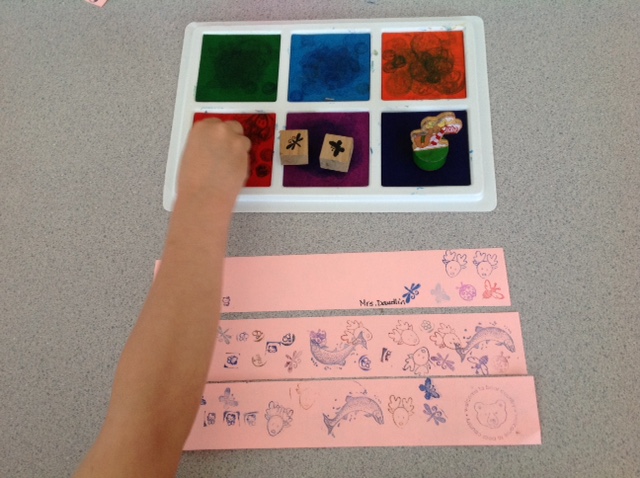
  • Our classes love to use rubber stamps and stamp pads, fantastic for fine motor development
IMG_1189

These activities are going to be the most fun when you sit down with your child, so enjoy this time together and write-on!
This Week In Our Room:  June 8-12, 2015

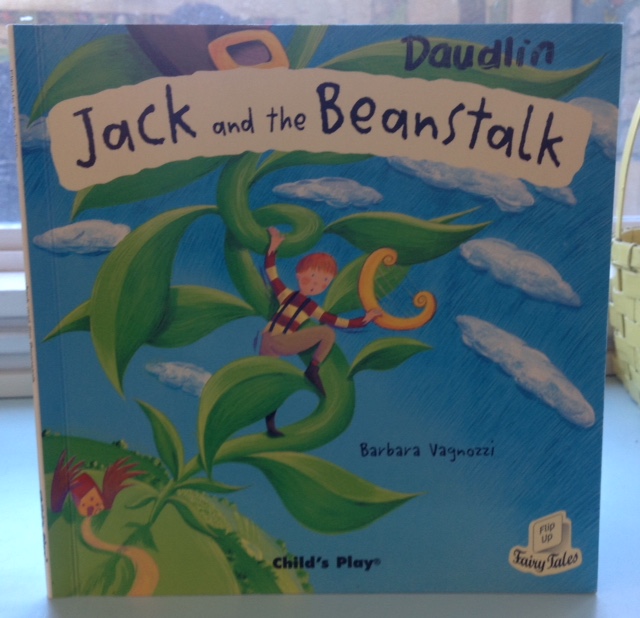
Fee, Fi, Fo, Fum…It’s Time for “Jack and the Beanstalk” and Growing Things

We seem to be on a bit of a mini-theme this week with our on-going Fairy Tale unit and our newly started Growing Things Science unit on plants.

Our timing couldn’t have been more perfect.

FullSizeRenderSince wrapping up “The 3 Little Pigs,” we started our next Fairy Tale, “Jack and the Beanstalk.”  We read a delightful, lift-the-flap version, where the children’s sharp eyes ensured we didn’t miss a single flap!

Instead of a craft, we decided it was time to plant some beans to try and grow a beanstalk of our own.  So in small groups we planted beans, while the rest of our class designed their plant markers.  We’ve been talking a lot about the needs of a plant, so we asked the children to draw all the things a plant needs to grow in a healthy way:  soil, water, sunshine and love.

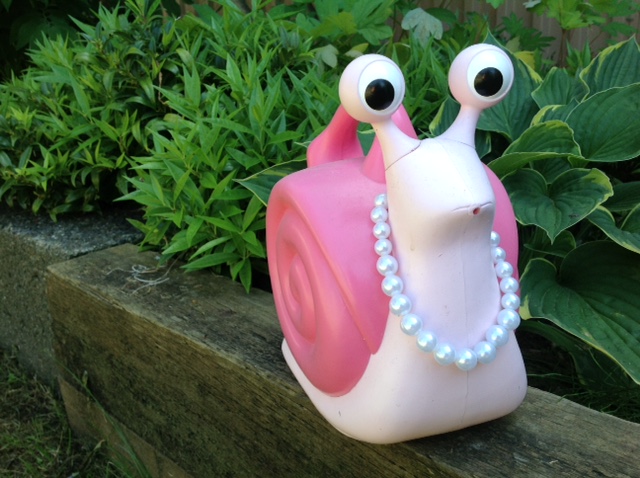
FullSizeRender-1To add to the festivities, Miss Pink made her annual visit to help water our newly planted seeds.

IMG_1248

We launched our Growing Things unit last week by going for a walk around the school to look for examples of living and non-living things.  We defined “living” as things that grow, and “non-living” as things that do not grow.  We saw some wonderful roses and trees growing on our school grounds, a butterfly and a huge bee in a California lilac shrub.  We saw many non-living things:  soccer nets, doors, cars and rocks.

The children understood that when a branch is attached to a live tree, it is living until it gets broken off.  In the same way, when they saw a dead worm on a school path, the children knew in their own small world that life is fragile and can quickly change from living, to not.

We finished up our week with another lesson on seeds.  We read The Surprise Garden by Zoe Hall.  It’s a fun story where a mom gives her children a variety of seeds to sort and then plant.  The children grow a variety of plants and vegetables to eventually make a lunch of salad, sunflower seeds and watermelon.

This Week:

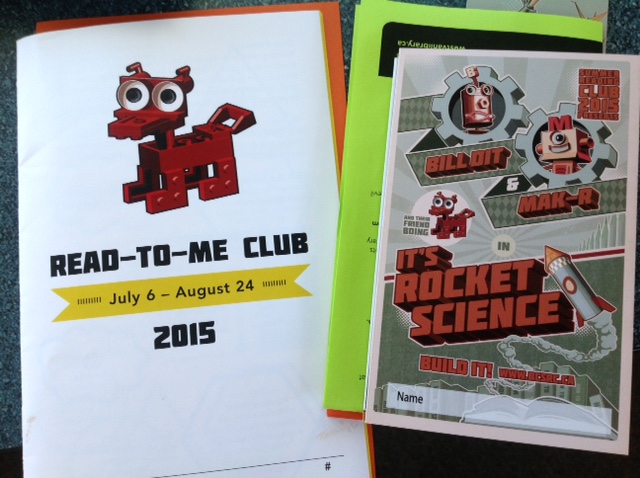
The West Vancouver Memorial Library gave a presentation on their Summer Reading Clubs for 2015.  This year theme is called “Build It.” We encourage all Kindergarten families to register at the Library and participate in this great annual summer tradition.

While older children and independent readers can read their own books, younger children can participate in the “Read-to-Me” Club and be read to by a parent or sibling. The most important idea is that the children read, or be read to, every day for 15 minutes, for 50 days.

Summer Reading Clubs

Summer Reading Clubs

The children can read picture books, chapter books, comics or listen to an audio book.

There are small special prizes given out every week and special challenges for each club.  After July 6, the children can go to the library every week to collect their prize.

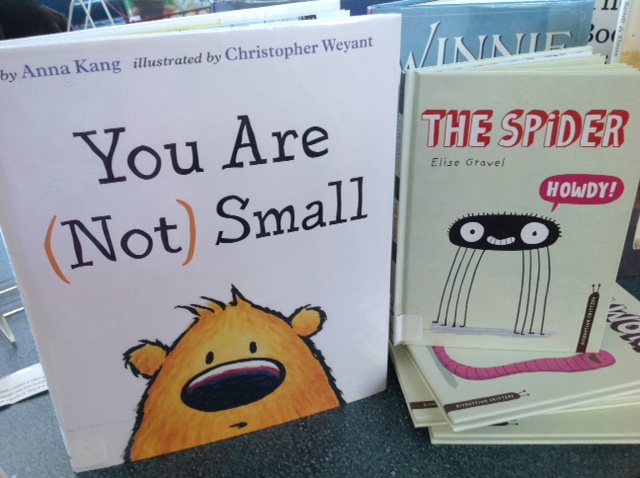
Two books that were shared with us were You are Not Small by Anna IMG_1237Kang and The Spider by Elise Gravel.  The children loved the humour of  The Spider which is also part of a series so that might be a fun collection of books to start reading.

Your children’s librarian is a valuable resource to you to help you find interesting books, at an appropriate independent reading level for your child. You can talk to the librarian and she will help you to join the reading club that best suits your child.

Sports Day 2015:

The Kindergarten children had an amazing day today at Sports Day.  We were so proud of them and their stamina, calm and ability to self-regulate and negotiate a highly energetic day.  Congratulations to our little athletes for demonstrating great team work and sportsmanship!

Upcoming Events:

Tuesday, June 16:  Prince and Princess Day in the Kindergarten.  Children may dress up if they wish!

Thursday, June 18:  Vancouver Aquarium Field Trip for Kindergarten.  Please return your permission form by Monday latest.  We’ll send home a special notice about this trip next week.

Monday, June 22:  Kindergarten Beach and Bubbles Party.  This will be a fun morning of beach and summer themed activities for our Kindergarten students at school.

Reminders:

All Library Books must returned the week of June 15.

Next week, June 15-19, is the last week for the Hot Lunch Program.  Starting June 22-25, children will need to bring prepared lunches from home.

June 15-19 is the last week for the Home Reading Program.  Book exchange is on Monday, Wednesday and Friday.  All books must be returned by Friday, June 19.

Once Upon a Fairy Tale

IMG_3890Fairy Tales is one of our favourite genres to read and explore with our Kindergarten children.  They form an important part of our literary culture going back to the stories of French author and poet, Charles Perrault (1628-1703) and the Brothers Grimm, Jacob (1785-1863) and Wilhelm (1786-1859) of Germany.

Perrault took eight existing folk tales of the time, which were shared through storytelling, and wrote them down as stories creating a new genre, fairy tales.  He is known for what might be considered the “classic” fairy tales including “Cinderella,” “Little Red Riding Hood” and “The Sleeping Beauty.”  He published Tales or Stories from Times Past, with Morals (subtitled Tales of Mother Goose) in 1697 under the name of his son, Pierre.

The Brothers Grimm were scholars who were also interested in recording the storytelling tradition of fairy tales. Stories such as “Hansel and Gretel,” Rapunzel” and “Rumplestiltskin” were published in the volume Nursery and Household Tales (1812),  and eventually retitled as Grimm’s Fairy Tales.  One interesting fact is that these stories were originally not written for children as the content was considered to be too harsh.  However, over time the stories have been revised as to be suitable for young readers.

There are often references to fairy tales in more recent literature, so it’s important that our students have a firm foundation in these stories to understand what they are reading now, and in the future.

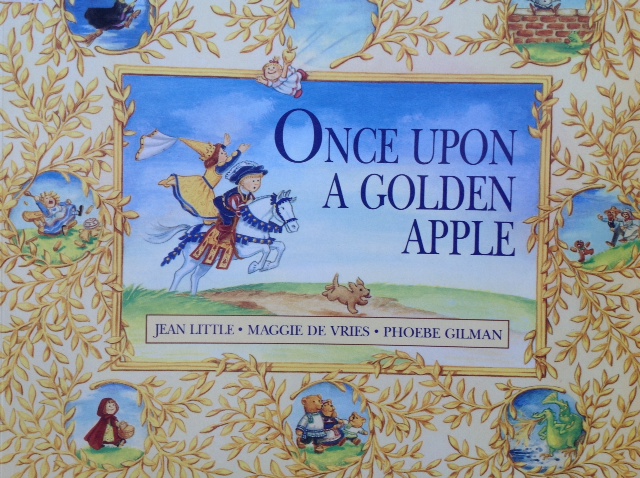
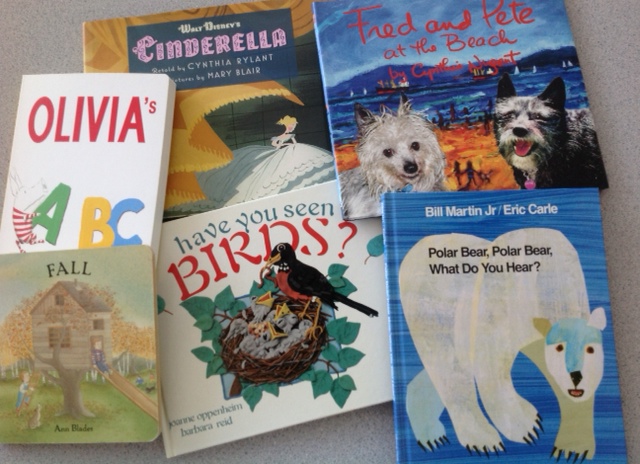
We always start our Fairy Tale theme by reading Once Upon a photo 1-3Golden Apple (1991) by Jean Little, Maggie De Vries and Phoebe Gilman.  This is a fairy tale that incorporates elements from a variety of well known stories and nursery rhymes and can test the knowledge of a children’s literature expert.  We ask the children to try to name as many of the fairy tales and nursery rhymes they know that are referred to in the book.  This year we were amazed at how many they identified.  We spent a fun morning reciting and laughing our way through familiar nursery rhymes such as “Humpty Dumpty,” “Little Miss Muffet,” “Little Boy Blue” and “Jack Sprat” among others.

Our discussions revolve around common elements in fairy tales such as how most stories begin (“Once upon a time….”) and end (“And they all lived happily ever after.”).

We’re looking at some of the more well-known archetypes of heroes and heroines (typically wise children who make good choices) the Baddies (usually an adult of some type, or large furry creature) and talking animals.  Sometimes we find there is a magical person (fairies, wizards and witches) or objects (apples, mirrors and wands).

We also focus on how the number 3 is important in fairy tales (3 Pigs; 3 Billy Goats; 3 Bears, Goldilocks does 3 things (eats porridge, sits on chairs, lies on beds) at the Bears’; the evil step-mother visits Snow White 3 times) as we read each of those stories.

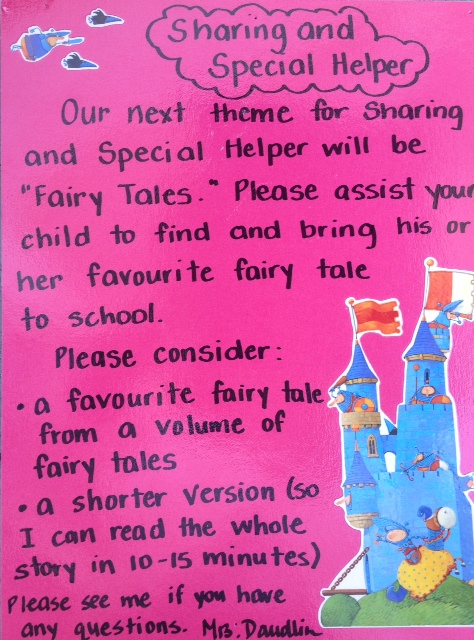
photo 2-3This month’s Sharing Theme has focused on Fairy Tales.  We’ve asked each Special Helper of the Day to bring a fairy tale to school for us to read aloud to the class at Storytime.  What a delightful assortment of volumes, stories and vintage books that have come our way!  Some of our students have brought their parents’ childhood fairy tale books (really fun to look at); we’ve seen the entire Disney Princess line-up; and we’ve been introduced to a collection new to us, Mary Engelbreit’s Nursery Tales: A Treasury of Children’s Classics.  We love it when two or more children bring the same fairy tale as it’s a wonderful opportunity to compare and contrast the different versions.

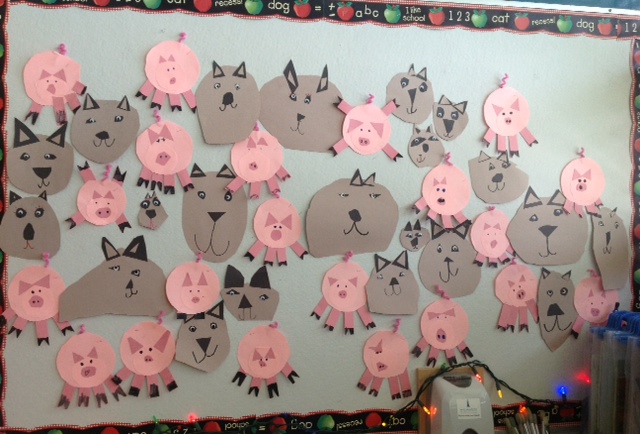
For teaching purposes, the first story we read was “Little Red Riding Hood,” to teach about story structure (beginning, middle and end) and we worked on our Wolf craft.

Our second story was “Goldilocks and the Three Bears” to reinforce our learning about how stories are organized.  We made stick puppets of the Bears to practise retelling the story in our own words.

This week we read the “The Three Pigs,” and sequenced the main events in a little booklet.  We see some interesting times ahead now that our “Little Red Riding Hood” wolves have met up with the our “Three Little Pigs.”

photo-14

We hope it’s all going to end happily ever after….

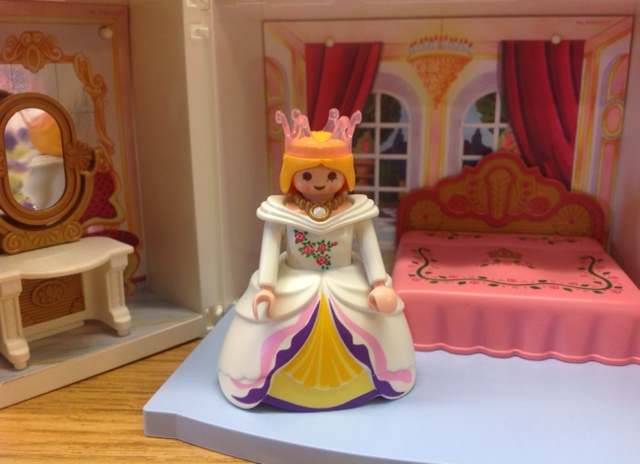
A reminder to moms and dads, that it’s Prince and Princess Day in the Kindergarten on Tuesday, June 16.  Boys and girls may dress up in their “royal” attire to celebrate the end of our study on Fairy Tales!

IMG_3893

Sports Day 2015

Kindergarten Parents, we’re transitioning to an online classroom newsletter for Fridays so we have included a few updates and reminders for you.

photo-11Sports Day:

Another great tradition, the Ridgeview Sports Day is next Friday, June 12.  We will start promptly at 9 am, following the singing of “O Canada,” so please arrive on time for school.

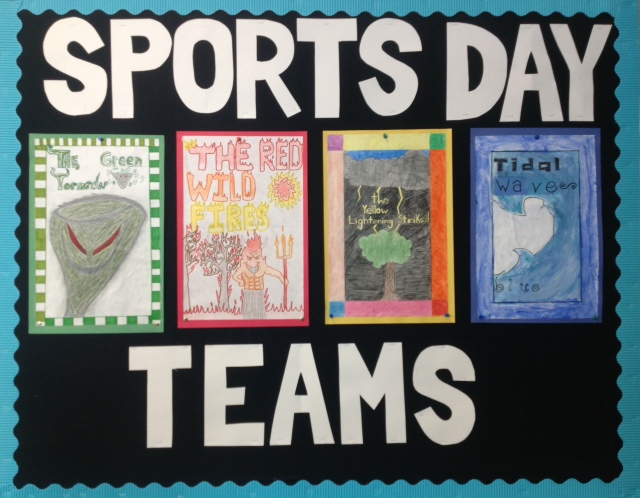
Division 15 (Mrs.Campbell and Mrs. Tsumura) is on the Red Wildfires Team.  Division 16 (Mrs. Daudlin) is on the Blue Tidal-waves Team.  Children should wear t-shirts in their team colour, shorts and running shoes with socks.

You’ll notice some older students enjoy painting their hair and faces in their team colour for Sports Day, and if your Kindergarten children would like to do so at home, they can let their team spirit shine!

Please ensure you have put sunscreen on your child before school, and send along a hat in case the weather becomes hot.

Our teams gather on the paved area of the playground, so that is a great place to watch our team cheers.  We will then move in to our mini-teams to participate at a variety of stations and you can follow your child around the events.

Following a Popsicle/Freezie snack around 10:30 am, all Kindergarten children will be called to meet their teachers on the playground and we will head back to our classrooms to have our regular snack time, and Activity Time.

Kindergarten students are dismissed at 12:00 pm from our classrooms.  If you were planning on ordering lunch and staying for the rest of the day to watch your older children, your lunch orders can be picked up from the school kitchen which is located near the gym.  Parents can order their lunch through munchalunch.com.  Please feel free to bring a blanket and have a picnic on the grass field.

If your child attends Camp Ridgeview, please make arrangements with them for an early pick-up from the classrooms.

This Week:

We saw a Grade 10 Drama class from West Vancouver Secondary School perform six Robert Munsch stories.  They used simple props from home and school in their excellent Story Theatre production.

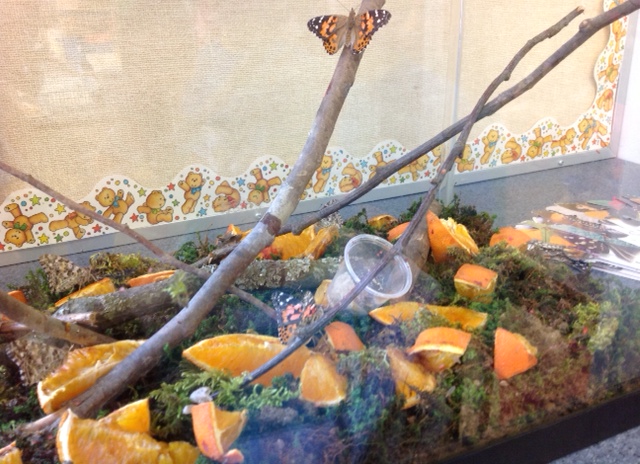
We went to visit the hatching chrysalis in Mrs. Bird’s and Mrs. Tsumura’s Grade 2 classroom.  The butterflies were beautiful!

photo-13

In Math, we have started our Measurement unit, and worked on centres about length using non-standard units such as links, Popsicle sticks and multilinks cubes.

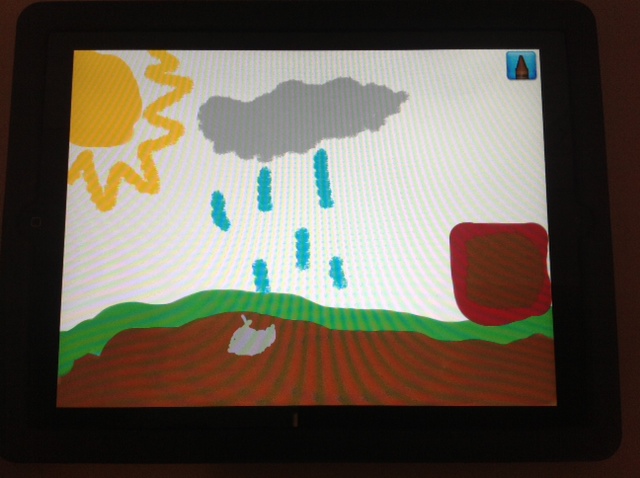
photo-12Ms. Wilson, the District Innovation Support Teacher (Elementary), taught our classes how to use the app “Welcome to Draw and Tell” by Duck, Duck, Moose.  We’re using it to draw pictures to make digital picture books about how seeds grow with our Grade 7 Buddies.

Upcoming Events:

Tuesday, June 16:  Prince and Princess Day.  Children may dress up if they wish for our day of  “royal” activities.

Thursday, June 18:  Kindergarten Field Trip to the Vancouver Aquarium.  Permission forms were sent home on Thursday.  Please return your permission form as soon as possible.

Reminders:

Mondays, Wednesdays and Fridays is Home Reading Book Exchange.

PE is on Tuesday and Wednesday for both classes next week.  Please wear runners.

No Sushi lunch on Tuesday, June 9.

Please check your Remind app texts and emails for any updates or changes.

Reading with Your Kindergarten Child: Literacy Awareness – A Book is More than a Story

photo-10Do you love reading as a pleasurable, down-time activity?

Do you have a list of books to read that will take at least two lifetimes to complete?

The importance of regular modelling of reading by all us, parents and teachers, cannot be taken too lightly.  The children are looking to us to see if we place a high value on reading through our words and actions.

Last week we wrote about creating a home environment that places reading as a priority to foster a love of reading and literature in our children.

As teachers, our students see us reading a lot.  From the attendance form to story time books, teaching books to charts and labels, our students see us doing a great deal of purposeful reading in our day.

Here are some things we think about as we are reading to and with our students that you can do during your own daily reading with your Kindergarten child at home.

Reading to Your Child

  • Fluency.  As teachers and parents, we want to read aloud the story as fluently as possible.  We get a lot of practise with some of the favourite read-alouds we’ve read to students many times over the years.  However, when we can, we still read new stories to ourselves first before reading them aloud to the children.  Of course, this is more difficult when you are reading longer texts and novels but for picture books with a lot of dialogue, we want to get the intonation of the character voices “just right.”
  • Expression. Demonstrate your interest, enjoyment and enthusiasm in your children’s selected storybook, and you can make even the most banal of words sparkle with excitement for them.  We really try to have fun with the character voices in a book, and take a great deal of delight in the children’s laughter (sometimes we are laughing so hard at our own reading we have to stop the story…really!). After all, who doesn’t love creating the Wolf’s voice as Grandma in “Little Red Riding Hood”?

Reading With Your Child

  • Take a “book walk” with your child before reading a new book.  Ensure that your child can see the pages, and that you have one hand free to “track” the text (point to the words) as you are reading and to focus on key details in the pictures which may aid in your child’s comprehension of the story.
  • Draw attention to the title of the story by helping your child find the front cover of the book.  Point out the differences between the front and back covers.
  • Make predictions about what the story will be about based on the title.
  • Look at the author’s and illustrator’s names and discuss the differences in their roles, in addition to their names.  Make connections by trying to think of books you’ve already read by them, or anyone you know who has those names.
  • Comment on the title page and the dedication page.  Speculate on who the people mentioned in the dedication might be.
  • Gradually develop your child’s awareness of where stories start (Where is the first word on this page?) and which way the print goes (Show me which way you read; Show me where we read next).

Interacting With the Print

Drawing attention to the print should be an incidental, rather than a continuous activity.  In other words, it’s not necessary to use all of these suggestions each time you read a story; instead, just pick and choose what you and your child enjoy most.

  • The beginning and endings of the story, eg., most Fairy Tales begin with “Once upon a time….” and end with “…and they all lived happily ever after.”
  • Unusual print in the story, eg., words in upper letters (BOOM!); words in speech clouds (speaking aloud) or thinking bubbles (silent thoughts); animal sounds (Woof, Meow, Mooooo).
  • Names and names of places, eg., all start with an uppercase letter.
  • Repetitive words, eg., “Sometimes it looked like a Rabbit.  But it wasn’t a Rabbit./Sometimes it looked like a Bird.  But it wasn’t a Bird.” (From It Looked Like Spilt Milk, by Charles G, Shaw)
  • Rhyming words, eg., “Humpty Dumpty sat on a wall, Humpty Dumpty had a great fall.

Encourage Your Child to Participate in the Reading

You can encourage your child to participate in the story by:

  • Pausing at certain points to enjoy the rhythm of the language, admire a beautiful picture or count the number of times the “Letter of the Week” occurs on a page.
  • Being careful to read aloud at a pace that allows for your child’s participation.
  • Engaging in “echo reading,” eg., you read a phrase or sentence and your child repeats it, or your child completes the next rhyming word or line (we use this second idea a lot with rhyming text in class).
  • Taking turns to read the character’s dialogue, eg., sharing the Wolf’s big scene, “The better to hear/see/eat you with” in “Little Red Riding Hood.”
  • Giving your child the opportunity to “read” as much of the story as possible, particularly repetitive text or dialogue, eg., Brown Bear, Brown Bear, What Do You See? by Bill Martin Jr. and Eric Carle).
  • Praising any participation in “reading” the story by your child.
  • Enjoying the cozy time you have spent together, parents and child, reading aloud a great book.

Source:  “Language and Literacy in the Primary Years,” A Parents’ Information Booklet from Ridgeview Elementary (1997/98).  Updated by The Self-Regulated Teacher at theselfregulatedteacher.wordpress.com (2015).

Self-Regulation Tool: Time Timer

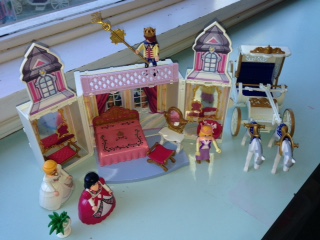
photo-9Well, we’re not sure what happened here, but it looks like everybody left for the weekend, lock, stock and barrel.  We can see we’re going to need some time to put this back together.

But we’ve got lots of other things to do on a Friday afternoon so we’re just going to allow ourselves a certain amount of time to locate the rest of the family and the furniture.  At home we might use our oven timer, but here at school, we’re fortunate enough to have a Time Timer.  Ours measures approximately 12 x 12 inches.


photo-8

The Kindergarten love the Time Timer.  They love it so much they’ll even remind us when we’ve forgotten to use it.

The Time Timer is a useful tool to help the children with their self-regulation, in much the same way as the visual schedule does, during our daily activities.  It’s a visual reminder for the Kindergarten to pace themselves during whatever activity they’re involved in, as they see the time ticking down.  Then the children know that we’re approaching a transition and it helps them to mentally prepare themselves for a change.

We like to make our day as predictable as possible to reduce any uncertainty or anxiety, so that the children can just enjoy learning and have fun with their friends.

We use the Time Timer in a variety of ways.

The first time we introduced the Timer was during the morning Activity Time.  When there’s a new Centre, such as new play dough, everybody wants a turn.  But there’s no way in 30 minutes of Activity Time that the whole class can each have a long enough turn to feel that they accomplished something.  So we started turns, or “shifts,” of 12-15 minutes.

When the quiet bell of the Time Timer rings, its a signal for all of us that the group’s turn is over and another one is about to begin.  A typical Activity Time has two shifts; we can accommodate eight children and we start a list of children who are interested in playing at the Centre for the next day.

Using the Timer was so successful in the morning playtime, we decided to also use it during the afternoon playtime as well.  Each afternoon we have a different focus, such as Literacy Centres, Puzzles or Construction Centres. Again, we might run two or three shifts, depending upon the rest of the day’s schedule.

An added benefit of the Timer is for the children who want to finish their work despite the fact Centre Time or the work period is over, and we’re transitioning to the next activity.  We like that it has removed the emotion that can come with our having to keep asking children to stop what they’re doing; instead, we can attribute it to the Timer’s bell signal that we all have to end the task.

We also use the Timer while the children eat during Snacktime  and Lunch hour.  It’s important that the children eat their food when they have the opportunity, to fuel their bodies so they have energy for the next part of the day.  Again, it’s a visual reminder about how much time they have left to eat before they go outside to play.

You can learn more about the Time Timer here.

We’re going to begin transitioning our classroom newsletter from paper to online for our Friday blog posts during the month of June.  We’re going to start exploring some different formats.  If you see something you like, and as importantly, what you don’t like, please let us know.  You can make a suggestion in the comment box below or just speak to us at school.  Thank you for your feedback!

Reading with Your Kindergarten Child: Establish an Atmosphere for Reading at Home

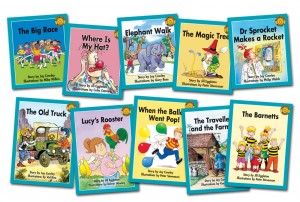
sunshine readersA few weeks ago we started a Home Reading Program for our Kindergarten classes.

It’s just a simple program of emergent books and readers, where the children independently select a book to take home to read with their parents three times a week.   We have our book exchange during Centre time.  We call the children over to choose their book by our “bookkeeping” method of the ziploc bags where we’ve written their names and keep the individual books.  After the children select their new book and put it into the ziploc, they place the book inside their backpacks to go home.

Home Reading is a fun opportunity for our students to read aloud books appropriate for their reading level to their parents. But it’s not meant to replace the nightly bedtime story.

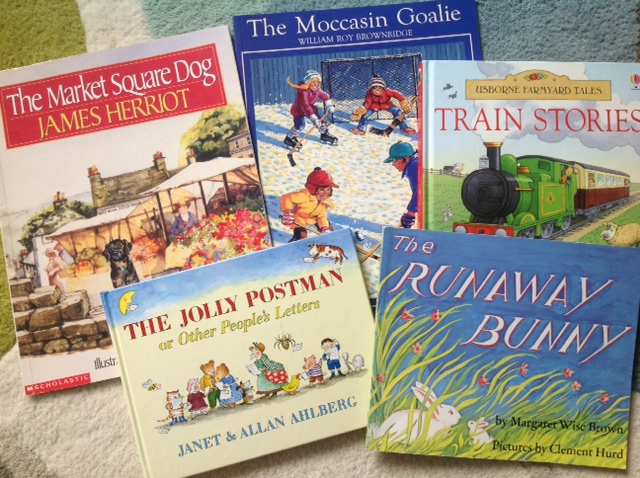
The cozy and comforting routine of a bedtime story is one of our strongest memories. We still have our childhood books: volumes of Mother Goose nursery rhymes, Fairy Tales, Just So Stories and Nancy Drew Mysteries; our favourite books include Anne of Green Gables, The Secret Garden, Little Women and Alice in Wonderland.

storybook

When our own children were born, reading the bedtime story was something we were so looking forward to doing. We were collecting storybooks to read aloud to our classes, and now we would also be able to share them with our children.

So what can you do to support your child’s love of reading and literature?

Create an atmosphere for reading at home

Books should have a place of their own at home, and be accessible at all times. Part of teaching your children to be a good reader and book lover is showing them how to care for books.  At school we have insisted on careful and respectful behaviour towards books.

  • Pick up a book carefully in one hand, or both hands if it’s a bigger book
  • Close the book when you are finished reading
  • Hold the book with both hands against your chest when walking with it
  • Put the book back on the shelf or book rack, right side up and cover facing out

Selecting books. When selecting a book, the most important thing is will your child enjoy it? Introduce new books regularly to your child. If your child has not already signed up for a membership at the Public Library in your community, now is the time. The Kindergarten children have been well taught by our Teacher-Librarian, and are able to conduct themselves appropriately in the library. This includes independently choosing a book.

Have a regular time and place for reading. Routines help us to get things done, and if it’s followed enough times it can, and will, become a good habit. For your nightly read-aloud, pick a time when you are ready to enjoy a story with your child. Many families read a story just before the children go to sleep in their beds. In our homes we sat on the sofa, with a child and book on each side. The bedtime story has to be a priority, more important than checking a Facebook newsfeed or watching “Sports Centre.” Being “present” with your child, enjoying one another’s company with a good story will make reading time very special for parent and child.

Regular modelling of reading by parents and older members of the household is essential. How do you see the role of reading in your life? To foster a love of reading, your children need to see you reading:   books, magazines, newspapers, recipes, comics and even work related documents. A lot of reading seems to be done via a personal digital device these days which is okay, but if you want your kids to read print, then that’s what they need to see you doing.

Choose books of different genres, such as Fairy Tales, poetry, wordless books, non-fiction animal books; and themes such as “Growing Up,” “Families,” holidays, personal interests and hobbies. Reading books of various lengths also teaches young readers that a powerful message or lesson doesn’t always need to be told through a long story.

At this early stage, most children are attracted to picture books or beginning chapter books which will need to be read aloud by you. These books can and should be above the children’s independent reading level. The books you are reading aloud will have the rich, diverse vocabulary and more complex sentence structure that will benefit your child’s oral vocabulary.

Finding books for your beginning reader to read independently is harder; that is how the home reading program tries to bridge the gap as we have access to the “little books” with simple vocabulary, predictable patterns and repetitive, rhythmic and rhyming language. Ask your community librarian to help you find books with these same characteristics at your local library.

We’ve written before that books are a gift that can be opened again and again. Why not consider establishing some new traditions around books like a special hardback book for each birthday with a special inscription from you? Instead of a big chocolate treat for Valentine’s Day or Easter give the joy of a beautiful book which will last so much longer, and just a small chocolate goodie. Suggest to friends and relatives that they also might give books as presents.

Our own children are teenagers now and moving into their senior years at high school this fall. Although we don’t read aloud stories or novels to them anymore, as families we still speak fondly of memories about books read aloud in the past.

Books, laughter, love…we’d call that some serious family bonding time.

Next week we’ll discuss reading to and with your child, and offer some suggestions on what you can do to encourage literacy awareness at home.

Source: “Language and Literacy in the Primary Years,” A Parents’ Information Booklet from Ridgeview Elementary (1997/98). Updated by The Self-Regulated Teacher at theselfregulatedteacher.wordpress.com (2015).


Fairy Tale Booklist and Royal Kinder Portraits

photo-5We told you last week that we had something very royal to show you.  But before we do, we wanted to share our growing Fairy Tale Booklist.  We’ve read some of these stories already, with more still to come.  We thought you might want to know some of the titles we’ve read up to this point, in case you wished to discuss them with your child.

Rumpelstiltskin (retold by John Cech and illustrated Martin Hargreaves)

The Princess and the Pea (retold by John Cech, illustrated by Bernhard Oberdieck)

Yummy : Eight Favourite Fairy Tales (Lucy Cousins)

The Balloon Tree (written and illustrated by Phoebe Gilman)

Chicken Little (Sally Hobson)

Once Upon a Golden Apple (written by Jean Little and Maggie De Vries, illustrated by Phoebe Gilman)

The Kissed That Missed (David Melling)

Cinderella Penguin or The Little Glass Flipper (Janet Perlman)

Aladdin and the Wonderful Lamp (Random House)

Hansel and Gretel (Random House)

Somebody and the Three Blairs (written by Marilyn Tolhurst, illustrated by Simone Abel)

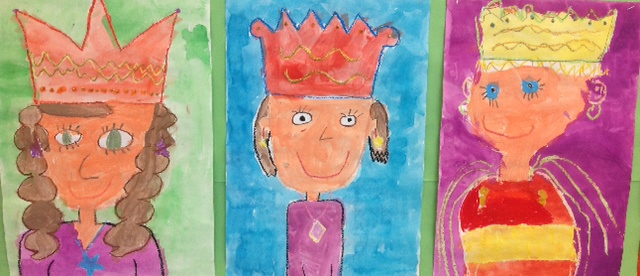
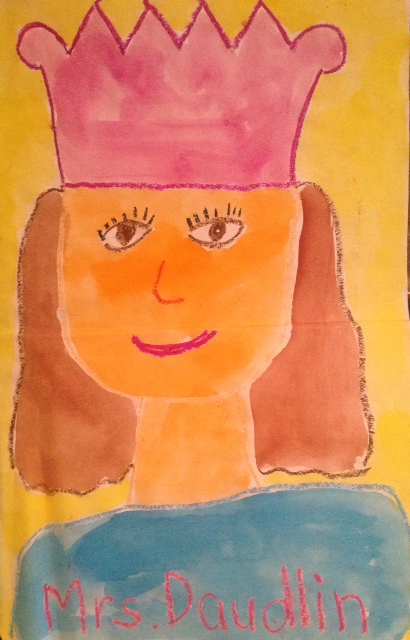
We’ll leave you here with what you’ve been waiting for…the gorgeous gallery of Fairy Tale Kinder Portraits.

From Deep Space Sparkle...

From Deep Space Sparkle…

Fairy Tale Royal Kinder Portraits

Fairy Tale Royal Kinder Portraits

Victoria Day

Our class began a new art project this week.  We started our theme on Fairy Tales and what better way to decorate our castle…uh, classroom, than with Fairy Tale Royal Kinder Portraits.   The children’s work is in progress and in a few days we should have something very royal to show you.

photo-4

photo-3


Fairy Tale Royal Kinder Portraits from Deep Space Sparkle

So from our castle to yours, enjoy your May long weekend.  Happy Victoria Day!

Kindergarten Art Auction Preview

Our Kindergarten classes have created some exceptional art pieces over the past few weeks.  This artwork has been specifically commissioned and designed for the Ridgeview Casino Night Fundraiser, a gala event for Ridgeview parents, and will be coming up for sale on Saturday, May 23, 2015.

Our paintings will be part of the Live Auction, along with artwork created by the other classes at our school.  Classroom parents will have an opportunity to bid on their child’s class’ artwork at this time.

We thought you might enjoy a preview of your child’s collaborative artistic creations.

photo-2

“Kinder Garden” by Division 16

Estimate:  Priceless

The term Kindergarten has a charming origin from the German educator, Friedrich Froebel (1782-1852).  Kinder means “children” and garten is “garden.”  Kindergarten can be literally translated to mean “children’s garden.”   Froebel took the term and used it to mean “a garden of children” and it was how he referred to young children as learners.

Froebel believed that each child was to be carefully nurtured, much like gardeners treat their plants.  Plants need to be placed in the right spot in the garden, with attention to soil, water, food and other environmental conditions.  Growing a strong and healthy plant is often a result of “the right plant in the right place,” an old gardeners’ saying. 

In the same way, in order to “grow” strong and healthy Kindergarten children, teachers work to create a calm, caring and supportive classroom environment for their young students.  We try to ensure we are giving them the time for play, positive attention, intellectual and creative stimulation, and the love they need in order to thrive.

So it is fitting that with parent helpers we were able to create our own “Kinder Garden.”  A classroom Mom sketched her design in pencil on a 14″ x 29″ canvas (measurements are approximate) and mixed colours for us using Artist’s Loft Acrylic Paints.

Our children were given specific sections to fingerprint.  We made a key with the names and fingerprints of every child so we know who painted each part of our painting.

We’re delighted with our efforts, and grateful to our volunteer parents who were able to help us create this gorgeous piece of art.  Our Kinder Garden is able to grow and flourish with support from our wonderful Ridgeview families.

photo 5

“The Senses” by Division 15 

Estimate:  Priceless

Our artist facilitator was a classroom Grandma!  We’d like to take this opportunity to “thank you” for her involvement in this very inspirational project.  Here is an excerpt from her description of “The Senses.”

“Our hope is that this work will remind the viewers to appreciate their senses and see the joy the children have in their expressions.

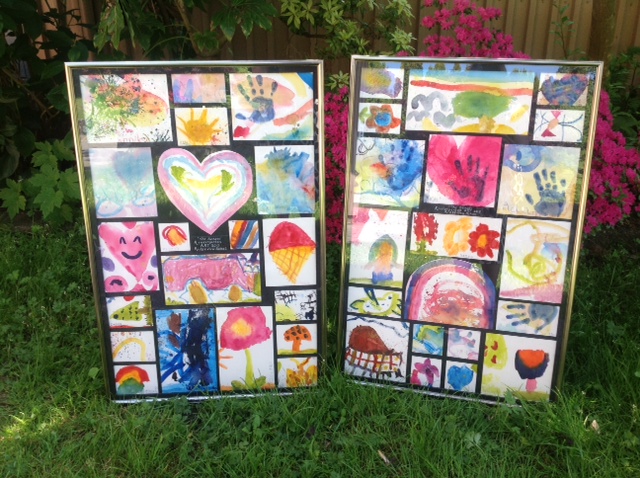
This Group Fine Art Watercolour Painting Collage was inspired by the class study of the five senses they use to interpret the world around them.

Each child was offered artist quality watercolour materials, instruction of various techniques, colour theory and an introduction to the concepts of the theme on two different weeks.  They spontaneously grasped the concepts of translating their personal experiences with taste, smell, touch, sight and hearing onto the paper….

A challenging process of editing and cropping their work to represent each student’s efforts was then channeled into these two pieces…..Each child has a large and a small painting, one in each frame so the whole class is represented in each.  There are twenty paintings in each frame, ten large and ten small with the opposite complement in the other frame.”

Please join us for this special night!

Ridgeview Parent Advisory Council presents:

Ridgeview Elementary Casino Night Fundraiser

Saturday, May 23, 2015, 7-11 pm

Ridgeview Elementary School

Tickets are $75 available at www.munchalunch.com

Email:  ridgeviewfundraiser.gmail.com

All proceeds directly benefit the children at Ridgeview Elementary School