Ridgeview Kindergarten Communication

We’ve been working to provide a variety of streams of communication for our parents so that they are fully informed about their Kindergarten children’s progress, classroom and school.

This year our Kindergarten students will receive three formal, written report cards at the end of each term, in addition to the Parent-Teacher Intake Conferences and Student Led Conferences.

However, there is also a great deal of information to be shared about the children’s daily activities in the classroom and important school events and programs.  Last December marked the beginning of an exciting journey for Christy and I as we launched our Kindergarten website and blog, theselfregulatedteacher.com.

Although we write this website and blog for our Ridgeview Kindergarten classroom parents, we’ve been delighted by the warm reception we’ve received from our colleagues and the wider digital education community.

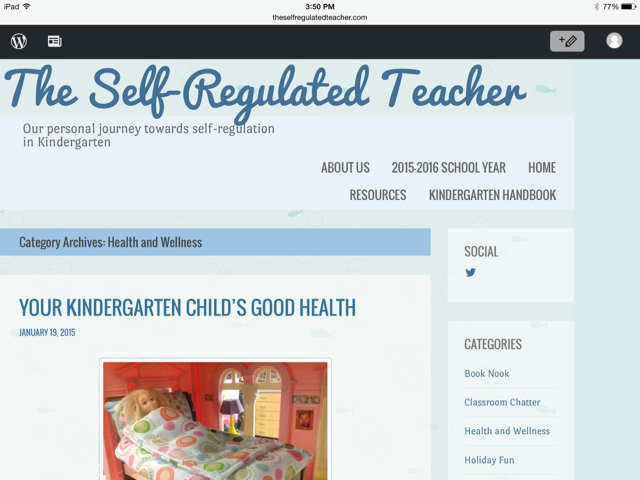
theselfregulatedteacher.com replaces our former weekly paper newsletter, incorporates our Kindergarten Handbook and blog posts.
IMG_1720

Blog Posts.  We usually post a new blog twice a week.  Sunday’s blog typically focuses on Kindergarten curriculum and Kindergarten related topics.  Friday’s posts will discuss what we’re doing in class, and include important classroom and school reminders and upcoming events.

About Us.  You can learn About Us, and our full story, “Becoming the Self-Regulated Teacher,” here.

2015-2016 School Year. All relevant information for this current school year, including links directly to the class newsletters, will be posted here.

Kindergarten Handbook.  We’re beginning to write, and collect in one place, important information for parents new to Ridgeview Kindergarten.  Here we give an overview of “how things work,” including school assembly expectations, playground expectations and recess and lunch routines.

Resources.  The foundation of our Kindergarten program is in the teaching and practise of self-regulation.  Under Resources there are links to self-regulation sites, a professional reading list and some of the supporting materials we use in the classroom.

Social.  Parents in our classes can subscribe to Remind to receive the text messages from their Kindergarten teacher.  But you can also follow us on Twitter @selfregteacher to learn when the latest blog has been posted.

Remind.  Remind is an app used by teachers to relay information to students (if they over 13 years of age), or in our case, parents of our students.  We use this app primarily for reminders such as Library Book Exchange or if the children need their runners for PE.  However, we also use Remind to send our parents the link every time we post on our blog.  Parents, if you have not yet subscribed to Remind and wish to receive the text messages for your Division, we sent home an instructions page with each student today.
FullSizeRenderThis Week in Our Room:  September 9-11, 2015

We’ve had a wonderful opportunity to get to know your children in the past three days through the Kindergarten Gradual Entry.  We’ve been able to carefully review the classroom expectations and daily routines, and practise them in a small group format.  The children have benefited from the slower pace as they’ve adjusted to their new teachers, classmates and classroom.

We are looking forward to beginning our regular Kindergarten program on Monday with our whole class.  Our children will need two snacks and lunch each school day, as we usually have a break in the afternoon, in addition to the morning recess.  Please note we begin at 8:50 am, although students are welcome to enter the main building at 8:45 am.

Please also pack an additional change of clothing to leave at school for your child in case of a bathroom accident, rainy day or playground mud.  You may leave it in a small bag to hang on your child’s cloakroom hook.

We spent some time going over the playground rules for Kindergarten.  The children know that although there are some areas of the playground they might be allowed to visit with their parents, as a class we would not be able to due to supervision concerns.  More information about the Ridgeview Kindergarten playground boundaries can be found here.

Reminders:

Today the verification packages were sent home.  You’ll need to complete these forms and return them to school.  Please note that the adults you designate for your emergency pick-ups does not preclude you from informing us if you are not picking up your children on a specific day.  We like to know specifically if you are not meeting your children at the end of the day so that we can ensure their safety by releasing them to the correct adult.

We sent home the September Homework calendar today.  Please consider doing these fun little homework activities, check each one off and bring it back completed for a sticker on October 1!

Parent-Teacher Intake Conferences will be held for Kindergarten students only on Thursday, September 17 and Friday, September 18.  Dismissal will be at 12 pm for both days.  Today we sent home the Developmental Questionnaire for you to complete for your child.  Please bring this questionnaire with you to school for your scheduled conference. The sign-up schedule will be posted outside of our classrooms on Monday.

We begin our interviews at 12:10 pm so please pick-up your child promptly on our conferences days.  If you are not here to pick up by 12:05 pm, please collect your child from the school office.

Setting Up the Self-Regulated Classroom

Although it’s the first day of school across British Columbia, here in West Vancouver our Kindergarten children do not start school until tomorrow.  Their Gradual Entry Program begins on Wednesday when we will welcome small groups into the classroom over the next few days, and provide the children with time to familiarize themselves with us, the classroom routines and their new classmates in a gentle and unhurried manner.

For the past week we’ve been busy setting up our classrooms, and we’ve been doing so with an eye to the children’s self-regulation.

Of course we will be specifically teaching the children about the Zones of Regulation, identifying feelings and emotions and exploring mindfulness.  But there are also some things we can do to prepare the physical environment of our classrooms to support self-regulation.

Stuart Shanker, in Calm, Alert and Learning: Classroom Strategies for Self-Regulation, reminds us that a classroom environment with reduced visual and auditory distractors can help students to concentrate better.  Here are some of his main points, and what we’ve been doing in our classrooms.

Lots of natural light.  We both have lots of windows to appreciate the natural light which flows into our classrooms.  Sometimes we will lower the blinds but in the “open” position so we can still have light.  Our windows also have a special reflective coating on them so the children can see outside; however, others are unable to see in.

Minimum of artificial light.  We keep the overhead lights IMG_4498“off” in the classroom generally, although the grey, cloudy days make the room quite dark.  Sometimes one bank of lights turned is on because it’s necessary for reading and printing!  We’ve purchased several lamps (or cast-offs from home) to provide some atmosphere and they make the classroom feel warm and cosy.

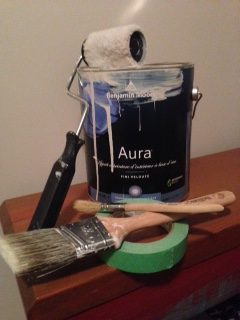
Soft paint colours in a non-gloss finish.  As teachers we don’t often have a lot of choice in the paint finish of our classrooms; we both have the standard “white.”  Christy’s cupboards are a soft blue and mine are naturally finished so we are fortunate in that regard.  We’re just happy to freshly painted classrooms and that our classrooms schools are beautifully maintained by our District Facilities group.

IMG_1654No vibrant colours.  Not living with colour in the classroom is something we have both struggled with.  We love colour:  colour energizes us, inspires us, provokes creativity, brings us happiness, and is necessary for our mental well-being.  We know there are many self-regulated classrooms which have gone with a neutral colour scheme, but that wasn’t for us.  We spend many hours in our classrooms so our compromise has been to decorate our classrooms in a blue (to suggest the sky or ocean) and green (to suggest fields and forest) colour scheme, both of which bring a sense of calm and tranquility to our teaching, and therefore, the children’s self-regulation.

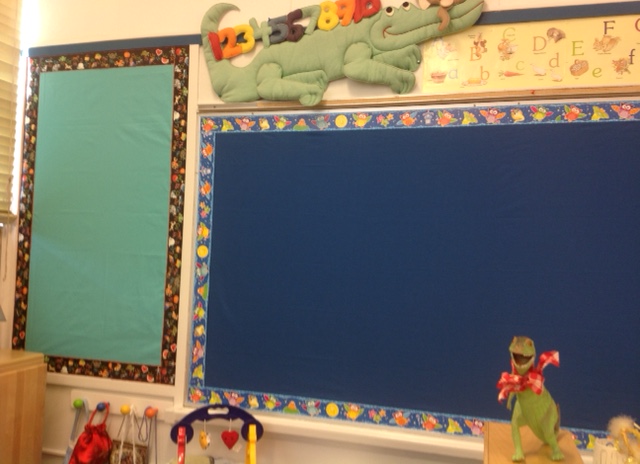
This year we also tried something different.  Instead of using paper to cover our bulletin boards, we used broadcloth to help absorb the sound better, plus being more environmentally responsible as fading should be less and the fabric won’t need to be replaced every year or two.

IMG_4500Organise everyday materials and put away other supplies.  In continuing with our blue and green colour scheme, we have primarily blue and green baskets to organise the children’s table school supplies, plus some pink for fun.  We place all daily school supplies (crayons, gluesticks, scissors, felt pens) in their baskets in a designated, labelled bookcase, and teach the children in the first weeks of school how to give out and put away the baskets.

The rest of the children’s school supplies for the year are stowed away in the cupboards.

We use clear tubs of for organizing Math manipulatives and Activity Time toys and shelving/tub systems for areas such as the Imagination Station.

Reduce wall clutter.  We don’t like any kind of clutter; we find it overstimulating and not helpful in our own self-regulation.  We use our bulletin boards for displaying student art work.  The children, and us, need to be surrounded by the beauty of their own creations, and to develop an appreciation of their own, and others, efforts.

We display only what we deem essential:  Alphabets, number line, our Math Their Way calendar, math rotation groups and the Visual Schedule.  Although we are often printing Alphabet letters, recording our brainstorming and demonstrating art projects, these charts usually come down or are put away soon after we’ve finished using them.

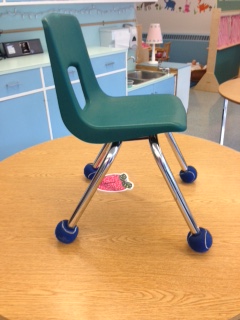
IMG_4502Tennis balls (“Hush-Ups”) on the chairs.  The sound of the chairs banging against the table legs and floor was one we endured for many years until we were able to order these “Hush-Ups”  through a Parent Advisory Council (PAC) grant for self-regulation materials last year.


Carpets on the floor.  My classroom is carpeted so the noise level is generally quite low.  Christy’s classroom is not carpeted but she was able to purchase, through the PAC grant, additional small carpets for some of her play areas to reduce the noise.  All the teachers in our school were fortunate to be able to select a beautiful, decorative carpet for our classrooms, paid for by our PAC.

Room organisation.  Although it seems logical that every classroom needs a quiet area for Meeting Time, sitting and discussion, the physical classroom itself does not always lend itself easily to determining where that might be.  Our Alphabet carpet area is the quiet space, and we’ve tried to surround it with low storage units or bookcases and the Special Helper’s chair to make it feel safe and enclosed.  We both have our quiet space deep into the classroom and well away from the door to help eliminate unnecessary distractions.

Well, our classrooms are ready, supplies are in their baskets and the activities are on the tables for the children.  We’re all ready for the Kindergarten and looking forward to facilitating their new journey as self-regulated learners.


Summer Play

IMG_4063It’s been a glorious summer here in Vancouver and we’ve certainly been taking advantage of all this holiday time has to offer to play.

We know that children need lots of time for unstructured play where they can use their imagination, explore and engage in conversations with others.

Well, what about adults? We need unstructured play time as well. It’s not just about sports and physical activity, although a lot of people might default to that definition.

What other kinds of activities can we do which allows our thoughts and ideas to roam free, where we might use our creativity?

Since the beginning of April, we’ve been playing in our gardens, designing, planting and caring for our plants. We both love perennials, but the hot summer weather has made looking after them very challenging. We’ve been resourceful with our limited water supply for the plants (using partially finished glasses of water and water bottles, and recycling the old ice from the ice maker in our freezers), while allowing the grass to go dormant. It’s been a joy to visit the gardens of family, friends, parks and the community and see the creativity and love that’s been poured into these welcoming spaces.

We’ve been playing in our homes, cleaning from top to bottom IMG_4413and purging unnecessary items. After our end-of-the-school-year “classroom clear out,” we often find it hard to relax right away so we carry that energy into our houses and start sorting, organizing and tossing. Although not everyone enjoys this kind of activity, we find it extremely therapeutic. A lot of stress seems to subside when there is less to maintain and clean. We’ve been painting, rearranging furniture and decorating to ensure every room is a calm and peaceful place to be.

We’ve been playing hard in the kitchen. Cooking for teenagers, particularly a teenage son who resembles an eating machine, is endless. The teenagers can’t help it if they’re hungry all the time; they’re growing and playing hard themselves. So the past few weeks our kitchen has seen some intensive cooking and baking lessons for the teenagers, as well as the advanced “washing/drying/loading the dishwasher with everybody’s dishes, not just your own” course. We’ve only had a few mishaps: sorting out the differences between “muffin method” and “cake method” mid recipe; no texting while frying; and going from “golden” to “burnt” can happen quickly if you’re not being mindful. It’s actually been really fun and we’ve shared a lot of laughter.

There’s been lots of other kinds of playing going on as well. We’ve had a lot of music being sung and played on instruments. We’ve been drawing and crafting. Even writing this blog post is playing–with words, phrasing and humour.

So what is play? Something we do, or a state of mind?

Below is a reblog of an earlier post we wrote, on the importance of outdoor play for our children.

thekinderteam's avatarThe Self-Regulated Teacher

IMG_1120It was brought to our attention recently that Rick Cluff, host of the CBC’s Vancouver morning show “Early Edition,” had a segment on this year’s ParticipACTION Report Card on Physical Activity for Children and Youth.

Rick spoke with Allana LeBlanc, an exercise physiologist, who works with ParticipACTION. Here are some of the main points we were able to take away after listening to the podcast ourselves and looking at the highlights from the ParticipACTION report.

“The Biggest Risk is Keepings Kids Indoors.”

The report explains that children need 60 minutes a day of physical activity, but their surveys on how much activity kids (5-17 years old) actually get indicate that only 9% of Canadian children meet the criteria.

This is a complex situation because it’s not just about the lack of physical activity, but the increase in sedentary behaviour.  Kids just aren’t moving around like they used to with more…

View original post 777 more words

Reading with Your Kindergarten Child: Literacy Awareness – A Book is More than a Story

IMG_0238Summer Travel and Reading

We’ve both been travelling with our own families this summer to places near and far, and the topic of “what to pack” inevitably comes up as leaving day approaches. Besides clothes, shoes and a small collection of handbags, there’s going to be few other things to consider depending upon your family’s composition.

For families with very young children, you will probably need to bring the travel baby stroller, car seat and travel cot. We watched in awe as a young family consisting of mom, dad, infant twins, twin 3 year- olds, two baby bucket seats and a double stroller, sat opposite us on our flight. So very brave.

For families with school-aged children, stuffed animals and a few favourite toys are necessary items for travel and as a reminder of home.

For those of us with teenagers, you might think it’s just a big collection of personal devices.

guidesWell… although my family did bring their iPhones and iPads on our most recent holiday (I can’t tell you how many we brought of each because it’s embarrassing and possibly contradicts what we’re writing about), we have a surprising amount of reading material. Between the four of us we have eight books, a Kobo reader and the Globe and Mail from the morning we left Vancouver. Plus, we’re receiving and reading the daily local paper and reading numerous guidebooks and brochures we picked up along the way.

From our gorgeous holiday location, one might wonder, “Why are you reading when you could be outside doing other things?”

Although we are thoroughly enjoying daily all of the outdoor pursuits our holiday has to offer –swimming, boogie boarding, paddle boarding, snorkelling, walking, hiking, zip-lining–we still think it’s pretty awesome that our teenagers love to read and chose to pack books to bring with them.

The kids read on the plane, at night before they go to bed, and yes, we’re all catching up on a bit of American Netflix at the hottest part of the day, but we’re also reading a lot. When I look around during a quiet moment here in our condo, and see that everybody is reading as a personal choice activity, I’m happy and satisfied with the decisions we made when our kids were young.

We’ve been readers our whole lives and sharing the love of reading as a pleasurable pursuit, and fostering and modelling a love of reading at home with our children, has always been one of our highest priorities.

thekinderteam's avatarThe Self-Regulated Teacher

photo-10Do you love reading as a pleasurable, down-time activity?

Do you have a list of books to read that will take at least two lifetimes to complete?

The importance of regular modelling of reading by all us, parents and teachers, cannot be taken too lightly.  The children are looking to us to see if we place a high value on reading through our words and actions.

Last week we wrote about creating a home environment that places reading as a priority to foster a love of reading and literature in our children.

As teachers, our students see us reading a lot.  From the attendance form to story time books, teaching books to charts and labels, our students see us doing a great deal of purposeful reading in our day.

Here are some things we think about as we are reading to and with our students that you can do during…

View original post 762 more words

Reading with Your Kindergarten Child: Establish an Atmosphere for Reading at Home

IMG_4073School’s out, our classrooms are tidied up and we’re officially on holiday, and that includes writing for our blog! But we’re reposting some great articles over the next two months that you may have missed, to read and catch up with the website.

With the summer break and the hot weather we’re having right now, we love to spend some time out of the sun doing one of our favourite activities: reading. Just the thought of freedom to read whatever we want, for as long as we want, is a delicious moment to savour! It’s a great chance to visit your local library, favourite book stores, or even peruse old favourites from your home library, for reading material.

Exploring secondhand bookstores is another fun thing to do with your family. We both love to buy old books to complete collections of series we started in childhood (I own every copy of the original 65 Nancy Drew books; and Christy, the entire A.A. Milne Winnie the Pooh series); or old copies of a favourite English series, Thrush Green by Miss Read, wonderful books about a fictional Cotswold village. The two schoolteachers, Miss Watson and Miss Fogerty, remind us that although our methods and curriculum might have changed, the sheer delight in working with young children remains the same.

Visiting new and used bookstores while we travel is a must. If you’re in Victoria, British Columbia, you must visit Russell Books, on Fort Street. It’s just up a few doors from the delectable Dutch Bakery where you can indulge your sweet tooth.

If you’re going down the coast, Village Books in Fairhaven, Washington, is a great destination. They have a wonderful children’s book section, and a lovely gift shop with an old fashioned candy area.

IMG_4067For those travelling through Oregon, you have to go to Powell’s Books in Portland Oregon. Go upstairs to the coffee bar for a coffee and cookie–absolutely fabulous! Warning: we spent only a morning at Powell’s and felt rushed. If you have a family of book lovers, you’re going to need time as it is takes up an entire city block! We bought 18 books on our last visit, and Christy’s family a mere 14, and getting down to those numbers was a huge challenge at best.

So now that you’ve bought all your books, time to start reading at home.

thekinderteam's avatarThe Self-Regulated Teacher

sunshine readersA few weeks ago we started a Home Reading Program for our Kindergarten classes.

It’s just a simple program of emergent books and readers, where the children independently select a book to take home to read with their parents three times a week.   We have our book exchange during Centre time.  We call the children over to choose their book by our “bookkeeping” method of the ziploc bags where we’ve written their names and keep the individual books.  After the children select their new book and put it into the ziploc, they place the book inside their backpacks to go home.

Home Reading is a fun opportunity for our students to read aloud books appropriate for their reading level to their parents. But it’s not meant to replace the nightly bedtime story.

The cozy and comforting routine of a bedtime story is one of our strongest memories. We still have…

View original post 835 more words

The Self-Regulated Teacher’s Top 5 Posts for Term 3

I’m attending the 2nd Annual SRL “Inquiry Hub Summer Institute:  Developing Self-Regulating Learners” at UBC from July 2-4, so follow us on Twitter (@selfregteacher) to hear what’s happening!  It’s going to be an amazing opportunity to meet other like-minded teachers who are interesting in learning about, and teaching, self-regulation skills to their students.

IMG_1418Bouquets

We have bouquets of thanks to give to those who have supported and encouraged us along our Self-Regulated journey.

Our dear friend and colleague, Cari Wilson (@kayakcari) West Vancouver District Innovation Support Leader.  Cari, thank you for your generous friendship.  You gently pushed us out of our comfort zone, and held our hand along the way.  Of everybody you supported this year through your Tech Job, we were probably your toughest gig:  you taught us the “two finger scroll” on a laptop (who knew?); and you didn’t seem to mind the 83 texts conversations!  Although you’ve now passed the “tech torch” on to Christy, we’re still learning and thanks for being there for us.

Our wonderful Ridgeview Principal, Mentor and Friend, Valerie Brady (@valeriejbrady) for your inspiration, guidance and continued encouragement.  Thank you for your endless patience every time we showed up at your office door with “just one more idea to run past you,” and for the numerous times we asked you to read and edit our draft posts (typically the day of publication) and you always so graciously helped us out.

Our West Vancouver (No. 45, not No. 44) Superintendent Chris Kennedy (@chrkennedy), for your praise and support in bringing attention to our blog and website.  Thank you for the time you spend reading our writing and tweeting out about us!

My husband, Brad Daudlin, WVSS Secondary Vice-Principal (@jbwdaudlin).  Thank you for continuing to be my sounding board and coaching me on the social media part of our website. You’ve helped me to find clarity in our goals, determine our audience and their needs, and to visualize the “look” of the website.  It’s exciting to still be working on projects with you after all our years together.

Christy’s husband, Andrew Campbell. Thank you, Andrew, for enduring the numerous hour long phone conversations, the 131 text message conversations before 9am on the weekend, and taking the messages for “Rainbow, or Cheese, Goldfish crackers for Sports Day?” We appreciate the “quick pick up” at Michael’s Craft Store for the much needed pompoms, Sparkle Modge Podge, and cardstock. Your behind the scenes work has allowed us to be able to write and work on our blog.  We both thank you so very much!


IMG_1411We can’t believe it, but today is our 50th post!  It’s also The Self-Regulated Teacher’s Top 5 Most Read Posts for Term Three, so don’t forget to add us to your summer reading list if you missed these posts earlier this year.

Math, the Kindergarten Way

Christy and I are advocates of Math Their Way, the child-centred, manipulative based mathematics program for young children.  It’s always been at the core of our math programs, whether we taught Kindergarten or Grade Three.  Math Their Way uses a hand-on approach to teach and develop concrete mathematical concepts first, then makes the learning connections to abstract symbols.  Starting with Free Exploration, we teach the careful use of manipulatives, working in a group and rotating between math centres.  From there, we move on to teaching Patterns and Number.

About Us

It continues to amaze us that so many people have read About Us!  Christy and I are Kindergarten teachers in beautiful West Vancouver, British Columbia.  We’ve taught Kindergarten since 2006, starting as half-time teachers in the half-day program, for five years.  When the Full-Day program was implemented at our school in 2011, we had enough enrolment for two classes so we decided to end our job-share to each take a classroom and teach our own class.  If you’re interested in learning about how we started this blog and website, we’ve added Our Story:  Becoming The Self-Regulated Teacher to the About Us tab.

Why We Need to Say “Yes” to English Language Learning for Kindergarten Students

We were privileged to have Donna Neilson, West Vancouver School District’s English Language Learning Resource Teacher, speak to our parent group in January of this year.  Donna answered some key questions ELL parents have about their children, regarding ELL instruction, additional tutoring and loss of classroom time for pull-out programs.  Donna compares learning English to the visual of an iceberg:  the children learn conversational English in 1-2 years, which is the tip of the iceberg.  But it is the academic English, the base of the iceberg that we cannot see, and which the children need for the later grades to cope with the reading and writing expectations, that takes 3-7 years to learn.

A Day in the Life of Kindergarten

A Day in the Life of Kindergarten is exactly that:  a description of how we run a typical day of Kindergarten in our classes.  Although this was not a blog post, but part of our Kindergarten Handbook on The Self-Regulated Teacher website, we’ve had a lot of interest in this piece of writing.  We wrote this originally for our current classroom parents, and incoming K parents to our school, so they would have a better idea of the routines and activities their children do all day.  If you are a new Kindergarten teacher, you may find it helpful to read our explanation of how we organize a Kindergarten day.

This Week in Our Room, June 22-25, 2015

This is our last classroom newsletter for the 2014-2015 school year.  It’s always bittersweet to say good-bye to our Kindergarten classes as we grow so fond of them, but we also know it’s time for them to move on to Grade One.  We give a run-down of our last week at school, from our Beach Bubbles Year-End Party, to our role in the Grade 7 Promotion Ceremony, to a brief explanation of the fabulous schoolwork our children have brought home to show their parents.

We will be re-posting some of our earlier blog posts this summer while we’re on holiday.  You can follow us on Twitter (@selfregteacher) to find out when they’ve been posted.  But we’ll be back in September, writing about our new classes and more to do with Kindergarten.

Andrea and Christy

The Gift of Mindfulness

IMG_1449School finished yesterday, the children have gone home for the summer and the classroom is empty.

But we’re starting the final clean-up and it’s time to put away the dollhouse.

It’s tidy…and looks so clean.  And a much neater place than the rest of the classroom (who owns all this stuff, anyways?). It’s a tiny piece of calm right now.

We’ve always known that the state of the dollhouse is reflective of how we’re doing.  What a wonderful place for those children to be in their thoughts and minds, where they could demonstrate their feelings about how they felt exactly at that moment as they finished playing with the dollhouse.  They must have felt very calm and relaxed.

Have you ever noticed how some people are just so incredibly calm?  Even when it’s the height of busyness all around, and you’re starting to feel overwhelmed, these special individuals exude calmness. You feel better when you’re around them, listening to them speak and realizing “everything’s going to be alright.”  What is it that makes these folks so calm….and peaceful?

We believe mindfulness is the key.  The mindful person is always in the moment, living in the present and just enjoying every feeling, thought and spoken word that is happening right now.

At a workshop presented last year by one of our district counsellors, Dr. Aron White explained mindfulness as a means of paying attention in a particular way, purposefully being in the present and non-judgemental.  Derived from Buddhist traditions, Dr. White described the three core components of mindfulness as attentive awareness, receptive attitude and intentionality, which can be cultivated in any situation or environment.

When we are mindful, we want to stay in the present.  Being caught up in the past, worrying about the future, or just being on “auto-pilot,” leads to a preoccupation in our thoughts with things, instead of experiencing them.  We lessen our experience of contentment, peace or even fleeting happiness if we are wishing for our circumstances to be other than what they are.

So what can we do to cultivate mindfulness in our classrooms through everyday teaching?

Take some time everyday to be mindful of the present.

In our classrooms, that means creating a routine to practise controlled, deep breathing sequences as a self-regulation strategy for the children to quiet themselves, and focus their minds on the here and now.  We build our stamina, starting in September for about 45 seconds, to the three minutes where we are now at the end of June.

We’ve managed to keep this routine fairly consistent so that everyday after the morning recess, the children gathered in the meeting area to listen to quiet music and were led by us in mindful breathing.  The children get ready by sitting cross legged, a straight back and eyes closed or looking down.  It’s a routine we teach and continue to refine and reinforce all year.

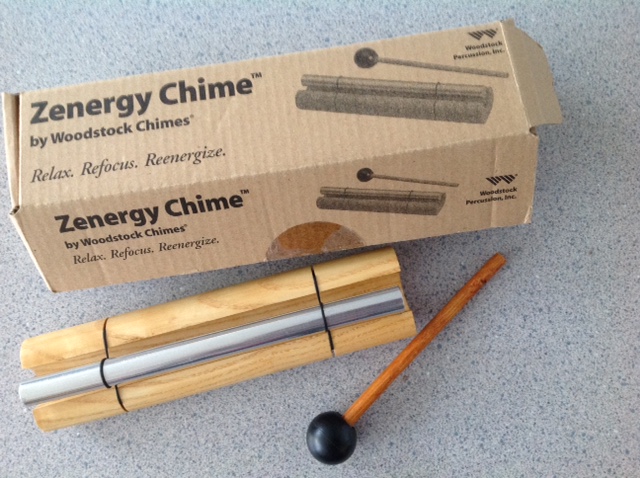
IMG_1441A change-up to this routine is to use a Zenergy chime at the beginning and end of each deep breathing sequence instead of music.  When we use the chime, we call it the “Core Practice,” which is part of The MindUp Curriculum.  We play the chime once, and ask the children to focus on the sound until they can’t hear it.  Then we start the deep breathing sequence, and meditate on moments of pure quiet and calm. We end with playing the chime again, being mindful of the sound, and the children are to keep their eyes closed until they can no longer hear the chime.

We don’t watch the children as they’re breathing; that would be a distraction.  Instead, we’re modelling the behaviours we expect from the children.  We’re using this time for ourselves to focus on the present, and to be mindful of where we are and what we’re doing.  We feel as refreshed as the students, calm and peaceful, and it makes a positive difference to our teaching.

We talk about being mindful quite often, and within the context of the classroom and playground.  We want the children to be aware of their words, actions and surroundings as they move through their day and how those same words and actions affect not only themselves, but others as well.

A wise Kindergarten child once shared that when we’re focused or concentrating on what we’re doing, we’re not thinking about anything else.

Calm.  Peaceful.  Mindfulness.

FullSizeRender (1)

Today’s post was inspired by our Ridgeview Principal, and dedicated to our dear Education Assistant who retired this June.  From our hearts to yours, we will miss you.

This Week in Our Room:  June 22-25, 2015

We are moving on to Grade One!

We are moving on to Grade One!

A Good-bye for our Kindergarten Students

It’s the last newsletter of the school year, and it is always with mixed feelings that we write the final one for our current classes.  We’ve had a wonderful year with our Kindergarten children.  They’ve been absolutely fabulous and we have so enjoyed coming to school every day to teach them.  We appreciate, so very much, our classroom parents, and their support and help throughout the year.

This morning as we were having our final Meeting Time, we shed some tears.

When you’re a Kindergarten Teacher, you take care of your students.

You love your students.

You teach your students about self-regulation, making friends and cooperating with others.

You teach your students a love of language and literature.

You foster creativity, curiosity, and an appreciation of logic and how to make sense of the world.

You help to establish a solid foundation upon which to build a lifetime of learning.

And then you let them go.

And you cry because these children have been your little school family for a year.  We’ve loved them like they were our own children.  But you can’t stop them from growing up and moving onto Grade One.

We wish everyone a happy and safe summer, and look forward to seeing you back at Ridgeview in September.

This Week

IMG_1401Beach Bubbles Party

It was gorgeous Monday morning for our classes to enjoy their end of the year, “Beach Bubbles Party.”  We opened both classrooms and the playground between our rooms for all the Kindergarten children to mix and move freely in the three areas.  With the California surfer music of the Beach Boys playing in the background, and the bubble-making machine going full tilt, our water tables, bubble blowing centre, sand and shells table were in steady use.  Some children enjoyed colouring and rubber stamping on a sea theme, while others were involved in imaginary play with sea creature figures.  We ate ice-cream cones with sprinkles in the afternoon.  It was pretty much a perfect day!

Grade 7 Promotion Ceremony

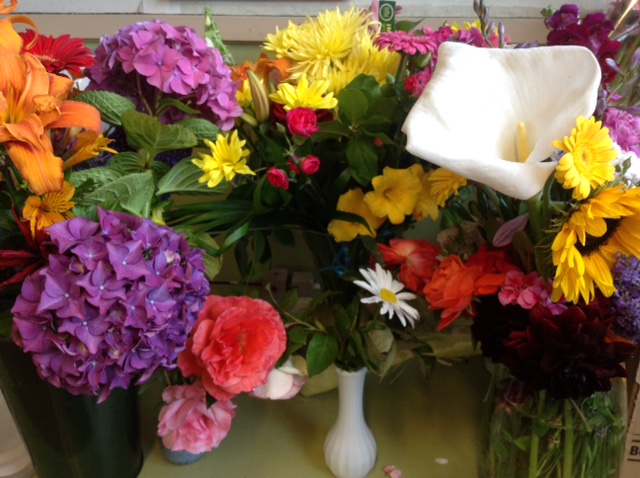
There wasn’t a dry eye in the house as our most senior students each received a flower from their Kindergarten Buddy during the Grade 7 Promotion Ceremony on Wednesday.  Our Buddy Classes have met weekly this year to make seasonal crafts, read stories, and work on digital projects together, so we know them well and have a strong relationship with them.  As we watched the Big and Little Buddies walk down the centre aisle hand-in-hand, Ms. Cari Wilson, one of our Grade 7 teachers, called us the Grade 7 graduating class of 2022.  That brought tears to our eyes, as it reminds us how quickly time goes by and how precious these days are when our children are young.

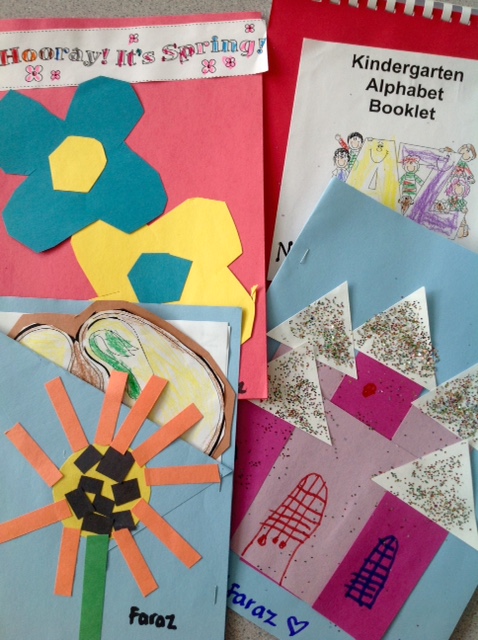
FullSizeRenderA Treasure Trove of Student Work

We don’t send home a lot of student work through the school year.  Instead, we’ve been saving it all up to make the beautiful scrapbooks for our Kindergarten children!  We’ve kept the best of the best all year and organized the children’s work into a monthly format of their artwork, writing and cute little crafts.  Each month starts off with their self-portrait and you can follow your child’s progress through the year and see the noticeable improvement in their printing, drawing and cutting.

From our blog posts, you know we also completed some fun units on the 5 Senses, Fairy Tales and Growing Things (plants).  The children also have their Alphabet Book, Writing and Math notebooks to bring home as well.  We’re so very proud of everything they’ve accomplished this year!

Reminders

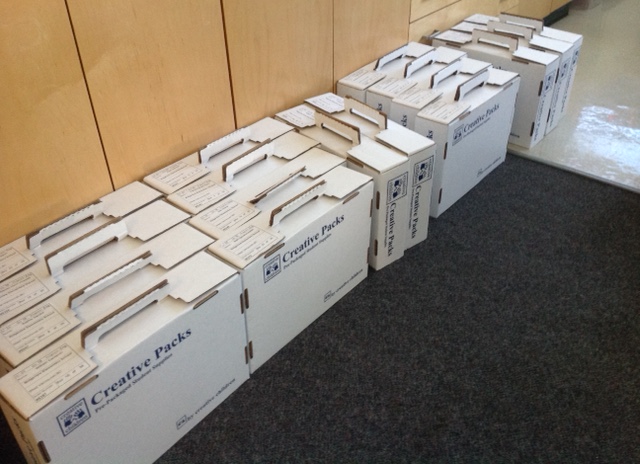
Students who received Creative Children school supply orders for Grade One:  we attached a note about how to label your school supplies for Grade One.  Here is the information again.

Please label for your incoming Grade One child:

Each individual pencil crayon, crayon and felt pen

Whiteboard markers

2 pencil boxes

Scissors

Pastels

Scrapbook

Please do not label notebooks, duo tangs, erasers, glue, or pencils.

Outdoor Play

IMG_1120It was brought to our attention recently that Rick Cluff, host of the CBC’s Vancouver morning show “Early Edition,” had a segment on this year’s ParticipACTION Report Card on Physical Activity for Children and Youth.

Rick spoke with Allana LeBlanc, an exercise physiologist, who works with ParticipACTION. Here are some of the main points we were able to take away after listening to the podcast ourselves and looking at the highlights from the ParticipACTION report.

“The Biggest Risk is Keepings Kids Indoors.”

The report explains that children need 60 minutes a day of physical activity, but their surveys on how much activity kids (5-17 years old) actually get indicate that only 9% of Canadian children meet the criteria.

This is a complex situation because it’s not just about the lack of physical activity, but the increase in sedentary behaviour.  Kids just aren’t moving around like they used to with more access to television and video games.

“Get out of the way and let kids play.”

One of the findings of the report is an increased fear of allowing children to play outdoors unsupervised.  We want to protect our kids and keep them safe from harm. Yet, when our children do play outside unsupervised, they take more risks, independence increases and physical and social skills can improve.  There is a difference between “danger” and “risk” and certainly no one is advocating dangerous or reckless behaviour.  But children need to be allowed a certain amount of freedom to test their personal boundaries.

ParticipACTION has also written a “Position Statement on Active and Outdoor Play,” and makes recommendations for children to have access and freedom to outdoor play and to play in nature, in all childhood situations from home to day care to school. This statement applies to all children from 3-12 years old.

Children who play outdoors, in a natural playground that includes dirt and sticks, are more active than when playing on a pre-fabricated playground.  In fact, children who take PE outside, are more active than when they play indoors.

Sometimes we think it’s safer and healthier to keep our children inside where we can closely supervise them.  But it’s not.  There are many risks to staying indoors: our children will not learn the fundamental movement skills of running, kicking, throwing and jumping.  They need these skills for their healthy growth and development; without physical activity, there is an increased risk for health concerns down the road.  We need to teach our kids positive health habits for their life time.

Click here to hear the original CBC podcast.

We’re very fortunate at Ridgeview to have a natural playground.  Located beside our adventure playground, the natural playground has a variety of shrubs; a long, shallow, meandering creek with slow moving water and rocks for crossing, and large trees with overhanging branches providing shade and cooler temperatures during these warm days.

In the beginning of the school year, our classes use only the adventure playground during the morning and lunch recess, with adult playground supervisors in attendance.  When school starts in September, we typically have 40-44 four- and five-year old children between our two classes.  Since the full-day Kindergarten program started, our children have their own recess time in the morning, after Grades 1-7 have finished their playtime. We’re fortunate to have school administration who understand the needs of young children and have specifically allotted resources to enable this to happen for the entire school year.

The children still have their lunch recess with the rest of the school and when we take an afternoon recess playtime, we are often joined by some of the other classes.  Our school population is currently > 400 students.

As part of learning to play, inside or outdoors, we establish classroom rules and routines, create a self-regulated classroom environment and directly teach the expectations and behaviour we want first, and we teach them as a whole group.  Kindergarten children come to us with a wide variety of preschool, daycare and home experiences.  Kindergarten is the first opportunity to develop a constant model for self-regulation and behaviour for the next eight years at our school.  Our teaching experience has taught us that when we have the respect, rules and safety expectations in place, then our students can have freedom within those boundaries, and we can all have a fun and enjoyable time.

Our only rule for the natural playground is that the children who want to play in the creek wear their rain boots, so they can still have dry socks and shoes to wear in class.  You’d be impressed to see how quickly children can change their shoes and boots when the recess bell rings.

Now here we are in June, and we’ve seen some amazing outdoor play.

We’ve seen children crossing the rocks across the creek, arms outstretched for balance.

Children are scrambling up the banks of the creek, clinging to shrubs.

We have children endlessly filling up and emptying containers and ziploc bags with creek water.

We noticed that a group of children has engineered a shallow trough down the length of the creek, right in the middle.

We see children running, jumping and negotiating their way around big tree roots.

Yes, we’ve had some tumbles and lots of scrapes, but nothing that a hug, a band-aid and a drink of water couldn’t fix.

And we also know that the closer the connection our children have to nature and the outdoors when they’re young, the more likely they will want to protect and look after their environment when they grow up.

This Week in Our Room: June 15-19, 2015

The Queen is off duty!

The Queen is off duty!

Prince and Princess Day

We had Prince and Princess Day, and all things royal, on Tuesday this week.  It was marvellous!  Just so much fun with a delightful, might we say, adorable, group of tiny princes and princesses.

Among the many wonderful aspects of teaching Kindergarten, is how the children really embrace any idea or suggestion for a new and fun activity.  We’ve been hosting a Prince and Princess Day since our job-sharing days, and again the children did not disappoint.

What fun to open the door and see so many princesses in gorgeous gowns, and handsome Knights and princes at every turn.  The children who didn’t want to wear a costume still came dressed up in lovely dresses or smartly dressed in pants and button down shirts.

We started off with a heap of giggles as we greeted each child, as we do every morning, during the attendance with, “Good Morning, Princess Nelli,” or “Good Morning, Prince Ryan.”  The children could barely speak because of the laughter as they each responded back, “Good Morning, Princess Mrs. Daudlin.”  That was their own idea, and it really set the tone for our fun day.

The Royal Family, as we called ourselves all day, went on to “the Royal Centres,” followed by the “Royal Meeting Time.”  We wrapped up our fairy tale unit with “Hansel and Gretel” and we drew a story map to help us in our retelling and comprehension of the story.

We decided to celebrate the July birthdays on this day as well.  In our classes, we sing “Happy Birthday” to the birthday children, mark it on the calendar with a special birthday cake cut-out and present them with a birthday certificate and sticker; then they walk up to the office for a birthday pencil.

Our July birthday children all brought sweet treats for the class which we throughly enjoyed.  Of course, all that sugar made our self-regulation a little more challenging but by keeping our routines the same, and our expectations clear, we were able to keep ourselves focused and on-task.

This Week:

We had an excellent field trip on Thursday to the Vancouver Aquarium. Have you been to the Aquarium lately?  It’s been recently renovated and they’ve done a first-rate job of providing a stimulating educational experience on aquatic life and conservation, with a focus on BC’s coastal waters.

We have only high praise for our wonderful Kindergarten children  on their first “big” field trip and they represented Ridgeview so well.  Our classes were respectful of the animals, exhibits and the many other visitors who were also in attendance on a warm and sunny June day.

Watching the penguins at Penguin Point

Watching the penguins at Penguin Point

The children were able to enjoy several shows as a class including watching the “Caring for Belugas” while we ate our lunch, and an informative talk at Penguin Point.  Between the scheduled shows, we spent a lot of time visiting the many species of frogs; saw a sloth and exotic birds in the Amazon Gallery; admired the luminous jelly fish; watched turtles, sharks and sting rays; and meditated on the graceful swimming movements of the beluga whales in Canada’s Arctic.

photo

We’ve mentioned it many times before, but it’s worth repeating again.  The children’s ability to self-regulate their behaviour, specifically assessing their social situation; following directions; delaying their personal wishes for the needs of the group; and taking turns to view the animals and cooperating with their friends, made a huge difference for all of us, adults and children, to being able to thoroughly enjoy our field trip.

We had a rehearsal Friday afternoon for the Grade 7 Promotion Ceremony.  As part of Ridgeview’s annual tradition of celebrating our Grade Sevens, the Kindergarten classes will be presenting flowers to their Grade 7 Big Buddies during the ceremony.  The school will provide the flowers.

Upcoming Events:  

Monday, June 22:  Beach Bubbles Party at school.  We’re going to have some fun, summer-themed centres with both Kindergarten classes in the morning between recess and lunch.  We’ll have a special ice-cream treat in the afternoon as well.  Please note that this fun day happens at school on our playground.  We will not be going to the beach, so there is no permission form.

Wednesday, June 24:  Grade 7 Promotion Ceremony.  Kindergarten students should come to school wearing their “party best” for this formal occasion.  Kindergarten parents may come and watch us.  Our part in the programme is around 11:40 am.

Reminders:

The Home Reading program is now finished.  If you still have a book at home, please return it for Monday.

Library Books are now overdue.  Please return any books you may have at home.

If you are leaving before Thursday, June 25, please let us know as we are putting the children’s scrapbooks together for them to take home on Wednesday, June 24.