May the Self-Regulating Force Be With You!

We often wonder how our teaching of self-regulation strategies fare outside of the specific lessons.  For us, the overriding question is whether or not the children are able to transfer what they know to a context outside of classroom instruction.  We’ve been practising our deep breathing; creating calm, peaceful scenes in our minds while meditating; listening to soft music and focusing on relaxing and breathing when using the Zenergy chime.  We’d have to say this was a pretty good week to test out the effectiveness of our teaching.  Would the children be able to manage their energy during the long presentations this week?  What would they do if they were feeling restless and wiggling in their seats?  Do they know how to ignore distractions? Would they be able to self-regulate their own learning by reflecting on what their task was in each new situation?

IMG_1186One of the most exciting things we did this week was to welcome Kathleen, a scientist leader, from “High Touch, High Tech” to our classrooms to present the “Newton in Nutshell” workshop which focuses on Force and Motion.  As physicists, the children would study things that moved and how they moved.

The children learned that scientists can do lots of things.  They conduct experiments which are done in a laboratory, and for this special day, our classrooms were the labs.  Kathleen reviewed the important safety rules such as wearing safety equipment like goggles and lab coats; walking in the lab and keeping things out of our mouths.  Students must listen to instructions, note the order in which tasks are to be completed and take precautions in using equipment.  

Kathleen asked the children to describe how objects move.  They knew they could pull or push objects. Pushes and pulls are the forces to get objects to move; however, the objects have to follows rules or “laws” so Kathleen taught us these laws:

The first law of motion:  An object in motion stays in motion.  An object at rest stays at rest.  Kathleen showed us with a long string of beads in a cup how once we start to pull the strand out of the cup, the rest of the strand would follow and it would not stop until it was finished. This motion stopped when the beads hit the ground.

IMG_1181The second law of motion: The bigger the force, the faster the motion. An object with a bigger force goes faster and further.  Kathleen set up a series of dominoes to demonstrate  what happens when we push hard or push slowly; and that by changing the position of the dominoes (closer, farther apart) it also changes the motion.

The third law of motion: For every action there is an equal and opposite reaction.   A reaction happens after the action; for example,  if pushing against a wall while wearing your skates (the action), the reaction is to go backwards.  Using Newton’s Cradle, Kathleen showed how the number of balls she set in motion had an equal reaction in that the same number of balls on the opposite side would start moving.  


FullSizeRender-1Finally, we learned about the apple falling out of the tree. Sir Isaac Newton discovered gravity.
If you drop an object, it will always fall to the ground. Gravity pulls everything to the ground.

With their newfound knowledge, our children then embarked on a series of experiments and learning centres to practise what they had learned.  They were able to drop a variety of objects down a vortex, race cars, fling pompoms in catapults, spin felt pen tops to make designs and test out the “spinning wheel” while standing on a moving platform.  It was a very busy and exciting time.

We were happy we’d taught the expectations for centre-based activities and practised this process many times under a variety of circumstances from the regular activity time to Hallowe’en Centres to Math.  The children were all able to rotate well through the stations and participate in their specific learning tasks.  They walked safely from table to table. For the most part, they remembered the instructions to follow through on their activities in the correct order.  For their age, and this being the first time for many of them to receive specific lessons in self-regulation strategies, we were really proud of our students for demonstrating patience, turn-taking and sharing cooperatively most of the time.

IMG_1191

But we’ve also learned that self-regulation instruction is not a series of lessons, or taught only in the early years of Primary.  In the past four years where we’ve made significant changes to our classroom instruction and classroom environment, we know that learning, understanding and using self-regulation strategies is a complex process.  We’ve said before that self-regulation is a way of being, something that we have learned and developed over time.  We know that our Kindergarten students are well on their way in their personal journey of self-regulation.

This Week in Our Room:  June 13-17, 2016

Many thanks to Roseanne from the West Vancouver Memorial Library for showing us a variety of wonderful books and reminding us to register for the Summer Reading Program.

We enjoyed our delicious cookies from the Kindergarten Cookie Sale.  Thanks to Mr. Blackburn and the Grade Six students for organizing this special event.  Funds raised will be donated to Free the Children.

We loved watching our siblings and other Ridgeview Primary students perform at the Primary Talent Show.

Upcoming Events and Reminders

Next week is the last week for Home Reading.  Friday, June 24, will be the last day to take home a book.

Wednesday, June 22, is our Vancouver Aquarium Field Trip.  Please return your permission form and cheque on Monday.

Elmer the Safety Elephant Returns to Ridgeview

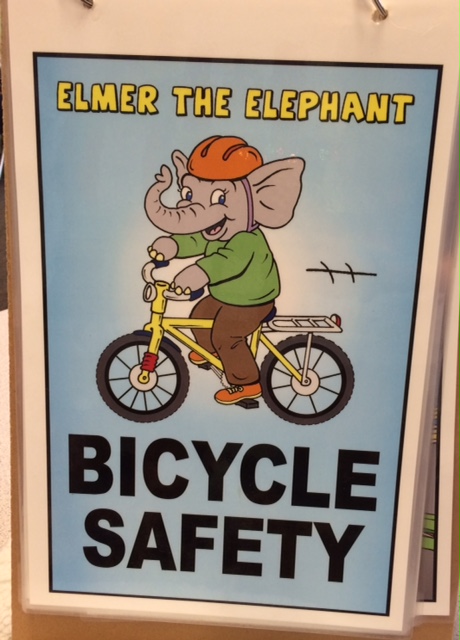
IMG_5390We had a fun visit from Elmer the Safety Elephant on Bicycle Safety.  Thank you so very much to Mrs. Young from the North Shore Safety Council for coming to speak to us.

With our mostly wonderful early summer weather, families are getting into the bike season and everyone needs to be safe.  When shopping for a bike helmet, we need to ensure it fits safely.

We see many people in our community wearing helmets.  The children are very aware of this and were able to think of many times when they wear, or have seen, people in the community wear a helmet.  This includes, but is not limited to, cyclists, hockey, football and baseball players, motorcycle riders, race car drivers, construction workers, skiers and skaters.  We should wear a helmet in any activity where your head might get hurt or banged, such as scooters and pogo sticks.

Mrs. Young explained that we don’t just wear a helmet:  we have to wear a helmet correctly.

2-4-1 Rule

2 – cover your eyebrow with two fingers.  The helmet should rest in the middle of your forehead.  With your fingers, you would be able to feel the edge of your helmet on your top finger.   It is very common to see many adults and children wearing their helmet too high up on their head.

4 – make a “V” with two fingers on each hand and place on either side of your head at your ears, with one finger on either side of your ear; that’s where your straps should be.

1 – you should be able to tuck one finger comfortably under your strap, so it’s not too loose. This strap is tricky so the children will need an adult to help adjust it.

FullSizeRender-4More Bicycle Safety Tips from Elmer:

If you see someone when you are riding and you think there’s not enough room for you or for someone walking by, you may need to stop. We need to be respectful of others who are on the sidewalk, and practise safety.

Stop when crossing a driveway in case a car is coming towards you, either backing out or driving in.

Ride single file, making a line. Cyclists should be one behind the other to make room for the pedestrians.  You need to slow down and be mindful that you are sharing the sidewalk.

To cross a busy street, walk your bike across the street.  Make eye contact with the driver first to be certain the vehicle has stopped before you enter the intersection.

If you come to a busy area, or there are lots of cars or construction, stop and walk your bike.  You are looking after yourself if you slow down and stay safe.

You can’t make other people wear helmets  But, you can wear yours and show others you are keeping your head safe.

If you have a lot to carry, place your belongings in a backpack or a bike carrier so you can keep both hands on the handles.

After a bike ride, you want to keep your bike safe.  You can learn how to look after your bike by putting it away in the garage or other safe place to keep it dry.  A wet bike, left out in the driveway, gets rusty.

This Week in Our Room:  June 6-10, 2016

FullSizeRender-3

It was a week of fairy dust and magic this week in the Kindergarten.  You’ve probably guessed that Cinderella’s back in town.  We will be posting more on Cinderella in the next day or so.

Next week we will read “Snow White.”  “Snow White” will be the last fairy tale we will study in our theme study.  We’ve had a wonderful time sharing so many different stories with the children, building upon their knowledge of the story and story structure with each new version and listening to them compare and contrast key elements of the stories.

IMG_5394

We created these beautiful castles for our fairy tales folders.  This was a fun idea we found in an Usborne art book.  We’re embarrassed to say we cannot find the original book among our resources.  But what we essentially did was pre-cut rectangles and triangles (more integration with our Geometry Math unit) and glued them together into a castle with towers and turrets.  Some felt pen details and a whole lot of glitter (fluffy Christmas sprinkles) turned these simple castles into something very special.  

We love to make special folders for the children’s classroom activities.  We believe it honours the hardwork and diligence of these very tiny people by creating something beautiful, that they can be proud of to show their parents.

FullSizeRender-2

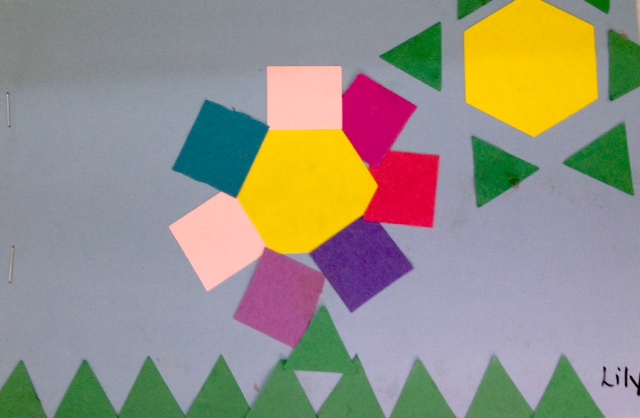
We also made these wonderful geometric creations for our Geometry Shape books. We gave each child a simple construction paper cover and some shapes we found in the school basement storage area (note to self: sort out that pile of stuff growing in the guest room at home). This was a lucky find as they are the pattern block shapes we use in class, with a few leftover squares thrown in as well.

Upcoming Events and Reminders

We have a very, very busy upcoming week with the Kindergarten.

Tuesday, June 14:  High Touch High Tech “Newton in a Nutshell” Scientist visit.  Our children will participate in a variety of activities on Force and Motion, one of the Kindergarten Science curriculum components.

Tuesday, June 14:  West Vancouver Memorial Library Visit to talk about the Summer Reading Program and how your children can participate.

Thursday, June 16:  Primary Talent Show with Grades 1-3 students.  Our children have been invited to the Primary Talent Show in the afternoon.  We will be reviewing appropriate audience behaviour with our classes.

Friday, June 17:  Prince and Princess Day.  Your child is welcome to dress-up if he or she wishes.  Some of the children were concerned about what to wear, but we’ve explained that what they have at home for costumes will be fine.  Princes, Knights or pirates would be fine attire for the boys, but please, no weapons.  Girls may wear their princess gowns if they wish.  This is optional so only if your child wants to participate.

Friday, June 17:  Kindergarten Cookie Sale.  Our children have been extremely flexible and understanding about not participating in the myriad of bake sales and freezie sales this year.  We’re reluctant to take part in every sale because of our healthy food philosophy, and the fact that the children could be standing in line for a long time during their playtime.  There are many more years at Ridgeview for your child to purchase a treat.

That being said, we voiced our concerns to Mr. Blackburn, our Vice-Principal, and he and the Grade 6 students have kindly offered to have a Kindergarten Cookie Sale just for us.  The Grade 6 students will sell the cookies just prior to lunchtime on Friday.  The final price has not yet been determined, but it will be $0.50 or $1.00 a cookie.  Each child may purchase one cookie only.
 

Fairy Tale Fun with Jack, Hansel and Gretel

FullSizeRender-23We’re still having lots of fun with Fairy Tales in our classes. One of the great things we get to do as teachers is share with our students some of the lovely books that have been read aloud to us, or that we’ve acquired over the years as parents to our own children and teachers of our students.

A couple of classic Fairy Tale books we wanted to read were ones that we were given as children.  The Treasury of Fairy Tales is my book that I received when I was five years old.  The Hansel and Gretel pop-up book was a Christmas gift when I was six.  We’ve read Hansel and Gretel to our classes and they just loved the vibrant colours of the pictures and a different version of a familiar story.

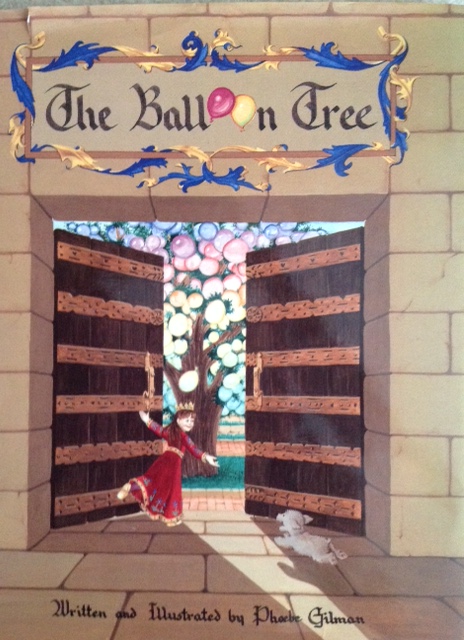
IMG_2857A new Fairy Tale classic is The Balloon Tree by Phoebe Gilman.  This sweet story is told in the traditional manner of a young princess whose mean uncle wishes to take over the throne from her Dad, the King.  When the King is away at a tournament, a plan is hatched by Princess Leora’s uncle to destroy all of the balloons of the Kingdom so the princess has no way to communicate with her father.  Princess Leora is locked in her room, but with the help of a wise wizard and a young friend, she is able to find a single balloon and then the magic happens.

We’ve been learning about the story elements (plot, character, setting, theme) and using Fairy Tales as our primary literature source to teach these important concepts.  We’ve talked about a story’s structure, beginning, middle and end (as a prelude to discussing plot) with Little Red Riding Hood and The Three Little Pigs.  

This week we focused on good and bad characters in Jack and the Beanstalk.  We compared the qualities of what makes good and bad characters, and the differences between main and secondary characters.

IMG_2853

We decided to focus on setting in Hansel and Gretel as it’s an excellent example of the literature theme, “Home is Best.”  Although we’ve typically taught this theme with Grade One and Grade Two, we thought that our children would be able to make the connection between the story and how they feel about home in their own lives.  We recall all of the places Hansel and Gretel visit in the story and list them in the correct sequence.  Then, we create a story map by drawing in those locations.  Revisiting the story, talking about the sequence of events and what happened at each of those places enriches the children’s understanding of the story.  They love to look at the pictures for clues and recall the details of each place.  

FullSizeRender-26

After we’ve created the map, we label the locations and then orally retell the story again.  The children have multiple engagements with a familiar story, which in turns enhances their understanding and appreciation of this important genre.

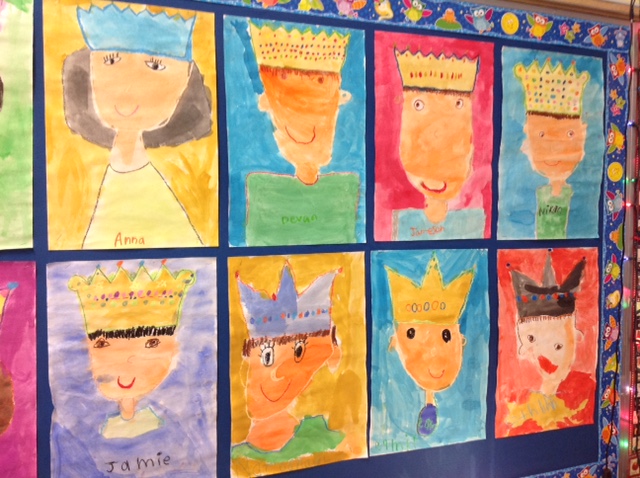
As part of our integration of the subject areas, we decided to create the Royal Kinder Portraits, another fabulous art idea from the website, Deep Space Sparkle.  We give the children a template for the crown which they trace in pencil, then outline in pastel.  With guidance, we demonstrate how to draw the face in pastel and then complete it in watercolour.  The oil pastels help to “hold” the watercolour paints from mixing together.

Presenting their Royal Highnesses….

IMG_2849

This Week in Our Room:  May 31-June 3, 2016

Thank you, everyone, for coming out to support us on Sports Day!  The children had a marvelous time, enjoying their mini teams and participating in the fun relays.  We saw many children love carrying the balloons with their foam chopsticks, jumping in the potato sacks, and pulling with all their might in the Tug of War.  They couldn’t wait to show us their tongues after eating their freezies!

IMG_2856

We had a good snack afterwards, Activity Time and many children also got a little bit of face paint (or arm paint) done as well.  All in all, we had a super successful first Sports Day, and the children can look forward to many more!

Upcoming Events and Reminders

It’s Home Reading Book exchange on Monday so please remember to return your home reading books.

On Wednesday, Elmer the Safety Elephant returns to talk to us further about bike safety.

A Huff and a Puff

FullSizeRender-21This week in our Fairy Tales study, we focused on “The Three Little Pigs,” illustrated by Georgien Overwater.  We’ve read several versions now, as a few children brought this story in for Sharing, and their choice has been our daily read-aloud book.  Each time we have a different retelling of a fairy tale, it’s been a wonderful opportunity to compare and contrast the characterizations and plot lines of the individual books.  In “The Three Little Pigs,” we read how the pigs are either eaten by the wolf, or safely club together in the brick house; different ways in which the wolf meets his end (each of them gravely acknowledged by the children) and observed additional details provided by the illustrator to enhance that particular version.  We’ve also read The Three Little Wolves and the Big Bad Pig (Eugene Trivizas and Helen Oxenbury), a reversal of the characters’ roles, to enhance our knowledge of the original story.

For our class activity, we recalled the main story events, illustrated each one, then cut apart and sequenced the pages in our mini-books.  Everyone was able to share their drawings and read their book aloud (from memory) at the carpet.

IMG_2836

We also each made a pig and hung them up with our wolves from “Little Red Riding Hood.”

IMG_2835

All of these stories create a rich and diverse understanding of Fairy Tales, which we consider an essential building block in the foundation of a child’s knowledge of children’s literature.  In the ensuing years, many books the children will read will make references to fairy tales, and they need some basic knowledge of the stories to understand at a deeper, more complex level.  The universal themes of good versus evil; the triumph of courageous, valiant young people over older, wicked archetypes (wolves, foxes, witches, uncles wishing to take over the throne); patterns of 3 (The Three Pigs, Goldilocks and The Three Bears) and “home is best” are ones that occur repeatedly in books.

We have a few more fairy tales to read over the next few weeks, and look forward to sharing our love and knowledge of these timeless, classic stories with our students.

This Week in Our Room:  May 24-27, 2016

Always after the Victoria Day weekend, the days just start to fly by.

IMG_0945Our bean plants really took off while we were away, and some had reached significant proportions.  We sent home the beans earlier this week as they were definitely ready for transplanting.  The pots are compostable so can be planted directly into a garden bed.  The beans could also be planted into a larger container at home.  But regardless of location, the plants should be staked so the vine does not get twisted on itself.  Happy growing!

Sports Day is now just a week away.  We sent home an information letter for you on Thursday this week.  Division 15 is on the Red Team and their letter was on red paper; Division 16 is on the Blue Team and their letter was on blue.  Please note that dismissal for Kindergarten is at 12 pm.  If your child is going to Camp Ridgeview for 12 pm, we ask you to please notify them as soon as possible so arrangements can be made.

A special Hot Lunch can be ordered for Sports Day. The link for this was in the Ridgeview Bulletin last Thursday, May 19.   If you decide to order lunch for yourself and your Kindergarten child, you can pick up your lunches at the kitchen (near the gym).  Please feel free to picnic on our school grounds as our classrooms will be closed.  The children know the location of the waste sorting bins on the playground to sort your lunch packaging after you’ve finished eating.

As we informed you last week, today we sent the children home with their first Home Reading book to read aloud to you.  Your child may find the book is too difficult;  in that case, please read the book aloud to your child, focus on a few specific skills (eg., look for words that begin with the same letter as your child’s first name, what is the letter name and the letter sound?).  Your child can tell us on Monday if the book was too hard, too easy or just right, and we can adjust.  There is further information for you in a letter in your child’s Home Reading ziploc.


Kindergarten Home Reading Program

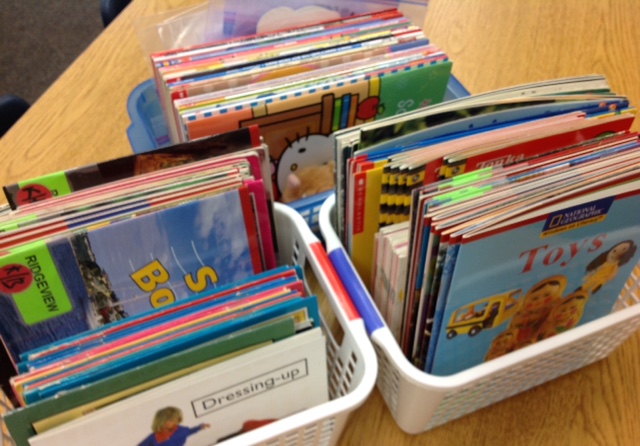
FullSizeRender-19We’re going to start our Kindergarten Home Program next week.  This will involve your child independently selecting a book from our Home Reading book collection to read at home with you.  We will be doing the book exchange on Monday’s, Wednesday’s and Friday’s.

We will start by selecting a book for your child which we think is in their reading range.  Your child can let us know at the next book exchange if it was too hard, too easy or just right.  We’ll do our best to adjust the books.  A letter will be included with your child’s first book, with more details and our expectations of the program.

Every child reads at his or own own level, and develops reading skills with practise and as they are developmentally ready.  At school, we have directly taught phonological awareness.  We’ve taught the alphabet letter names, alphabet sounds, identifying beginning and ending sounds and blending and segmenting skills.  These are skills which can all be reinforced at home.  Some of the children are continuing to learn their sounds, some know the basic sight words, and some are already reading.  We have found that this is the nature of the Kindergarten child:  as a class, their reading ability is pretty much all over the map.

We do know that daily reading aloud at home, where you are reading to your child, does make a difference.  They are learning literacy awareness, but more importantly, you are fostering a love of literature and reading that will stay with your children their entire lives.  When we consider what gifts we can give to our children, we’d say that one ranks near, or at the top of, the list.

This Week in Our Room:  May 15-19, 2016

Our beans have sprouted, and like any good gardener, we take so much joy in the small things.  Naturally, this generated a lot of excitement so we pulled out the magnifying glasses so we could get a closer look at exactly what’s going on with these tiny seedlings.

FullSizeRender-17


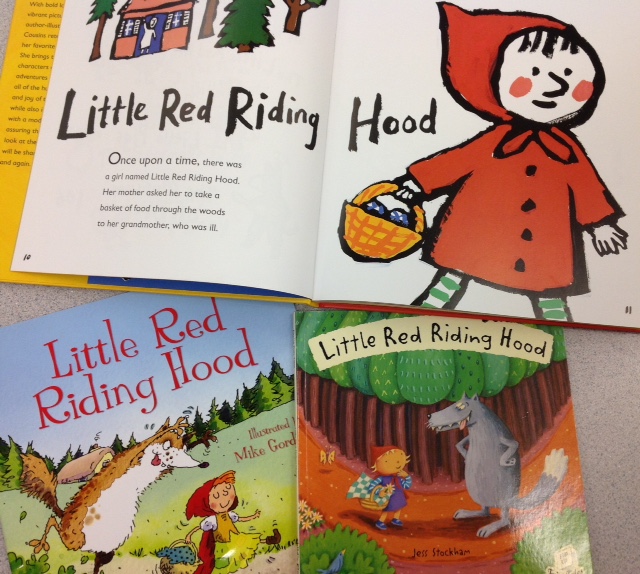
We read “Little Red Riding Hood” this week for our Fairy Tale study.  We enjoyed reading several versions and looking for the common elements across the stories.  One of our favourites was the from the fairy tale collection, Yummy by Lucy Cousins.

FullSizeRender-16


We’re continuing our work in Geometry, focusing on circles and spheres, squares and cubes.  Next week we explore rectangles.  

FullSizeRender-18

As part of our unit, we read Shapes That Roll (Karen Sagel and Steve Wilson), Perfect Square (Michael Hall) and Mouse Shapes (Ellen Stoll).  

We really try to take advantage of the excellent children’s literature available to us as a way to enhance our lessons.  It provides us with another opportunity to model a love of reading and reading behaviour (what does a good listener do?), oral expression (a chance for us to use a variety of voices when reading aloud, pacing, statements versus questions) and a shared understanding of vocabulary and concepts.

Reminders and Upcoming Events

We are collecting donations of $2 or more between May 16-27 to support Cops for Cancer. West Vancouver Schools are partnering with the West Vancouver Police Department to support Cops for Cancer’s Tour de Coast ride, taking place in September 2016. Donations made to the Canadian Cancer Society through Cops for Cancer are used to fund life-saving research and support programs for children suffering from cancer.

There is Professional Day tomorrow, Friday, May 20th.  School is not in session.  Monday, May 23rd is Victoria Day.  We wish all of you a wonderful long weekend and look forward to seeing the children back at school on Tuesday!

On Friday, May 27th we will be starting our home reading program. Each Kindergarten child will be bringing home a home reading book in a Ziploc bag and a letter outlining how the program will work.

Friday, June 3 is Sports Day! We will be dismissing the Kindergarten at 12pm that day. You’ll be receiving your information letter on Thursday. Division 15 will be on the RED TEAM and Division 16 will be on the BLUE TEAM.

Mystery Box Inquiry: Plant Edition

IMG_2819We’ve had a busy time working on our current Inquiry study on local plants.  It’s been beautifully timed with the gorgeous early summer weather we’re having right now in the Lower Mainland and so many flowers are in bloom.  This is one of our favourite units to teach as Christy and I are both avid gardeners ourselves, and we love to share our passion for plants and growing things with our students.

We try to teach by theme and connect as much across the curriculum as we can to give a rich learning experience for our students.  We love it when the vocabulary and content can be tied together within the curricular competencies.  So for our most recent round of “Sharing and Special Helper,” we asked all the children to bring in a “Sign of Spring” and many of them brought their favourite plants or flowers from their gardens.  Our students brought in rhododendrons, azaleas, tulips of all colours, daffodils, bluebells, wild poppies and a huge blossoming branch from an apple tree.  By the time we started our plant study, our class had all been exposed to a great variety of flowers and shrubs.  This is particularly important so that we have some similar experiences to refer to during our lesson discussions in the days to follow.

As we’ve mentioned earlier in our previous weekly newsletters, we started our Inquiry with a walk around our extensive school grounds. We stopped to name and discuss some of the plants we have growing in our school garden, and if the children had those same plants at home.  We listened for birds and the sound of our creek.  We also heard the springtime sounds of construction and lawnmowers.

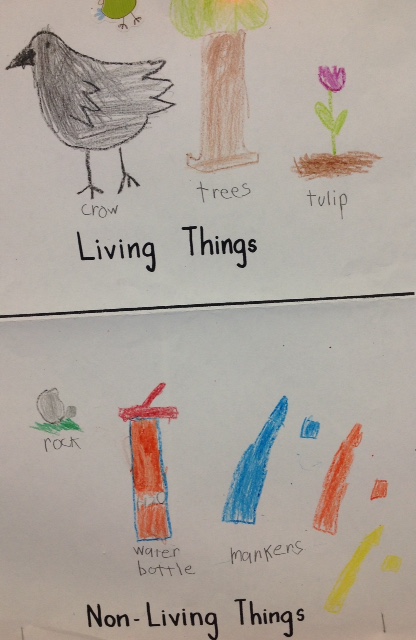
Back in the classroom, we read  Living Things, by Melvin and Gilda Berger, to help reinforce the idea that living things grow, need food and often look like their parents when they grow up, as opposed to non-living objects.  We recalled the things we had seen on our walk, looked around for everyday things in our classroom and sort and categorised those items into living and non-living things, which the children recorded on their charts.

FullSizeRender-14


In our next lesson, we read the delightful chapter, “The Garden,” from Frog and Toad are Friends (Arnold Lobel) which sent everyone, including the teachers, into hysterical laughter as Toad tries to grow his garden as beautifully as Frog.  After yelling at his seeds to GROW, Toad thinks he has scared his planted seeds so they are now afraid to grow.  Toad reads stories, poems, plays music and keeps the seeds company in the evening with candlelight.  The children concluded (and knew) that water, air, soil, food, time and love are essential plant needs.

FullSizeRender-15

Time for a Mystery Box Inquiry!  We placed a variety of seeds in the Mystery Box.  The children asked some great questions to determine what was inside.  Even better, we had the first “checking questions” being asked…questions the children asked to confirm whether their idea was correct, or not.  Wow!  Talk about amazing curiosity and wonder.  The children loved sorting the seeds into groups and then matching them to the seed envelopes.

IMG_2818

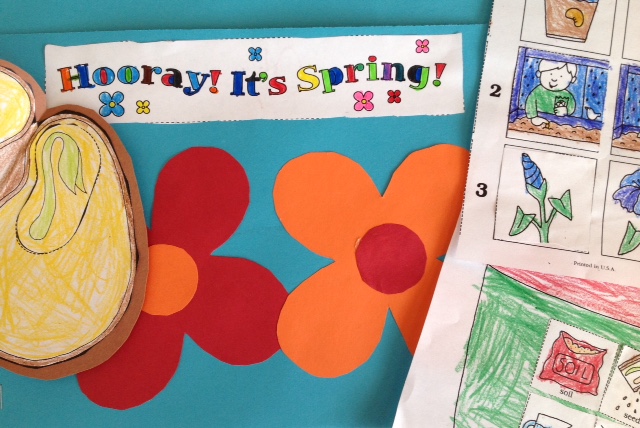
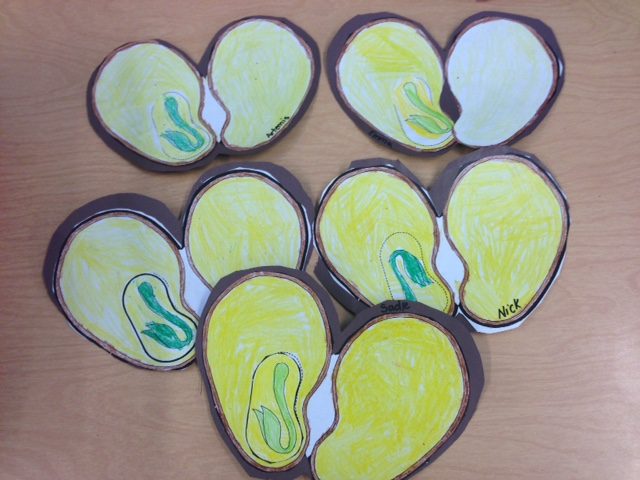
We made our own seeds from a National Geographic learning resource we had on seeds.  We are enlarging our vocabulary to include seed coat, plant embryo, roots, stem, seedling, leaves, blossoms, germination and pollination.  

IMG_5302

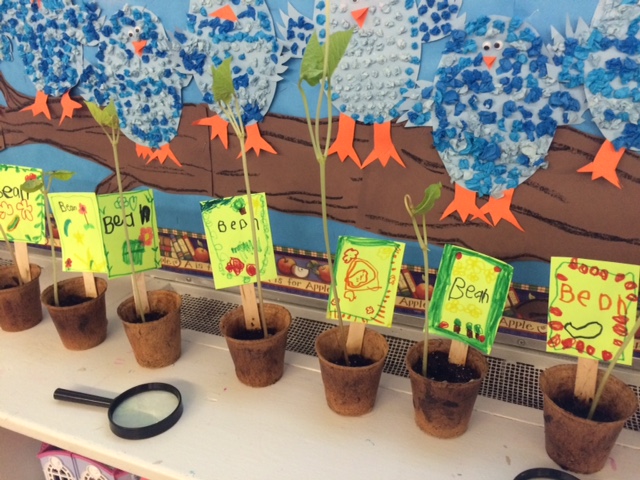
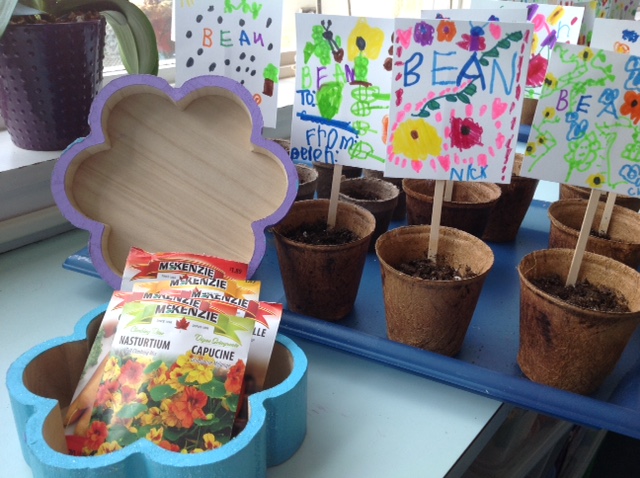
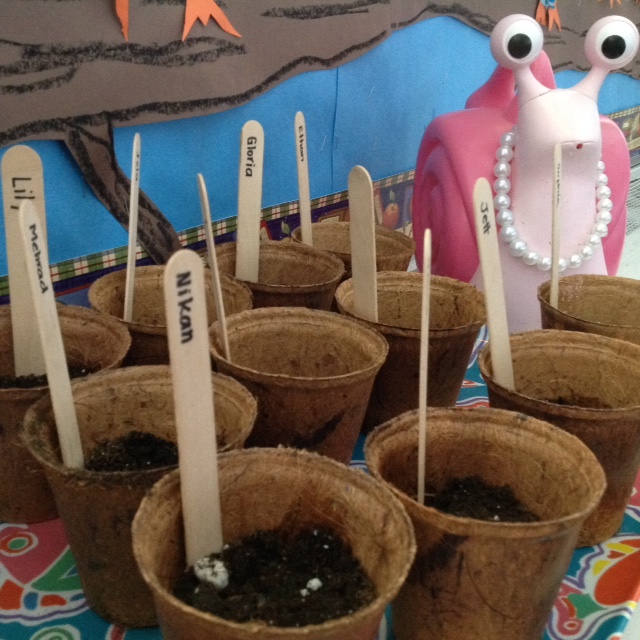
The most exciting part of learning about plants, of course, is to plant our own seeds.  We’re growing Scarlet Runner beans because we can count on them to sprout (favourite word in the Kindergarten right now) quickly.  We purchased small compostable pots and brought in a trug full of potting soil and a small potting trowel.  After a few mishaps …lots of soil on the table and floor… we quickly realized a quick lesson on how to handle the trowel was needed.  Here are our beautiful little pots with their bean plant markers.  

IMG_2797


That’s Miss Pink, by the way, our trusty snail watering can, looking on.  We’ll follow up in a newsletter with how our beans have grown.  When thinking about the integration of curriculum, our bean plants will be a useful reference point when we teach “Jack in the Beanstalk” from our Fairy Tale literature unit, so the children can imagine where the giant’s castle is located.

By the time you read this post, we will have taught our last lesson on how seeds travel.  We’ve learned over the past few weeks from a variety of books that seeds can travel by air, water, on our clothing or dropped by animals after eating the surrounding fruit.  We were fortunate to have dandelions which had gone to seed brought in for Sharing and the children were all very familiar with what happens when they blow on those “puffballs”  and how the seeds travel.  Some of the children also knew about seeds clinging to their clothes after forest and meadow walks.

Here’s our current book list of plant books that we’ve been reading aloud to our classes, and some other beautiful stories with gardening and plants as interwoven themes.  We’re hoping you and your little gardener enjoy many happy years of gardening and reading together!

  • Once There was a Seed (Judith Anderson and Mike Gordon)
  • Living Things (Melvin and Gilda Berger)
  • Seed to Plant (Melvin and Gilda Berger)
  • All About Seeds (Melvin Berger and Anna DiVito)
  • Linnea in Monet’s Garden (Christina Bjork and Lena Anderson)
  • Grow Flower, Grow! (Lisa Bruce and Rosalind Beardshaw)
  • Flower Garden (Eve Bunting and Kathryn Hewitt)
  • Flowers (Vijaya Khisty Bodach)
  • Leaves (Vijaya Khisty Bodach)
  • Roots (Vijaya Khisty Bodach)
  • Seeds (Vijaya Khisty Bodach)
  • Miss Rumphius (Barbara Cooney)
  • In My Garden (Ermanno Cristini and Luigi Puricelli)
  • Growing Vegetable Soup (Lois Ehlert)
  • Planting a Rainbow (Lois Ehlert)
  • From Seed to Plant (Gail Gibbons)
  • Round the Garden (Omri Glaser, Byron Glaser and Sandra Higashi)
  • Nora’s Roses (Satomi Ichikawa)
  • How a Seed Grows (Helene J. Jordan and Loretta Krupinski)
  • The Carrot Seed (Ruth Krauss and Crockett Johnson)
  • Frog and Toad are Friends (Arnold Lobel)
  • Who is in the Garden (Vera Rosenberry)
  • This is the Sunflower (Lola M. Schaefer and Donald Crews)
  • Tops and Bottoms (Janet Stevens)
  • A Tree in a Forest (Jan Thornhill)
  • My Garden (Kevin Henkes)
  • Up in the Garden and Down in the Dirt (Kate Messner)


Just Another Week in the Kindergarten

We’ve had a really busy few weeks so it’s wonderful to get back to our regular timetable and everyday routines.  We appreciate structure, knowing what’s going to happen next and a certain amount of predictability.  It helps us personally with our own self-regulation and we know our students thrive on it.  Although there is excitement in the unknown, being flexible (one’s ability to self-regulate, cope and manage changes in a day) is a skill that is learned over a lifetime and one that we most certainly teach in the Kindergarten.  But we need to teach those concepts within the context of what familiar days and patterns look like so when our schedule is stable, we can accomplish a great deal.

What have we been up to?

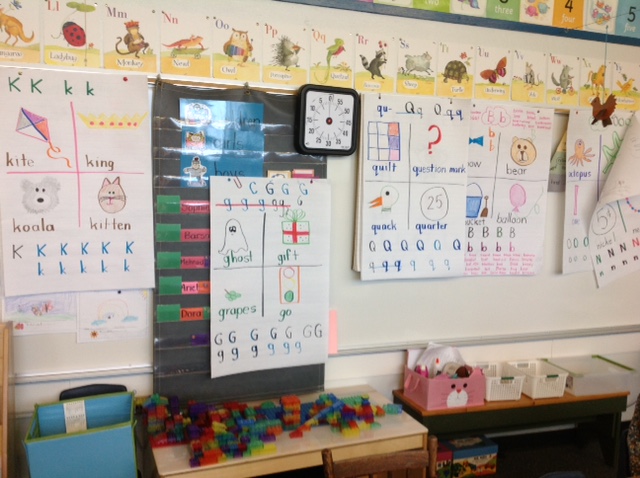
IMG_2785Well, we officially finished our Alphabet Books last week with the “Z” page and painting zebra stripes for our “Z” craft.  But many children had missed out on some alphabet pages due to travel, sickness or a late start at Ridgeview.  So we had three days of finish-up for all the pages missed.  You can see from the photo that we had our alphabet charts displayed on the wall (and on the floor) for children to fill in their pictures, labels and printing.  The children were meticulous in diligently going through their books to figure out what pages were incomplete.  

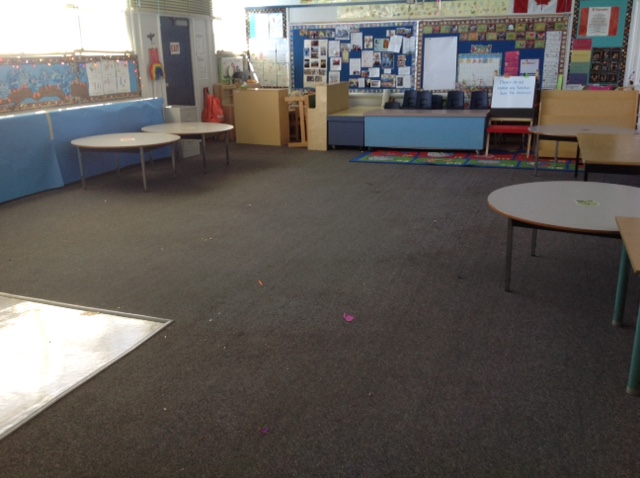
This massive undertaking was taking place alongside preparations for Welcome to Kindergarten (Parent Information Evening on April 25; new Kindergarten student participation on April 27 and 28), our fabulous Student Led Conferences (May 4), Mother’s Day paintings (May 5) and classroom preparation (May 6) for our school’s Mayfair (May 7).  Our classrooms usually looks like this:

IMG_2817

But for the Silent Auction (my classroom) and Book Sale (Christy’s classroom), our classrooms looked like this:

IMG_2789

We want to thank the Kindergarten children and Grade 7 students for helping us to not only take down the classroom on Friday for Mayfair, but also for restoring the classroom again on Monday morning.

This Week in Our Room:  May 9-13, 2016

Our big excitement this week was taking our class photos and our school panorama photo!  It’s a special moment for us and our students to gather together for a photo the children will always remember as “my first school picture.”

IMG_2797We’ve been working hard on our Inquiry study on local plants.  We learned about how plants grow (germination, roots, stems, leaves, pollination) and we crafted our beautiful Plant folders.  We also had a Mystery Box Inquiry where we placed a selection of seeds in the Mystery Box and asked ten questions before guessing.  Then, we sorted and classified the seeds and matched the seeds to the plant envelopes.   We finished our last lesson today with “How Seeds Travel” and planted our bean seeds.


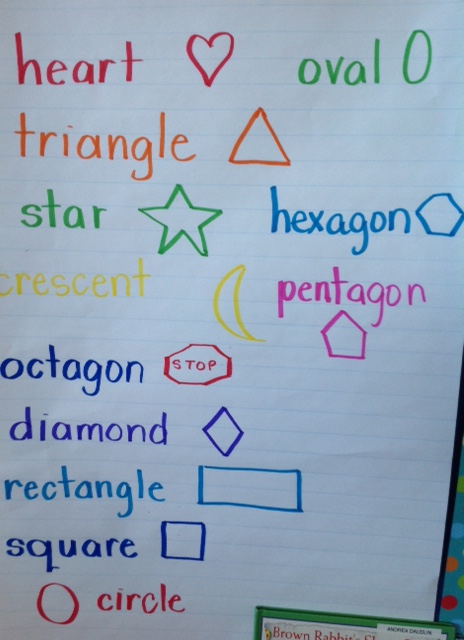
IMG_2807-1We started our next Math unit in Geometry.  We brainstormed all the geometric shapes we know and read Brown Rabbit’s Shape Book by Alan Baker.  We’re now starting to learn about the individual two and three dimensional shapes and their properties, beginning with circles and spheres.


We also launched our Fairy Tale literature study with Once Upon a Golden Apple by Jean Little, Maggie De Vries and Phoebe Gilman.  This delightful story makes plenty of references to nursery rhymes and fairy tales and we had lots of fun reciting the nursery rhymes we recognized and identifying the fairy tale titles from the hints in the story.  

Upcoming Events and Reminders

Friday, May 20, is a Professional Day for teachers.  Students are not in session.

Monday, May 23, is Victoria Day and school is closed for everyone.

Friday, June 3, is our Ridgeview Sports Day.  Please note that Kindergarten students will be dismissed at 12 pm that day.  If your child attends Camp Ridgeview, please be sure to let them know we will be dismissing early.  We will send out more information about our student expectations for Sports Day in the next two weeks.


Happy Mother’s Day!

Happy Mother’s Day to all of our classroom mothers!  We hope you enjoyed a lovely day with your children and the special art project your Kindergartener painted in celebration of you!

FullSizeRender-13

This Week in Our Room:  May 2-6, 2015

We enjoyed seeing everyone at our Student-Led Conferences on Wednesday.  The Conference is a wonderful way for your children to communicate their learning to you, where you can experience first hand their learning environment, come to know the routines and expectations we have for them and enjoy their fabulous school books and projects.  The children were so excited all day and eagerly anticipating sharing their learning with you.  We noticed lots of happy faces, children and parents alike.  Some of the children said they wished their Conference could go on and on, which indicates to us how much they love coming to school and on the path to becoming a lifelong learner.

We’ve been outside in the forest area and the grassy hill which runs along Mathers Avenue.  We’ve explained to the children they are not to go too close or over the fence.  They are enjoying these shadier areas for playtime instead of being in the direct sun.

We’ve started our Inquiry of Local Plants, and compared living and non-living things, and a plant’s needs.  This week we learned about the parts of a seed and made our own seed.  We also had a Mystery Box Inquiry with a mixture of seeds, and the children asked excellent questions (the 5Ws) before successfully guessing.


Communicating Learning: Student-Led Conferences

This article was originally posted on February 23, 2015.  We’re reblogging today with updates to reflect this current school year.
IMG_2771We communicate student learning in a variety of ways:  through this website, our Remind texts, the curriculum overview and Meet the Teacher Night, and the three formal and two informal reporting periods each school year.   Our Kindergarten students receive their formal written report cards at the end of each term.  Students received their first report card last December, the second report card was given out in March, and the third report will be distributed at the end of June.

The two informal reporting periods are a parent-teacher interview, held last fall, and this Spring’s  Student-Led Conference.

There’s a lot of excitement and wonder surrounding Student-Led Conferences, and for good reason.  Having your child lead the conference, not the teacher, is a shift in mind-set, particularly if this was not part of your school experience growing up.  But we know this will be one of the most delightful learning experiences you will share with your children, as it will be for them to demonstrate their independence and leadership with you.

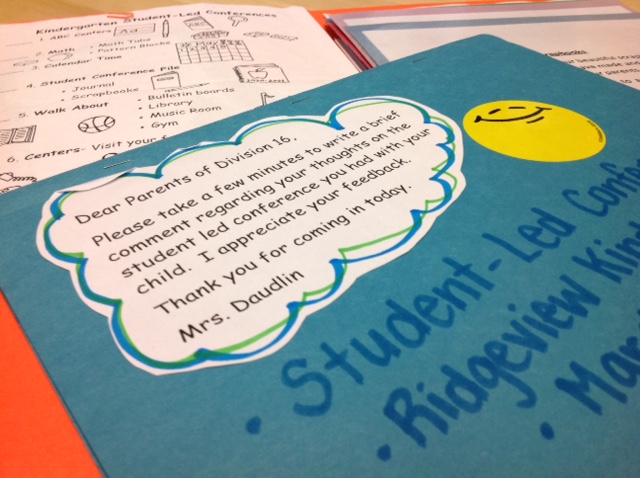
A Student-Led Conference is exactly that–a conference or interview for you and your child, led by your child.  During the Conference, students assume the ownership for reporting and explaining to their parents what they are learning about and how they are doing in school.  The teacher, who has supported the students in the selection of student work and practiced the conference with them, stays in the background during the actual Conferences.

During the years we taught from Grades One to Four, our students participated in a teacher-led discussion about the student work they would like to present at the Student-Led Conference.  A brainstorming session of possibilities would ensue.  There would be suggestions such as a polished piece of writing, the latest math test or a Science notebook; the class would vote on the ideas they liked best and those selections were included in their Student-Led Conference folder.

Depending upon the grade, sometimes we had a combination of “must-have” work and some student choices.  An “art walk” around the school hallways, the latest digital learning project and a mini music performance were other fun choices to round out a Student-Led Conference.

A week or two before the Conference we had our older students write a letter inviting their parents to attend.  The letter would highlight the learning and personal achievements students wanted their parents to particularly notice.  This was a wonderful opportunity for student self-reflection of his or her successes.

For our Kindergarten students we organize our Student-Led Conferences by Centres.  It’s a system the children are familiar with, and one in which we’ve used successfully with this age group.

In the weeks prior to the Student-Led Conference we review with your children the activities they enjoy most in our day and want to share with you.  We also initiate some discussion on the learning we think you would enjoy seeing as their parents.

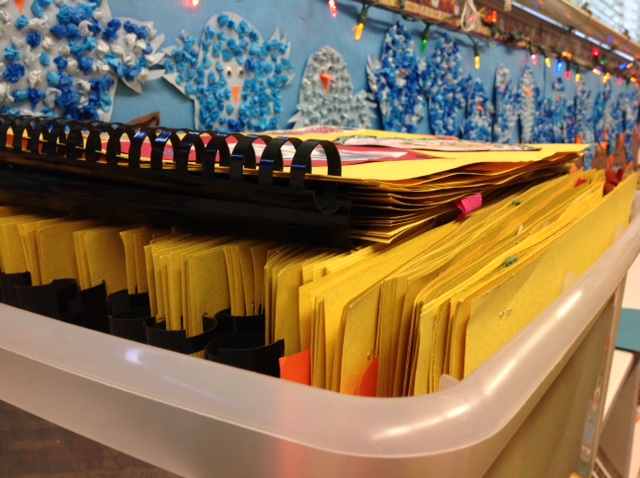
IMG_2770We typically include a Language Arts Centre which focuses on the children’s Alphabet and Writing Books; a Math Centre to create math patterns and showcase their Math Books; and a Scrapbook Centre to see some of the best work we’ve completed in Kindergarten this year, in the children’s individual scrapbooks.  With the children’s help, we form an “Agenda” of the Centres the children will lead you through.

When you arrive with your child at our classrooms, your child will be given a personal copy of the Agenda and he or she will mark each activity with a sticker as it is finished.  The Centres do not need to be completed in any particular order, but each one must be visited.  We explain to the children that if they see there are many families at one Centre, then they should choose another until it’s less crowded.

During your child’s Conference, parents are able to enjoy looking at their child’s schoolwork and participate in the activities he or she has selected for you.  As parents, giving specific praise and support recognises your child’s efforts at school.  It is through your comments that you model what you value about your child’s learning.

This is a time for positive comments only to your child.

IMG_2772At the end of the Student-Led Conference we ask our parents to sign the Guest Book.  It’s important for us to have a record of parent attendance and receive feedback every year.  Over the years parents have always enjoyed the Conferences so it’s very rewarding to have the appreciation of your children’s, and our, efforts.

This year the Kindergarten Student-Led Conferences will be held on Wednesday, May 4.

All Ridgeview students will be dismissed at 1:50 pm, and the Conferences will begin at 2 pm.  You will have a 25 minute time slot with your child.  A maximum of five-six Conferences will be held at once so families need to be prepared to speak softly.  At the appointed time, we will ring a bell to signal the end of the Conference so that we may prepare for the next group.

Over the years, a few parents have asked why they cannot have an interview with the teacher instead.

To put it simply, the reason why you’re having a Student-Led Conference is because it’s an incredible opportunity and privilege to share in the learning of your child.

You will hear about your child’s learning from your child’s perspective, and have that deep insight into your child’s thinking, motivations and achievements.  You will be engaged in a dialogue rich with the language of a young learner, share the joy of a job well done, and a sense of pride with every printed letter and cut out shape.  And you’ll be able to share in the delight of your Kindergarten child as he or she begins the journey as a life-long learner.

Student-Led Conferences are one of our favourite days of the entire school year. From a teacher’s perspective, we couldn’t be any more proud of our students as they beam with pride at leading their mom and dad into their classroom to share the fabulous work they’ve completed at this point in the school year.

Please make arrangements for siblings so that your Kindergarten child can have your full attention during his or her Conference.

You can sign-up for your Student Led Conference now outside of our child’s classroom.  Grades 1-7 sign-ups are in the main hallway across from the office.


One Year Later: Welcome to Kindergarten

FullSizeRender-12As you know, we welcomed our incoming Kindergarten students and their parents to Ridgeview this week.  Christy and I were out of our classrooms to help facilitate some of the learning centres.  This year we decided to host a parent information evening for new Kindergarten parents, and Welcome to Kindergarten sessions for the children over two mornings.  We’ve been running this program, with The Learning Partnership, for many years now and were excited to add Block Play to our Creative Explorations, Noticing Print, Playing with Playdough and Talking and Reading Activities.

When we returned to our classrooms after each of the sessions, we were caught off guard.  Our Kindergarten students seemed so…grown-up…mature…and ready for Grade One!  It’s been about a year now, that we first met our current students at their Welcome to Kindergarten day.  The time has certainly flown by, and how quickly children change in a single year.  Although all students show growth each year they progress through school, the changes we see in Kindergarten are quite profound, as we see the children move away from being egocentric to thinking about and considering others, more reflective in their thoughts and speech and glowing with confidence in their abilities, knowledge and self-regulation.

We’re getting that teary feeling thinking about our little people moving on so we better stop, be mindful of the moment and this wonderful time we’re having together at school enjoying each other’s company, utilizing and applying the skills they’ve acquired, deepening our learning.

This Week in Our Room:  April 25-29, 2016

This was a big week, not just because of the WTK, but we finished our Alphabet Books!  We finished the letter Z, so now we will take a few days to get caught up on some of the pages we might have missed. We will send these books home soon for a special Kindergarten keepsake.

Speaking of finishing, we’ve come to the end of number concepts to 10 with reading a great little book, 10 Black Dots by Donald Crew.  We used the story frame to make our own big book by creating individual pages, designing with as many dots as each child wished.  We love how the children chose to use their black dots, and you’ll be able to read their big book when you and your child attend Student Led Conferences.

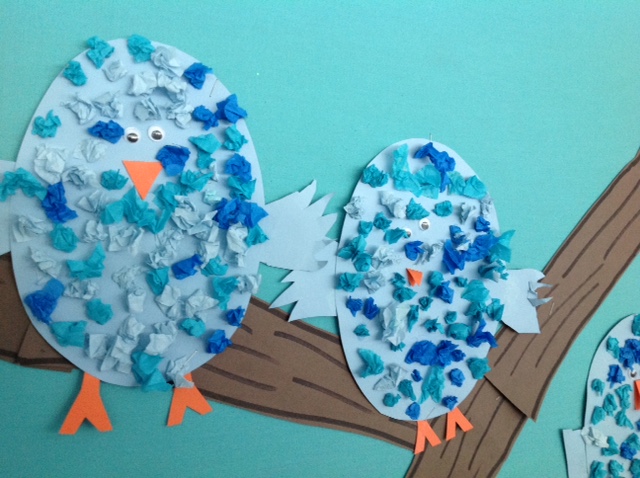
IMG_5270We made these cutie robins with our Grade 7 Buddies this week, and still on the spring bird theme, we made our sweet blue chicks.  We love the blue chicks, decorated with crushed light blue tissue squares, as it’s a craft which requires perseverance to finish, yet is repetitive enough to allow us to chat with our neighbours like a quilting or knitting bee, and strengthens our fine motor skills for printing.

IMG_2774

We’ve started our study of Plants, with a spring time walk and comparison discussion of living and non-living things.  We talked about how living things require food to grow and can look like their parents as they grow up.  This week we read “The Garden” from Frog and Toad are Friends as part of our inquiry into a plant’s needs.  We learned that soil, water, air, time and love are necessary for plant growth.  

Upcoming Events and Reminders

There will be an early dismissal on Wednesday, May 4, at 1:50 pm for Student-Led Conferences.  We will be starting our first session of conferences promptly at 2 pm so please be on time to pick up your child.  If you are late, your child will be waiting for you at the office.