Kindergarten Basics

fullsizerender-19This week we’re going to bring your attention to an important part of theselfregulatedteacher.com, and that is the category of Kindergarten Basics.

Here we categorise the posts we believe form a basic part of Kindergarten life at Ridgeview.  We cover many different topics, from what we might do on a typical day in Kindergarten, to reading with your child, to the importance of play.

At the beginning of the school year, here are three important blog posts that you may find informative to help you understand what we’re thinking about.

Start the Kindergarten Day Off Right! (February 16, 2015)

Like the routines we create and follow at school, having routines at home helps us to be organised so everyone knows their job, mom, dad and kids.  We establish a strong classroom structure to provide predictability and ultimately, security for our children:  when the boys and girls know what’s expected of them and the other children, they feel much more confident in knowing what’s going to happen.  It’s very exciting when they remember the routines and it all just seems to magically happen!  We know it’s not magic, but rather the result of methodical planning and consistent behaviour on the part of the teacher.  The same can be said for home where the children have afterschool, dinner time and bedtime routines.  In the same way classroom routines make for a smoother and more enjoyable day, so can the ones related to getting up in the morning, preparing for the school or work day, and probably the most important, getting to bed on time!  Click here to read the original post.

Waste Management, Revisited (October 19, 2015)

You’ve probably already heard from your child that we are asking them to put specific items in the organics garbage can in our classrooms.  Right now, it’s mostly just wet paper towels after handwashing.  The odd fruit pit or cupcake wrapper ends up there which is ok, but we really need everyone to participate fully in the waste management system at school.  We’ve been doing this for three years now, and we need to ensure good habits are in place in Kindergarten as this will be the system for your child’s Ridgeview school life.  Currently, we are asking children to put the food packaging garbage back into their lunch bags to take and sort out at home.  Better still, please send your child’s food in recyclable containers to eliminate any garbage.  A small ziploc bag, or vegetable plastic bag might be more preferable for your children to take home fruit peels and pits if they don’t want them loose in their lunch bags.  Click here to read the original post.

A Day in the Life of Kindergarten

This is probably one of our favourite pages in the Kindergarten handbook that we’ve ever written because it sums up what a day in our Kindergarten life looks like.  It can be hard to imagine what we’re doing all day, although we will reassure you that your children are playing and working extremely hard.  By the end of last week, the children were very tired; indeed, there were many small heads drooping at the morning assembly.  Sharing, turn-taking, negotiating, compromising, cooperating, speaking kindly to your neighbour, listening to your teacher and paying attention to the many social cues that go on around you telling you what you should do next takes tremendous energy and self-regulation.  We do as much as we can through play, within our classroom structure, as the children become better acquainted with each other, their teacher, and themselves as a learner.  As the days go on and the temperatures become cooler, we will see remarkable growth in our Kindergarten students!  Click here to read the original post.


This Week in Our Room:  September 12-16, 2016


fullsizerender-18We had a very big week with lots more firsts!

Our biggest accomplishment this week was three full days of Kindergarten.  The children were beginning to tire by the end of Thursday, and the warm temperatures in our classrooms made that more difficult.  But we ensured there were many opportunities for drinks of water, snacks, playtime inside and outdoors and practise for self-regulation strategies.

We had our first Music classes with Mrs. Taylor.  Our long-time Music teacher, Mrs. McKanna, has moved to continue her teaching career in the Maple Ridge School District to be closer to her family.  Many of your older children had Mrs. McKanna as their first school Music teacher and will remember her well.  We will really miss her and send along our best wishes!l

We visited the Library with our Teacher-Librarian, Mrs. Kennedy.  We were so fortunate to be able to take out a book on our first visit.  Mrs. Kennedy sets very clear boundaries regarding what baskets of books and library shelves we can select a book from, so right now our focus is on picture books. Here are Mrs. Kennedy’s top concerns about book care when looking after your Ridgeview library book at home:

  • Keep your library book safe from food or water
  • Remember that younger siblings can be destructive around books
  • Keep your library book away from your pets (Note:  ask Mrs. Campbell what happened to her passport and math textbook the next time you see her)
  • Turn book pages gently

We made our first self-portrait for September.  The children worked hard to draw their pictures according to our criteria of “Big,” “Bright” and “Beautiful.”  Big means to fill your space of paper, Bright is to use 5 colours or more and Beautiful is to do your personal best.  We really think they did!  It was also our first foray with using scissors and gluesticks and there were many determined faces as the children tried to cut stems and leaves independently.

img_1665

Upcoming Events and Reminders

We still have quite a few outstanding cheques due for school supplies.  Please hand your cheque into the school office if you have not already done so. We do not keep track of the cheques so please enquire at the office if you cannot remember handing yours in.

Thank you to the families who have already submitted their child(ren)’s online Policy and Procedure form.  All Ridgeview families are asked to submit the District’s Policy and Procedure eForm each year and for each child in the family.  Without completion of this form, students may be unable to participate fully in classroom and school activities such as accompanying the class on walking outings in the neighbourhood of the School(i.e Terry Fox Run).

With a change in our beautiful weather expected, we would ask for each child to have a pair of rainboots that he or she can keep at school all year.  This way, if there is ever a sudden rain shower, your child always has boots he or she can wear on the playground.  We like to keep our classroom carpets clean as we sit on them frequently and dry shoes make all the difference.  Please write your children’s names clearly on their boots.

Children should also have an extra change of clothes to keep at school.  This year, we would ask you to place the clothes in a small bag with handles or a drawstring, marked with your child’s name, that can be hung on each child’s hook.  Some parents have already started to bring them in so you can see examples in the cloakroom.  Hanging up the extra clothes at school means your child’s backpack doesn’t seem so full.  Right now, we’re having trouble manoeuvring the lunch bags and water bottles in and out of the backpack so a separate clothing bag is ideal.

Although we’ve talked many times at school and ask frequently, sometimes the children are reluctant to use the washrooms.  Most often, it’s because they don’t want to miss out on what’s happening in the classroom.  We’re trying to encourage them to go to the bathroom during break times, listen to their body for the signs they might need to go and ask them to “check” just in case (not as well-received by the children but we’re going to keep trying).  The most important thing you can remind your children about  is to ask or tell us they are going to the bathroom (so we know where they at all times) preferably before it reaches the state of “emergency.”

We sent home the Scholastic Order Forms today.  If you are interested in purchasing any items please fill out the form, attach a cheque and return it to school by Tuesday, September 27th.

We enjoyed meeting everyone at the Intake Conferences.  If you were unable to make it this week, please speak to your classroom teacher to reschedule.  

Beginning next week, we will be on the regular school schedule.

First entry bell rings at 8:50 am.  Please wait until the bell rings before entering the building.

Second bell rings at 8:55 am.  School has officially begun.  If you are in the hallway and “O Canada” begins, please wait in the hallway or cloakroom until we have finished.

Dismissal bell rings at 2:55 pm.  We’re still adjusting to this part of the day so we apologise if we are a couple of minutes late to dismiss.  

Tuesday, September 20, is our individual student photo day.  Class photos are usually taken in the spring.  We try to have Kindergarten student photos taken first while we are all still looking “fresh.”

Friday, September 23 is a Professional Day.  Students are not in session.

First Week: Introducing Clasroom Routines, Rules and Expectations to the Kindergarten

IMG_2089Our students started their Gradual Entry for Kindergarten this week, with smaller groups attending for a shorter time so that all of us, teachers and students, have an opportunity to get to know each other in a calm, gentle and relaxed environment.  We’re fortunate to have this time to be with our students, so they can socialise and play with their new classmates and we can introduce and settle them into our classroom routines.

When we are establishing routines in our classrooms, we begin the first day of Gradual Entry with our small groups.  We believe that routines, in conjunction with setting up a self-regulated classroom, can underlie the children’s self-regulation:  when they know what’s expected of themselves and others, and have a sense of predictability about their day, they feel safe and secure in knowing what’s going to happen next.  The children feel calm so they can focus on the teacher’s instructions and participate fully in class.  We want to reduce uncertainty and anxiety as much as possible so our little learners are able to do the job they come to school for:  to learn.  As we said many times before, when our children are relaxed, focused, calm and happy, they are ready and in their optimal state for learning (the green zone).

We have two different groups of children (morning and afternoon) so it’s very important we’ve taught the routines and stated the expectations in the same way (hopefully exactly) for consistency for when the entire class is together (which for us is tomorrow).  We still carry around our dayplan during these first few important days so we do not forget anything.

We met our new students on the playground and led them to our respective classrooms to hang up their school bags in the cloakroom.  It is here, at the classroom door, that we teach the first routine for children to wait with their parents or caregivers for the teacher to open the door in the mornings.  We remind the children there is no knocking or banging on the door; rather, they are to wait quietly with their adults, no running or loud voices.  

We have books waiting on the alphabet squares of the carpet in the Meeting Area.  As we welcome the children into the classroom and direct them to the carpet they may look at a book for a few minutes if we are helping a reluctant child at the front door; yet we’re still able to see the class.  We eventually modify this routine after a couple of weeks and ask the children to select their own book from the book rack.

We introduce three big sets of classroom routines, rules and expectations for getting along together on the first day, and review the use of the washrooms and lining up.  At first this might seem like a lot but we find the children always rise to the challenge, as they have already done this week.  

Typically, whenever we enter our classroom, including the start of the day, returning from recess, Library or PE, our routine is always to walk and sit down in the Meeting Area.  The Meeting Area is an important area in the classroom:  we use it for curriculum instruction, Storytime, Sharing and whenever we have something very important to say to our class, such as introducing rules and expectations; therefore, we must be able to cooperate well as a group.

  1. Getting Along Together at the Meeting Area
  • Sit cross cross on your alphabet square in your personal space bubble
  • Raise your hand if you wish to speak
  • Only one person can speak at a time
  • Hands and feet to self
  • Listen for the teacher’s bell – what does listening to the teacher look like?  Turn your body to face the teacher, ears are listening to the teacher, eyes are looking at the teacher, hands are still.  We call this “listening with my whole body”
  • Sometimes we (the teacher) will use the word “stop” or “freeze”

We have a brief chat about “stop” and “freeze” and what that means and looks like before we move to discussing Centres Time expectations.

  1.  Getting Along Together during Centre Time
  • Four children to a Centre at a time
  • Centres are “open” or “closed” (we teach them what that looks like for different Centres eg., no paper on the easel means painting is closed for today)
  • Inside voices are quiet voices
  • Walking feet
  • Gently and quietly select toys and materials from their baskets
  • We treat our Centre activities and each other with kindness and respect, share and take turns
  • When the clean-up music comes on, then we must stop what we’re doing and begin to tidy.  We also give a 2-5 minute warning before the clean-up song and show it on the Time Timer

We give a tour of the classroom, which includes a visit to the washrooms, and practise walking to the different Centres and review what is “open” or closed” for today.  During the children’s playtime, we circulate around the classroom, practise the routine of listening for the teacher’s bell and what “listening with my whole body,” “stop” and “freeze” look like and sound like.  We also try to enforce the clean-up routine as we know this routine must be firmly in place in order to make Centre Time successful for everyone.  We praise the children for following our commands and gently assist those who need more support.

Before we head to Snack Time, we gather at the Meeting Area to introduce the Snack Time rules and review the expected behaviour when using the washrooms.

  1.  Getting Along Together during Snack Time
  • Bring snack bags into the classroom and place them on the designated tables for eating
  • Wash and dry hands at the sink area
  • Stay seated to eat; there is no walking and eating at the same time
  • Eat quietly with small bites and mouths are closed when chewing; swallow our food before the next bite or taking a drink
  • Quiet conversation only with our tablemates
  • Use your spoon or fork correctly
  • When your snack is finished, pack out your garbage and wait to be called to line-up for outside recess

It might be mind-boggling to see all of these classroom routines, rules and expectations in print and wonder, how can our Kindergarten children remember and do all of this?

Well, we’re here to tell you that the children can and will meet our expectations if we have made our expectations clear and explicit, provided multiple opportunities for them to practise, and positively reinforced and praised the desired behaviours we hope to elicit from them.  For the past three days during Week One of Gradual Entry, we have tried to consistently use the same language and routines so the children can internalise their new learning to become part of their natural behaviour.

Our classrooms are ready, we’ve set up a learning environment that supports self-regulation and we’ve introduced our classroom routines, rules and expectations.  Our whole class arrives tomorrow and we are waiting with anticipation…..


This Week in Our Room:  September 7-9, 2016


fullsizerender-17A very warm welcome to all of our Kindergarten students and their families to Ridgeview Elementary!  We’re very excited to have started our Gradual Entry Program and meet all of our new children.  We are so pleased to see the children beginning to settle down into their routines.

We will be continuing with Gradual Entry for September 12-16.  Next week’s schedule is as follows:

Monday, September 12:  8:55 am-12 pm for all students.  Please bring a snack and a non-spill water bottle.  Intake Conferences for Kindergarten parents begin promptly at 12:10 pm.  

Tuesday, September 13:  8:55 am-2:55 pm for all students.  Please bring two snacks, lunch and a non-spill water bottle.  Please indicate to your child that one snack is for the afternoon.

Wednesday, September 14:  8:55-2:55 pm for all students.  Please bring two snacks, lunch and a non-spill water bottle.

Please Note:  “Meet My Teacher” for Grades 1-7 have an early dismissal at 2 pm.  Kindergarten is in session until 2:55 pm.  Kindergarten Families are encouraged to visit the sale of Ridgeview Spirit Wear and the Ice-Cream Social at the undercover area across from the portables after dismissal.

Thursday, September 15:  8:55 am-2:55 pm for all students.  Please bring two snacks, lunch and a non-spill water bottle.

Friday, September 16:  8:55 am-12 pm for all students.  Please bring a snack and a non-spill water bottle.  Intake Conferences for Kindergarten parents begin promptly at 12:10 pm.

fullsizerender-16Reminders and Upcoming Events

Please sign-up for your child’s Intake Conference if you have not have already done so.  Please be on time to pick-up your child as the teachers wish to start the conferences on time.  If your child attends Camp Ridgeview, please inform them to make arrangements for early pick-up and which classroom your child is enrolled.

We sent home our Developmental Questionnaire for you to fill out.  Please return at any time before your conference, or bring the questionnaire on your day.

We sent home the Kindergarten September Homework Calendar for some fun activities for you to do with your child.  Attached was the Ridgeview Traffic Safety Reminders from our Principal, Mrs. Brady. Please take some time to review this very important document as traffic safety  affects everyone, students and adults alike.

This newsletter has also been posted on our classroom website: theselfregulatedteacher.com.  All future newsletters will be posted on the website.  Please check it weekly.  We will send you a link on Remind when the newsletter is posted.

Time to Review Our Kindergarten Classroom Routines

We’re back at school this week, setting up the physical space of our classrooms and thinking about our teaching practise.  We will be reposting some of our blog posts for the next few days  to keep us focused on what we need to do when creating a safe, secure learning environment that best supports self-regulation and ultimately, student learning.  Today, we reblog, “Our Kindergarten Classroom Routines” from February 2015.


photo-12It’s been a really busy time in the Kindergarten.  In addition to our regular schedule, Christy and I have been out of our classrooms a couple of times each week for the last few weeks, completing our school district’s Kindergarten/Grade One Literacy Screener with our students, completing the Early Development Instrument (EDI) for participating students and attending Professional Development sessions.

We are looking forward to returning to a regular routine with our students.

Last week we wrote about the importance of getting your child to school on time.

Over the next two posts we’ll explore, as teachers and parents, our thoughts about routines you can establish at home to help your child get organized in the evening so the mornings are not so rushed, an important factor in arriving to school on time. Which brings us back to our greatest comfort, routines.

Let’s start with how we establish routines in the Kindergarten.

Classroom routines are necessary for successful teaching and learning.  From our perspective, classroom routines are one of the pillars of excellent classroom management which, in turn, is the foundation of successful teaching. Classroom management includes clearly established expectations and routines (sometimes called classroom structure); management of desired student behaviour; and organization of lessons in order to maximize student learning, process and productivity.

In Kindergarten the classroom routines are established by us, the teachers.

Partly from experience, and partly through learning about our new class each year, we create routines around student work (eg., Alphabet Books), student activities (Meeting Time, Centres) and any transitions in our class.  A transition would be any time students are moving between activities or subject areas.

Routines give our students security because routines establish boundaries around expected behaviour.  The children know what is expected of them, and the other students.  They feel safe because they know what they are allowed to do, and we teach them to peer-reference (look to others) if they are uncertain.  The children want to please their teachers, they want to do the right thing, and when they feel safe and secure in their classroom environment, they flourish.

Routines give our students predictability.  Being able to predict or know, exactly what is going to happen next, allows the children to relax and be calm and contributes to their self-regulation.  When the children are able to self-regulate their behaviour, all of their attention and positive energy can be focused on listening and learning, following the teachers’ instructions and having fun with their friends.

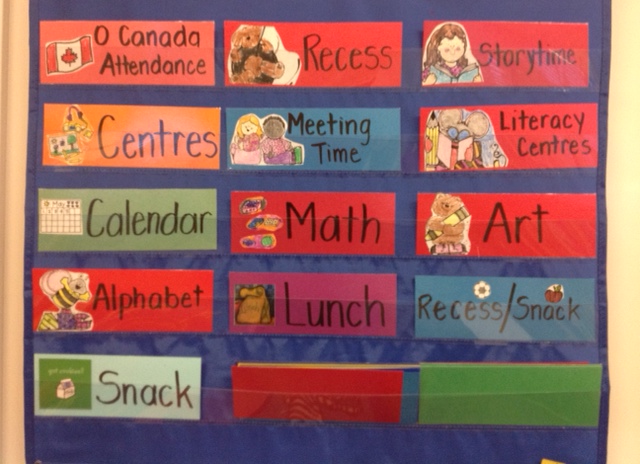
Here is the visual Daily Schedule from our classrooms.  We read it in three columns: the first column is the activities from the start of the day until snack time; the second is from morning recess to the end of the lunch hour; and the third is the afternoon.

photo

The children love the schedule because they know what’s going to happen in class next, when their breaks will be and when we get close to home time.  The children often ask when they can go home during the afternoon as the full day in Kindergarten can be a long one.  When we can show the children on the schedule how many activities there are before home time, they feel they can cope because they can count them down.

Reviewing this visual schedule is part of our morning routine right before Centres.  Sometimes we remember to change it the day before, but lately we’ve started changing it with the children so they can see, and hear from us, how their day will unfold.  The children are developing a sense of the passage of time, which we believe helps them to pace themselves throughout the day.

photo-11

We added the “I forgot…” card to the schedule because inevitably, we will forget something
resulting in a change in the schedule (eg., we forgot the gym is in use during our PE time for a school-wide event or we have to miss Centres to go to an assembly).  Each time we use the “I forgot…” card, it is an opportunity for us to teach our students about being flexible.  We just place the card in front of the activity to be missed or moved to another time or day.

Although there might be disappointment, a five-year old child is old enough to understand that sometimes what we planned for is not going to happen. Kindergarten children are able to learn to be flexible, adjust and accept the circumstances of a given situation.  We try to positively use these experiences in class to teach our students to express their feelings and use a self-regulating strategy to help deal with their emotions.

We begin teaching our classroom routines on the first day of Gradual Entry for Kindergarten.  We start with a routine for how to sit at the carpet during Meeting Time (walk to the carpet; listen with your whole body: sit cross cross on your Alphabet square, hands in your lap, eyes are looking at the teacher, ears are listening to the teacher, mouths are quiet).

We carefully explain what our expectations are, specifically praise the children for showing us the expected behaviour and in the days and weeks to follow, continue to practise and positively reinforce the desired routines and behaviours with more praise.  From there we add our routine for Centre Time (walk to a centre, four to a group, quiet voices, share), and continue building in more routines through the months of September and October.

Our students are becoming independent in the classroom as a result of learning routines.  They are able to do many things for themselves and take a lot of pride from that independence. It’s certainly one of the big goals we want for our children as they grow up and move through the school years.

Time to Revisit “Setting Up the Self-Regulated Classroom”

We’re back at school this week, setting up the physical space of our classrooms and thinking about our teaching practise.  We will be reposting some of our blog posts for the next few days to keep us focused on what we need to do when creating a safe, secure learning environment that best supports self-regulation and ultimately, student learning.  Today, we reblog, “Setting Up the Self-Regulated Classroom” from September 2015.

We’ve spent some time unpacking the cupboards and boxes, and moving the classroom furniture into place the past couple of days.  While we’re keeping the general layout of tables and chairs and location of various Centres the same, we did try to further reduce clutter at the end of last school year and refine our organisation of school supplies and learning resources.

Some small changes we made this year include:

  • DECLUTTER!  Removal of toys and activities the children showed little interest in or were in poor condition; recycle extra copies of alphabet and writing activities; return extra and unnecessary supplies to the art and science cupboards
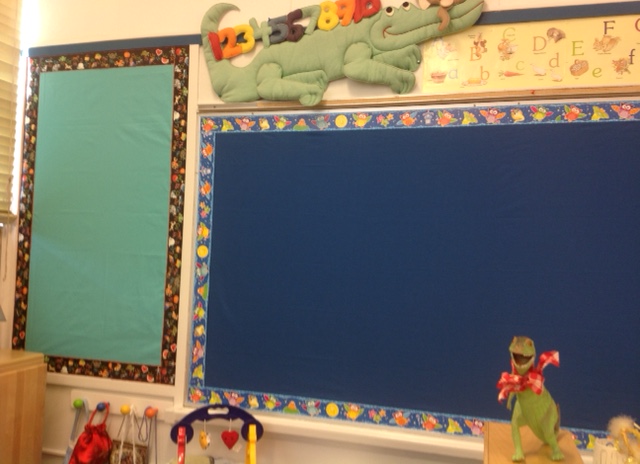
  • Cover the remaining bulletin boards with broadcloth for increased noise reduction
  • Purchase a few more matching clear containers for all math manipulatives, Centre activities and storage so there’s a sense of cohesiveness and uniformity when you look around the classroom
  • Place Centre toys and activities on a rotation so not everything is out in view; but rather, stored in a closed cupboard and can be brought out as needed
  • Christy is sewing curtains to cover her open cupboards – reveal to follow in the next few days!

Setting Up the Self-Regulated Classroom

Although it’s the first day of school across British Columbia, here in West Vancouver our Kindergarten children do not start school until tomorrow.  Their Gradual Entry Program begins on Wednesday when we will welcome small groups into the classroom over the next few days, and provide the children with time to familiarize themselves with us, the classroom routines and their new classmates in a gentle and unhurried manner.

For the past week we’ve been busy setting up our classrooms, and we’ve been doing so with an eye to the children’s self-regulation.

Of course we will be specifically teaching the children about the Zones of Regulation, identifying feelings and emotions and exploring mindfulness.  But there are also some things we can do to prepare the physical environment of our classrooms to support self-regulation.

Stuart Shanker, in Calm, Alert and Learning: Classroom Strategies for Self-Regulation, reminds us that a classroom environment with reduced visual and auditory distractors can help students to concentrate better.  Here are some of his main points, and what we’ve been doing in our classrooms.

Lots of natural light.  We both have lots of windows to appreciate the natural light which flows into our classrooms.  Sometimes we will lower the blinds but in the “open” position so we can still have light.  Our windows also have a special reflective coating on them so the children can see outside; however, others are unable to see in.

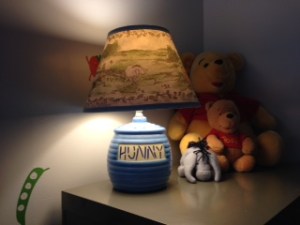
Minimum of artificial light.  We keep the overhead lights IMG_4498“off” in the classroom generally, although the grey, cloudy days make the room quite dark.  Sometimes one bank of lights turned is on because it’s necessary for reading and printing!  We’ve purchased several lamps (or cast-offs from home) to provide some atmosphere and they make the classroom feel warm and cosy.
Soft paint colours in a non-gloss finish.  As teachers we don’t often have a lot of choice in the paint finish of our classrooms; we both have the standard “white.”  Christy’s cupboards are a soft blue and mine are naturally finished so we are fortunate in that regard.  We’re just happy to freshly painted classrooms and that our classrooms schools are beautifully maintained by our District Facilities group.

IMG_1654No vibrant colours.  Not living with colour in the classroom is something we have both struggled with.  We love colour:  colour energizes us, inspires us, provokes creativity, brings us happiness, and is necessary for our mental well-being.  We know there are many self-regulated classrooms which have gone with a neutral colour scheme, but that wasn’t for us.  We spend many hours in our classrooms so our compromise has been to decorate our classrooms in a blue (to suggest the sky or ocean) and green (to suggest fields and forest) colour scheme, both of which bring a sense of calm and tranquility to our teaching, and therefore, the children’s self-regulation.

This year we also tried something different.  Instead of using paper to cover our bulletin boards, we used broadcloth to help absorb the sound better, plus being more environmentally responsible as fading should be less and the fabric won’t need to be replaced every year or two.

IMG_4500Organise everyday materials and put away other supplies.  In continuing with our blue and green colour scheme, we have primarily blue and green baskets to organise the children’s table school supplies, plus some pink for fun.  We place all daily school supplies (crayons, gluesticks, scissors, felt pens) in their baskets in a designated, labelled bookcase, and teach the children in the first weeks of school how to give out and put away the baskets.

The rest of the children’s school supplies for the year are stowed away in the cupboards.

We use clear tubs of for organizing Math manipulatives and Activity Time toys and shelving/tub systems for areas such as the Imagination Station.

Reduce wall clutter.  We don’t like any kind of clutter; we find it overstimulating and not helpful in our own self-regulation.  We use our bulletin boards for displaying student art work.  The children, and us, need to be surrounded by the beauty of their own creations, and to develop an appreciation of their own, and others, efforts.

We display only what we deem essential:  Alphabets, number line, our Math Their Way calendar, math rotation groups and the Visual Schedule.  Although we are often printing Alphabet letters, recording our brainstorming and demonstrating art projects, these charts usually come down or are put away soon after we’ve finished using them.

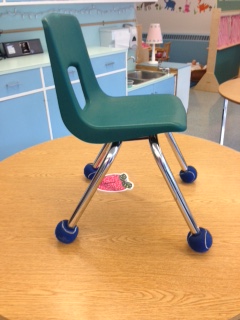
IMG_4502Tennis balls (“Hush-Ups”) on the chairs.  The sound of the chairs banging against the table legs and floor was one we endured for many years until we were able to order these “Hush-Ups”  through a Parent Advisory Council (PAC) grant for self-regulation materials last year.


Carpets on the floor.  My classroom is carpeted so the noise level is generally quite low.  Christy’s classroom is not carpeted but she was able to purchase, through the PAC grant, additional small carpets for some of her play areas to reduce the noise.  All the teachers in our school were fortunate to be able to select a beautiful, decorative carpet for our classrooms, paid for by our PAC.

Room organisation.  Although it seems logical that every classroom needs a quiet area for Meeting Time, sitting and discussion, the physical classroom itself does not always lend itself easily to determining where that might be.  Our Alphabet carpet area is the quiet space, and we’ve tried to surround it with low storage units or bookcases and the Special Helper’s chair to make it feel safe and enclosed.  We both have our quiet space deep into the classroom and well away from the door to help eliminate unnecessary distractions.

Well, our classrooms are ready, supplies are in their baskets and the activities are on the tables for the children.  We’re all ready for the Kindergarten and looking forward to facilitating their new journey as self-regulated learners.
 

Summer is (Almost) Over Musings and Some Back to School Shopping

IMG_1448It’s been a gorgeous summer, filled with aquamarine skies and tropical waters, sandy beaches, barbecues with friends and families and lots of gardening.  Although we’ve travelled to places near and far, there’s nothing quite like coming home and the comforts of your own space and bed.  That’s probably more indicative of our age, but it’s a conversation that can be revisited at another time, cool drink in hand.


My dad used to always say that time goes by faster after your children are born, and in our families,IMG_5655 that is certainly true.  We don’t think just about the days and weeks anymore; instead, we find ourselves measuring time by years, holiday celebrations and the summer holidays.

IMG_5676


This summer was particularly poignant as my daughter graduated from high school and so begins her next journey in education:  University.  It’s such an exciting time for her, and we’re so delighted as our own memories of University life are very special.  Back at home, Christy and I each have a child going into Grade 12 this year so I’m back on the graduation wheel of special events but this will be it for me (apparently with a son it’s supposed to be simpler?).  Christy’s youngest has a few more years in school so she will have a bit of a breather between her girls.  It occurred to me that Christy and I are closing the circle as parents of school-aged children, and this will be reflected in our blog as we think about Kindergarten within the context, and as the foundation, of public education this year.

And now onto business.

Although many people don’t realise this, it actually takes a great deal of time to wind down the classroom, and ourselves, after a busy year of teaching.  There is a lot to clean and tidy in a Kindergarten classroom and we are usually in school for another week or two, depending upon what projects we might be up to.  When we’re finished, we definitely try to relax and “let it go.” But school is never really far from our minds, because in just a matter of days after starting our holiday we found ourselves out and about and shopping for some great resources for our classrooms this fall.

Whenever I go to Victoria, British Columbia, I love to visit my favourite teacher’s store, Schoolhouse Teaching Supplies.  I’ve been shopping there for a number of years now and they always have such fantastic collections of books, teaching resources and supplies, stickers and classroom decorations.  The lovely shopkeepers are happy to order things in for you, if you’re looking for something specific.  We need to replenish our alphabet stickers, calendar pieces, birthday certificates and cloakroom tags every year, and sometimes a pretty new bulletin board border is just the perfect finishing complement to an art display.

Some of the treasures of our most recent shopping spree

Some of the treasures of our most recent shopping spree

On this particular visit to Victoria, we wanted to do a mini bookstore tour so we took a day to go to the downtown Chapters, Russell’s New and Used Books and Munro’s Books.  We hadn’t been to Munro’s for a long time but our son’s English teacher had recommended he go there the next time we were in town.  Munro’s is in a beautiful, high ceiling space on Government Street and very wonderful it is with not only a well-curated collection of books and fun “bits and bobs” for the literati (think cute book lovers’ tote bags, book labels, cards and papers) but they also have an outstanding children’s literature section.  Naturally, we couldn’t leave empty handed so we came away with these beautiful new alphabet books:

FullSizeRender-11


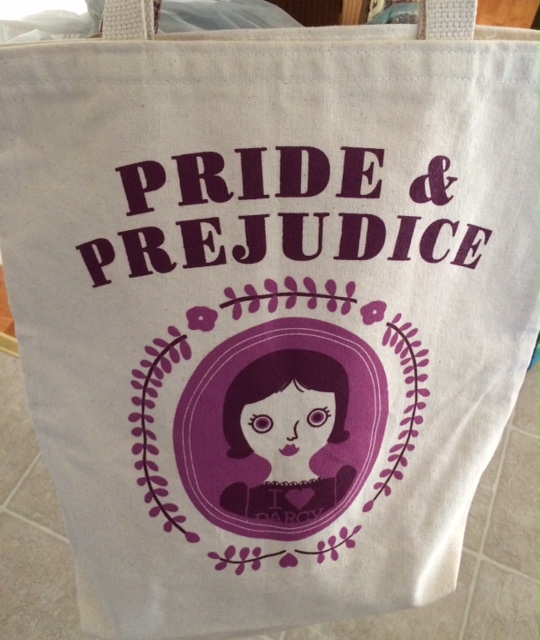
And I had to buy this adorable tote:

I <3 Darcy

I ❤ Darcy

Back at home, when we thought we couldn’t possibly buy anything else for school, we were having lunch in town with a colleague and walked past Vancouver Kidsbooks at their new Broadway location on the way back to the car.  Although our usual neighbourhood haunt is our adored Kidsbooks in the Village store in North Vancouver, this larger store is pretty amazing.  There are just so many beautiful books for children from infant to young adults, and toys, puppets and puzzles.  We’ve been replacing and upgrading the learning resources for our classrooms so we decided to purchase some new puzzles for our classes:

FullSizeRender-13

We won’t tire you with the rest of the shopping we did, but let’s just say we’re going to need some help getting this stuff to our classrooms.  The shopping bags are starting to pile up downstairs for our return to school this week, and there will be certainly be some unpacking to do.  But in the meantime, we’re going to stay in this restful and relaxing state of mind, hopefully the same as you.


A Letter for Our Kindergarten Children


photo-2
(
We’ve made a few adjustments to our original letter for the purposes of this post.)

To Our Dear Kindergarten Children,

As we were preparing your slideshow and looking back at your adorable pictures from September until now, we’re amazed at how fast this year has gone by.  You have grown up so much, ready to leave Kindergarten and move ahead to Grade One.  You were small, shy children when we started and now you are confident, knowledgeable students.  We listen to your thoughtful questions, observe you sharing and taking turns even when it’s really hard and notice when you try to do the right thing by making a responsible choice or decision.

We are so proud of you.  Do you remember when we talked about what that meant?  It means we are so happy with what you are doing.  We’re so proud of how hard you worked on your self-regulation strategies, how you are thinking about the feelings of others, your knowledge and understanding of stories and much, much more.

We have loved teaching you this year.

We love how excited you are to have your Sharing and Special Helper Day.

We love reading stories aloud to you, and the sound of your laughter when we read the funny bits.  

We love the love you have for your Grade 7 Buddies as you play, craft, read and learn together.

We love your enjoyment of forest play and how you walk up and down the creek wearing your boots.

We love that you share our love of Sparkle Mod Podge and all things that glitter and sparkle.

We love the pride you demonstrate when sharing your schoolwork with your parents during our Student-led Conferences.

We love your enthusiasm for drawing with pastels and painting on a big scale.

We love your dedication to finishing all of the pages in your Alphabet Book.

We love all your stuffed animals, big and small, that you bring to play with in the House Corner.

…this is our greatest wish for you:  that you will be happy in every class, that you continue to find joy in your learning and that you follow your dreams to be everything that we know you can be.

We will miss you so much.  You are a very special group of children.  We are our own Kindergarten Fairy Tale that will “live happily ever after.” Have a wonderful summer!  It’s time for you to play, eat, read and sleep, and remember…take some time to breathe deeply every day…you know what to do!

Love, Your Kindergarten Teachers


This Week in Our Room:  June 20-24, 2016

On Monday we were fortunate to have Kathy Nowak, a Registered Holistic Nutritionist and School Nutrition Educator for Kin’s Farm Market and COBS bread, come to our classrooms to speak to the children about nutrition.

FullSizeRender-9Kathy covered a wide variety of topics, including the Canada Food Guide’s four food groups, healthy food choices and the dangers of pop.  She also discussed with the children why they should eat a good breakfast, and the class shared some of their ideas for the first meal of the day.  Kathy emphasised how important it is to have protein with breakfast as it helps them with their energy and alertness in class.  Dairy products, such as milk, yogurt and cheese, nuts and leftover beans or fish were some of the suggestions she gave us.

One of the most fun things Kathy did was explain the importance of eating a rainbow of colours, as each of these foods provide different nutrients.  Kathy brought along sliced fruits and veggies to sample, and yes, many of the children enjoyed eating the raw purple cabbage and took seconds!

We’re sending home an Activity Book to follow-up from our healthy food presentation.

IMG_1285We had an amazing day at the Vancouver Aquarium on Wednesday!  The sun was shining, the sea animals were swimming and we were ready for a wonderful day out with our classes.  We’ve been every year for the past five years with the Kindergarten, yet we continue to be amazed with this incredible teaching facility.  We learned so much from each exhibit, from the frog displays, to the beluga and porpoise training, to the beautiful Amazon area where the caiman had surfaced to greet us.

IMG_1300

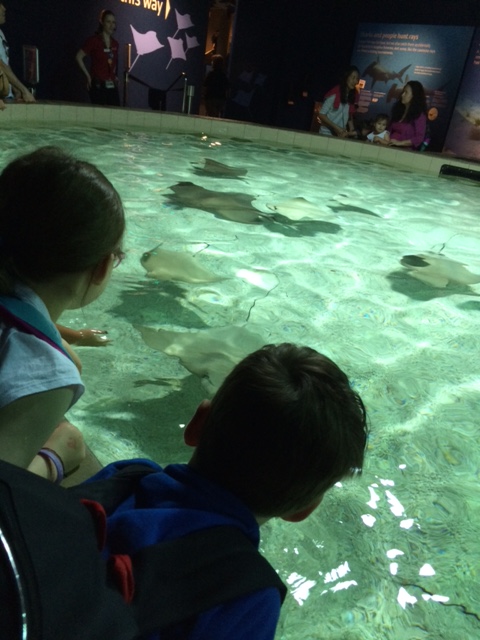
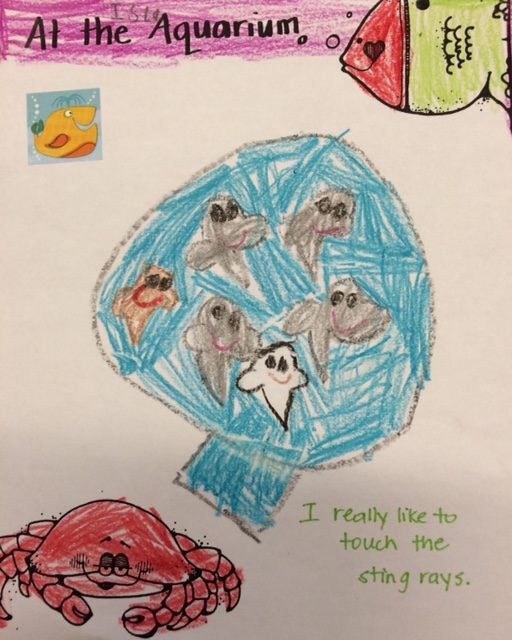
The children loved the new Sting Ray pools where these fast moving swimmers glided among our outstretched hands.  For many of the children, this exhibit was their absolute favourite.  They were able to use two fingers to gently touch the Rays, an experience they will never forget.


FullSizeRender-7


Who can imagine that eight short years ago, Christy and I taught the current Grade 7 students?  Now these young people are leaving Ridgeview as they continue their schooling at various high schools.  But before they do, the Grade 7s, our Big Buddies, will attend their Promotion Ceremony on Monday, June 27.  When the Grade 7s were in Kindergarten, they presented flowers to their Buddies.  Now, it is our children’s turn to give a flower to each of their Big Buddies.  We were asked, how long has the flower ceremony been a tradition at Ridgeview? It has been a tradition for at least 13 years, 3 years while we were teaching Grade One and the past ten years since we’ve been in Kindergarten.

We had a rehearsal on Thursday so the children know what to expect.  Please refer to the information letter we sent home on Thursday for appropriate attire for your Kindergartener.  You are welcome to join us to watch your child and see us with our Buddies.

Upcoming Events and Reminders

Monday, June 27:  Grade 7 Promotion Ceremony. We sent home a letter earlier this week with detailed information about this event. Please let your teacher know if you have any questions.

Tuesday, June 28: Kindergarten “Beach Bubbles” Party. We’re going to have a fun day for our students with summer themed centres and a special snack. Our party takes place in both Kindergarten classrooms and the playground area between our rooms.

Wednesday, June 29:  Kindergarten students will be dismissed at 12 pm (the last day of school).

If the Shoe Fits…..

IMG_1171It was Cinderella’s turn to make an appearance last week in the Kindergarten….She left a little glass slipper amidst a flurry of fairy dust on the Special Helper chair in the meeting area.


FullSizeRender-3The children entered the classroom and walked to the meeting area as is their usual routine.  We believe that establishing, maintaining and reinforcing classroom routines is an essential part of the children’s self-regulation as routines create predictability about what might happen next, and reduces anxiety about the unknown.


As they settled themselves on the carpet with a book and quietly greeted their classmates, there was a beautiful silence as the children happened upon this provocation in a moment of sparkle.  Truly, you could hear the children’s brains trying to make sense what they were seeing with what they know about magic.  And then came the flood of questions.

Who did this?

Is that Cinderella’s slipper?

Did you (the teachers) do this?

How did this get here?

We could not have asked for a better reaction.  The children were buzzing with excitement, trying to logically figure out how this occurred (we had left tiny trails of glitter around the classroom the day before and denied our involvement), verbalising what they already knew about the story and some were very much convinced we had been visited by fairies.

We finally did explain we had created that little scenario as a special surprise for the children to get them to start thinking and talking about what they knew about Cinderella.  And they most certainly did.

We read three different versions of Cinderella.  The first was beautifully written and illustrated by Barbara McClintock.  We loved this story because it is very traditional, explains how Cinderella got her name and has a very happy ending for all the characters.

IMG_5396

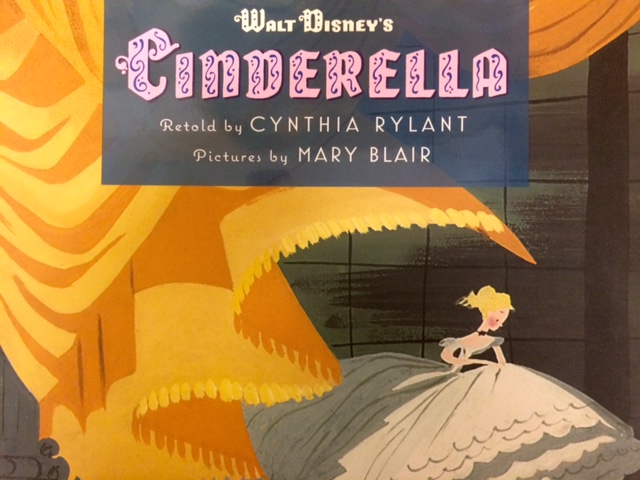
Next, we read Cinderella by Cynthia Rylant with paintings by Mary Blair.  Mary Blair’s original paintings were for the “Cinderella” animated movie by Walt Disney Studios.  This is a lovely and romantic retelling of the story Cinderella, probably unlike other versions the children have heard.

“Who can say by what mystery two people find each other in this great wide world?”

Now, if those words do not set your heart aflutter, we don’t know what will….

As for the children, who felt the pictures were not at all like the movie, they still did very much enjoy our reading of the story.

FullSizeRender-4

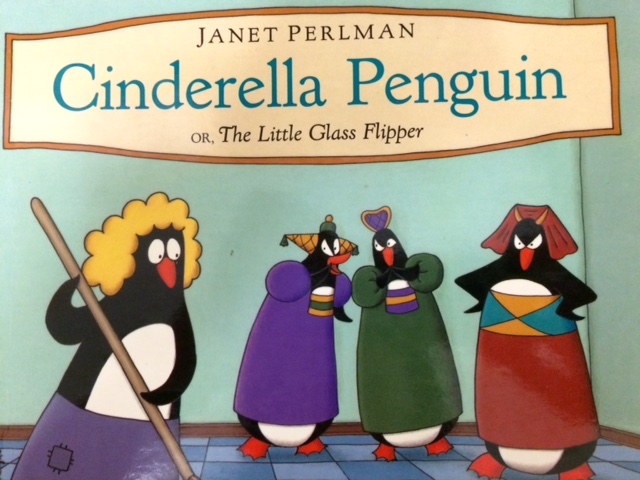
Our final Cinderella story was a bit of a twist, similar to The Three Little Wolves and the Big Bad Pig by Eugenios Trivizas and illustrated by Helen Oxenbury.  We read Cinderella Penguin or The Little Glass Flipper by Janet Perlman.  The laughter when we read aloud the title was almost hysterical.  After all, we had already completed our Penguin Inquiry, so the penguin references made complete sense to the children.  The children’s knowledge from learning about penguins made a very tidy integration with this book.

FullSizeRender-3

We’ve spent some time discussing story structure (beginning, middle, end), characterization and setting.  Now, we’re getting into some of the interesting elements about fairy tales, specifically the pattern of 3 and magical objects and people.

The children have a lot of knowledge to draw upon; even if they were not really familiar with fairy tales previously, we’ve read a wealth of them at Storytime (the Sharing item every student had to bring in for the past four weeks was a fairy tale and we thoroughly enjoyed a wide range of books), and used some specific books to teach about the story elements.

We brainstormed all the magical people, objects and words we could think of from all the fairy tales we’ve read so far, and selected a few objects from Cinderella to draw and label for our literary response.

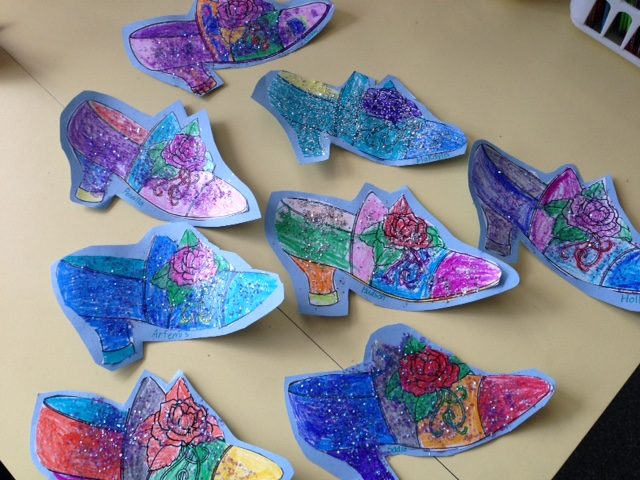
We also decorated some gorgeous shoes for our story craft and made our Fairy Tales folders during Art.

FullSizeRender-5

All in all, it was a magical week at school, and not just because of Cinderella.

IMG_5392

There’s a change in the air.  We’ve noticed in the past two weeks the change in our students.  They’ve become more self-assured and self-confident.  Many children are showing an independence that was not observable even a month ago.  Self-regulation strategies, which we have diligently worked on all year, are being used by the children as they are mindful of themselves and their social context.

Suddenly, everyone has fallen into the routines.  They’ve developed a social awareness of, and flexibility for, the constant changes that happen at this time of the year.  There’s an indescribable ease with which they move around the class, talking, negotiating and sharing with their classmates.  The children are getting ready to move on.  But for now, we can only think of our classes as our Kindergarten children…we’re not quite ready to let go.