Kindergarten Readiness Pyramid: Part 2

We hosted our Welcome to Kindergarten Event (WTK) last week, and as part of the handout package for parents, we included the Kindergarten Readiness Pyramid.  Last week we began to reflect, with reference to the Readiness Pyramid, on how our Kindergarten students have matured since their WTK experience one year ago as they head towards Grade One Readiness.

photo

Kindergarten Readiness are the skills incoming Kindergarten students should have in place when they arrive at school.  The foundation of the pyramid is Self-Care and Motor skills, or the ability to look after one’s personal care.  These skills are taught during the early years while the children are at home with their parents.  In Kindergarten, children are expected to independently use the washroom and wash their hands, feed themselves and change their own clothes and shoes.

The second layer of foundation blocks are Self-Regulation and Social Expression.  Self-Regulation is the children’s ability to regulate their emotional state and behaviour so it is appropriate to their current social situation.  It includes the ability to listen to others, exhibit impulse control, and demonstrate an understanding of commands and boundaries, all necessary skills for the safety and emotional well-being of the entire class.

Let’s look at the last two sections of the Kindergarten Readiness Pyramid:  Social Expression and Kindergarten Academics.

The Kindergarten Readiness Pyramid we refer to in both of these blog posts was originally used in a research study on children’s readiness for Kindergarten in the Silicon Valley.  It has been modified slightly to fit our needs at Ridgeview.

Social Expression

In this context, Social Expression refers to the oral language skills children will use in the classroom.  At school, we can see and hear the impact that adults have on oral language development with their children.  The time parents spend with their children in the early years talking, discussing, explaining and questioning around dinner tables, during car rides, at bedtime and the myriad of activities in between, is significant.

This year we listen to our Kindergarten children express their opinions, stories and questions, which have been shaped and influenced by their parents, family members, and other adults, in every class discussion.  The children’s sense of wonder and curiosity becomes apparent in what they notice and often bring to our attention.  As part of our Inquiry Based Learning, we have begun teaching them how to ask questions to obtain the answers they are looking for.

It is through the children’s Imaginary Play that they are using and practising the oral language, and re-enacting situations, that are familiar to them.  Centres such as the House Corner allow the children to assume roles in their play.  The children bring together their diverse experiences to create a plan or goal for their creative play and use their words to cooperatively bring it to fruition.

Our Kindergarten group interacts with many adults in the school building.  In addition to the classroom teachers, our students have frequent contact with our Education Assistant, Music Teacher, Teacher-Librarian, Administrators, Office Staff and Playground Supervisors.  With their ever expanding vocabularies and natural charm, the children are learning that language is their means of communicating their needs and wants.  The relationships between themselves and the important adults in their family life builds a base of experience, confidence and security as to how well they can relate to adults outside of the home.

Kindergarten Academics

Over the years we have seen a growing love of books from the Kindergarten children.  We know this deep love of literature has been carefully nurtured from the time their children were infants by all of our classroom parents, who understand the importance of reading aloud to them.  Indeed, the bedtime story ritual is one of the most precious times spent with our children.

In class, not only do we have Story time every day, but we often introduce a lesson with a book to teach or review concepts.  The children enjoy the read aloud time, and we’re always amazed at how well they can sit and focus.  We engage with books multiple times in our day.  As this school year has progressed we’ve noticed an increasing number of children in our class who choose to independently read books, listen to stories at the Listening Centre or “read” the room with a reading wand, in a sustained way during Activity Time.

Many children come to Kindergarten able to print their first name, usually in uppercase letters.  As part of our Kindergarten program, we teach each letter name, sound and correct upper-and lowercase letter formation.  As each child begins to print his or her name correctly with a combination of upper- and lowercase letters, it becomes a day of pride, independence and celebration.

We also practise and build upon the children’s knowledge of phonological awareness skills, including rhyming, syllables and initial sounds.  Although for some children the Alphabet lessons may be a review, they are all receiving teacher directed instruction as a whole class which helps to prepare them for the later grades.  We extend our Alphabet teaching with drawing, colouring and labelling pictures of words beginning with the Letter of the Week.

Our students are a long ways away now from the Kindergarten Readiness Pyramid.  For this final term at school we’ve been fondly calling them our “Grade Ones in Training.”  But in our hearts, they’ll always be our Kindergarten children.


Safety Week in the Kindergarten

IMG_3809We’ve been practising safety of all kinds this week at school.

Elmer the Elephant and Bicycle Safety

On Wednesday we welcomed Elmer the Elephant and Ruff the Dog.  Elmer and Ruff come to us from the North Shore Safety Council.  They are puppets, voiced by the amazing Mrs. Young.  The children are enchanted with these delightful and endearing puppets.

Elmer spoke to us about bicycle safety.  An important reminder is

And here's Ruff!

And here’s Ruff!

that the children should go shopping with you to purchase their new bike and helmet to ensure everything fits perfectly.  Although it’s a wonderful surprise to bring home a special bike for your child, it’s necessary to get a bike that is the right size.  A helmet must fit correctly, with the front edge above the eyebrows.  The strap should always be fastened under the chin.

Here are some of the highlights from Elmer’s talk:

  • Slow down and stop your bike, if necessary, for pedestrians if you are riding on the sidewalk.
  • Stop and check before crossing a driveway to see if a car is backing up.
  • Ride in a single file line; a sidewalk is for sharing.
  • Stop your bike at the crosswalk.  You get off your bike and walk it across.  It is much safer than riding because you do not want to fall down in the middle of the street.
  • Taking a break is ok in the middle of your ride.  You could be tired, or there could a lot going on around you such as construction.  Elmer emphasized to the children that learning to know their limits is part of learning to look after themselves.
  • Look in both directions before you cross the street, and look behind you to see if a car is coming up on your left.
  • A bike carrier or backpack is necessary to carry your things.  Ruff explained that the children need to balance and steer their bike with two hands so they need somewhere to store their belongings.
  • Bike storage must be dry and safeWe repeated these words after Elmer: “My bike ride isn’t over until my bike is put away.”


Earthquake Preparedness :  The Emergency Release Drill

Drop, Cover and Hold!

Drop, Cover and Hold!

We had our first Emergency Release Drill yesterday.  It can be a little worrisome for the Kindergarten because they’ve never done this before at Ridgeview, so we tell our children exactly what will happen during the process in the days leading up.  An

Emergency Release can be used in any type of emergency, and this week our school was practising it in conjunction with a simulated Earthquake drill.

Although the Kindergarten children are used to listening to follow our directions and instructions for things like class work, lining up or dividing into small groups for PE stations, an Earthquake or Fire Drill is different.  This is a emergency situation where the children need to be able follow the teacher’s directions quickly; we tell them that our explanations will be quite abbreviated.   We teach the children that we will have to move quickly; we won’t have time to wait for them to finish whatever they might be working on.  When it’s time to go, we must go.

We have these drills to practise as a school in the event of a real emergency but it also gives us an opportunity to see who can quickly follow our commands in a new situation.

We can see how well we have taught our students to listen, follow instructions and focus on what we’re trying to accomplish as a group (get out of the building) instead of our individual needs.

When we heard the signal (rumbling earthquake noises) over the public address system (PA) the children immediately ceased what they were doing to follow our directions of “Duck, Cover and Hold” under the classroom tables.  We walked quickly to the tables, mindfully pulled the chairs out and kneeled down under the tables, fingers intertwined and over the back of our necks, elbows covering our ears.

We count to 60 as a class, as most earthquakes don’t last more than a minute.  Then, we carefully came out from under the tables.  Sometimes there might be a few more earthquake noises coming from the PA so we would quickly go back under the tables and begin counting again.  We had already taught the children that there can be aftershocks, and to be prepared for a second round of counting.

Our Principal, Mrs. Brady, spoke on the PA to ask us to prepare to exit the building.  The teacher brings the emergency backpack which is filled with supplies and the children line up behind us.  Before we leave our classroom, we place a green “OK” sign in the window so if this was a real emergency situation, staff members would know we were all safe and had left our classroom.

Our school population gathers on the gravel field.  We complete our attendance and wait to hear if the building is deemed safe by our Damage Assessment Team.  In this instance our school was declared safe, and students were allowed to return to the classrooms.  Once we were settled, we waited for Student Runners to come and collect the children after their parents had checked in at the Student Release Centre/Parent and Student Reunion Area.

We were really proud of the Kindergarten students; they did a fantastic job from the way they walked carefully down to the gravel field, waited patiently for the Damage Assessment Team to finish their survey to staying calm and focused throughout the entire drill.

We know that it’s not “if,” but “when” the Big One will come.  And when it happens, our practise and preparation with our students means we will be ready.

Kindergarten Readiness Pyramid: Part One

We held our annual Welcome to Kindergarten Event (WTK) last week to welcome the incoming Kindergarten students for 2015-2016.  It’s amazing to think that a year has already flown by from the first time we met our current Kindergarten students.

One of the handouts from the Welcome to Kindergarten package was the Kindergarten Readiness Pyramid.  It was interesting to revisit this again and reflect on how very far our “Grade Ones in Training” have come along through their Kindergarten year.

photo

We value this pyramid because it clearly illustrates one of our core beliefs about Kindergarten Readiness:  that a strong foundation of basic self-help, self-care and motor skills; the ability to self-regulate and demonstration of social expression are necessary before the children can access the academic learning at the top of the pyramid.  Although the tendency is to focus on the academic skills as an indicator of Readiness, in Kindergarten we begin with a solid footing in how to independently help ourselves.

Today we’ll look at two sections of the Kindergarten Readiness Pyramid:  Self-Care and Motor Skills, and Self-Regulation.

Self-Care and Motor Skills.  We share school supplies, toys and books in class so germs can spread quickly in the Kindergarten.  Most children come to Kindergarten knowing about hand-washing because they have learned this skill well at home and had it reinforced in preschool or daycare.  It’s wonderful to see how quickly our children organize themselves now at the various sinks and washrooms to wash their hands, once they understood the routines we created at school.

Although it might be faster to help the children on with their jackets, our classes love their independence to do up their coats themselves.  We’re pleased to note how easily our classes can change their own shoes and boots, and change their pants and socks if they get wet on a rainy day.  When children have Velcro or slip-on shoes, they can maintain their independence; laces are not a practical option for Kindergarten.

With the Full Day Kindergarten, the children eat their lunch at school every day.  Many children eat finger foods for lunch, which is great because it’s like they’re on a picnic!  But a thermos full of warm food is also a nice change; however, the children must be able to use a fork or spoon as we do not teach this skill at school.

Self-Regulation.  We’re always amazed at how our classes embrace practicing self-regulation strategies.  Although they might not have called it “self-regulation” before Kindergarten, many of the children we are teaching this year are used to “lying down to rest,” or “looking quietly at a book,” or “playing Lego in my room by myself” at home.  They have been taught, or developed, strategies to help them to feel calm and relaxed.

When the children started school, they understood that we were also teaching them additional ways to stay self-regulated as a class.  They recognize that the self-regulation strategies they use at home are sometimes different than the strategies we use at school because of our social situation.

When the children are calm and focused, they can pay attention and follow the teacher’s instructions.  This is especially important in the area of “obeying commands” and respecting rules and boundaries.  There are times during the day when the teacher might say “no,” “stop” or “wait” and we expect the children to respond quickly; we cannot always wait for a student to finish colouring a page or building with the blocks because we often move on to the next activity as a whole class.  Sometimes we just have to be patient, work through our frustration and delay our gratification, all important skills for self-regulation.

We have clearly established rules and routines for classroom play. Rules and routines provide security for our students because they establish boundaries around expected student behaviour, their own and others’.  Routines make the school day predictable, and may reduce some anxiety about “what will happen next.”

Our Kindergarten students love routines.  They love the routines so much that if we have a change in our day, they can appear to be troubled.  But change is important because part of their learning is that they can still be self-regulated while being flexible.

On our playground, we have specific boundaries for where the children must play during morning and lunch recess.  These rules are to ensure their safety, and they can play  where we know they can be easily seen by the playground supervisors.

The children need to respect the playground rules, as it is only through their ability to follow them that we would consider increasing those boundaries.  This year the Kindergarten is doing an outstanding job.  We just extended our students’ playground boundaries to include the forested area on our school property, a natural playground of trees, shrubs, and a shallow creek.  We take a recess time separate from the rest of the school population, and only allow the children to play there when it’s just our two classes and under our direct supervision.

Every year our classes come to understand that although we might not like the rules, we need the rules to keep us safe.   Rules are to be followed by everyone for the greater good.  When we feel safe, we are happy.  When we are happy, we are calm, relaxed and self-regulating.  Now we’re in the Green Zone:  focused, alert and ready to learn.

Thank you to our Ridgeview Principal, Mrs. Valerie Brady, and our Kindergarten teacher colleague, Lorraine Hartley, for bringing the Kindergarten Readiness Pyramid to our attention.  The Pyramid was originally used in a research study on children’s readiness for Kindergarten in the Silicon Valley.  We have modified it slightly to fit our needs at Ridgeview.

To learn more about Kindergarten Readiness, read this blog by our Ridgeview Principal.

Next week we’ll continue our reflection of the last two parts of the Kindergarten Readiness Pyramid:  Social Expression and Kindergarten Academics.


Self-Regulation Tool: Todd Parr Feelings Flashcards

photo 3We find the state of the dollhouse can be indicative of how we’re doing.  From the looks of things, it appears we’re having a complete overhaul.

We’re having a renovation at school right now, across the hall from one of our classrooms.  Both divisions are affected as the playground area between our two classes is filled with work trucks and a cordoned off worksite.


But…we’re heading into Week 2 now of the renovation, and the Kindergarten teachers’ nerves are just about frayed.

There’s nothing quite like story time with the whirring of a table saw as your background.  Or teaching the sound for “y” (the letter of the week) to the echo of rapid fire from a nail gun.  We were heading outside for PE and as we opened our back classroom door, one of the students said, “Hey, there’s four trucks out here!”  So much for bringing out the playground balls.

We think it’s time for some self-regulation….

You all might have guessed we’re huge Todd Parr fans by now.  We refer to his books often.  At a district Professional Day last year, we were introduced to the Todd Parr Feelings Flashcards by the Learning Support Team from Westcot Elementary in West Vancouver.

photo 1

We’ve been using these cards weekly with our classes as one of our HACE (Health and Career) resources.   Both sides of each card are labelled and gorgeously illustrated with a different feeling.  At the start of the year, we taught each feelings card, beginning with “happy,” “sad,” “angry” and “disappointed,” as those emotional descriptors we felt many of the children would know and already understand.

photo 2

Sometimes things happen in class; it’s a teaching and learning opportunity, so we gather together at meeting time and pull out the appropriate feelings card to generate a discussion.  We’ve talked about what it means to feel “left out” and “shy.”  The children are very serious and open about their feelings, and want to share their personal experiences about a specific emotion, particularly if we’re trying to solve a problem.  It’s important to talk about our feelings, and we connect those descriptors back to the Zones of Regulation and try to tie together how we feel with the actions we sometimes take, as a result.

With the on-going renovation this week, the teachers have made excessive use of the “calm” flashcard.  We’ve explained that exciting as it is to have a renovation at our school, it’s also frustrating for us as our environment is noisy and it’s difficult to teach. We want to feel calm; that is the optimal zone for both learning and teaching.  The children are making good suggestions for us to “down-regulate,” and bring our emotional state down from the frustrated feeling of the Yellow Zone to the calmness of the Green Zone.  We’re doing a lot of deep breathing, counting backwards from 10 and listening to quiet music, and the children are happily leading us.

The children are aware of, and beginning to articulate, their emotions while demonstrating empathy for how others feel.  They are very sophisticated in their ability to self-regulate.

We were able to order The Todd Parr Feelings Flashcards from Vancouver Kidsbooks or you can purchase them directly through Amazon.

Becoming The Self-Regulated Teacher

photo-3Much to our surprise, last Friday we passed a mini-milestone of 30 posts on this blog.

We’ve had a few friends and colleagues make comments or ask questions about The Self-Regulated Teacher such as, “It must be so much work having to think of something to write every week,” and “Where do you find the time?”  Although it’s not hard to think of ideas for writing (every day is a new adventure in the Kindergarten-there is no shortage of something to share) and time is always at a premium (we’re opportunists so we talk and write whenever we can, although we typically edit our work and post on Fridays and Sundays) we thought today we would reflect on how we started this website.

It was this time last year, at the end of April 2014, that we started thinking about how we could better communicate the wealth of information we have about the Kindergarten program to our classroom parents. The week prior we had just hosted our school’s  Welcome to Kindergarten event for all of the incoming Kindergarten students (our current group of children right now) and we were considering plans for the next school year.

We’ve talked about writing a handbook for parents since we started teaching Kindergarten nine years ago.  Although we try to cover as much ground as possible through the Curriculum Overviews and Curriculum Nights each fall, we often found ourselves rushing through our presentations and then feeling we hadn’t quite answered everybody’s questions to their satisfaction.

There is just so much information for first-time parents in the school system, and families new to Ridgeview, and Canada, to learn, digest and assimilate, particularly with the full-day Kindergarten program.  We remember ourselves how completely overwhelming it is when your children start school, and we’re teachers with the inside track!  Sometimes you just want to be able to take a little bit of information at a time, reflect, revisit, reflect again and then you can move on to the next thing.

We’re very fortunate that one of our best friends, Cari Wilson, is not only a Ridgeview Grade 7 teacher, but the West Vancouver District Innovation Support Leader (@kayakcari).  Cari had been encouraging us to switch from our hand-printed weekly classroom newsletter to an online version.  Christy and I were certain that a digital version of the Kindergarten handbook would be our chosen format.  From there the three of us decided we would actually create a Kindergarten website to house the handbook and the newsletters, and Cari would help us to build it and give us technical support until we were ready to manage it independently (sounds a lot like Kindergarten).

But what to call it?

Self-regulation is the cornerstore of our Kindergarten program at Ridgeview.  We have been using The Zones of Regulation  (2011) by Leah Kuypers for the past three years, and influenced by Stuart Shankar and his writing in Calm, Alert, and Learning (2013).  From these resources, we learned that being self-regulated ourselves, and being able to articulate our emotions to model what we were doing to self-regulate our own behaviour in class, would serve as a positive example for our students.  We would be self-regulated teachers; thus, The Self-Regulated Teacher.  It took another eight months of talking, thinking and planning before our first post.

The Self-Regulated Teacher’s primary purpose is as a resource for parents about everything to do with Kindergarten; we are very aware that we write for our intended audience, the Ridgeview Kindergarten parent group, new and seasoned.

Our Kindergarten Handbook holds all the important information about how we do things in Kindergarten at Ridgeview.  It will always be changing as we make new additions to keep it current, depending upon how each school year unfolds.

We started a blog as well to share about what’s happening in our classrooms and at school, as well as writing about the issues and topics important in Kindergarten including self-regulation, early literacy, play and social responsibility.

We inform our Ridgeview parent group that we have new posts on our blog through “Remind,” the app for teachers to remind their students and parents about classroom events and homework.  Our original intention was to have “Remind” replace the classroom newsletter but we found there were not enough characters for each “remind” to write descriptively about our classes, so that is why we write the blog.

As far as the Friday classroom newsletter is concerned, we’re still writing it on paper and will do so until the end of this school year.  We started the newsletter in September, switched to “Remind” in October, and brought it back again when our parent group told us they missed it, and we want to honour their feedback and appreciation.

We are thrilled to be able to share our teaching and classroom experience on The Self-Regulated Teacher as a result of today’s technology.  Through social media and the support of others, we’ve been able to reach farther afield beyond that of our parent group to include teaching colleagues, teacher candidates, administrators and other interested parents.  We are delighted and so appreciative to those of you who have happened to stop by.

Be Full of the Joys of Spring

FullSizeRenderBe full of the joys of Spring…feeling happy, full of energy and enthusiasm. We’d say that pretty much describes the Kindergarten!


We’ve been, at least until the end of this week, enjoying some wonderful Spring weather in West Vancouver.  Here’s some of the fun things we’ve been doing in class over the past few weeks.

Earth Day

It was Earth Day on Wednesday, so we started our celebrations with some energy saving measures.  We kept the lights turned off all day (including our twinkle lights) and were diligent about turning off the tap quickly after washing our hands in the classroom.

photo 1-9We read another book by the amazing Todd Parr, The Earth Book, recalled the main ideas of how to look after our Earth better and added on a few of our own, such as “Looking after our people and animals friends.”  We each made a page for our class book to enjoy for the rest of the year.

Christy and I recently attended a BC Hydro sponsored workshop in

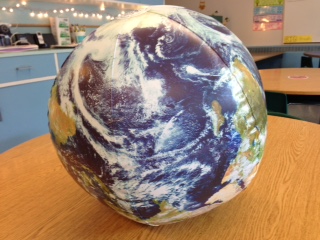
IMG_3780 our school district called “Energy Explorers” to learn about some new and exciting ideas about energy use and conservation for Kindergarten learners.  We received a lot of great stuff such as a teacher’s guide, big book and student resource books, but it was this fabulous earth ball that had the Kindergarten really intrigued.  The children were fascinated watching us blow it up (it’s quite big).  At the end of the day, after all of our discussions and what we could do to conserve our Earth’s limited resources, we passed around the “Earth” and each child stated what he or she would personally try to improve.  We had a number of children say they would try “to not waste food and eat the leftovers….”  Isn’t that awesome?

Signs of Spring Sharing

For Sharing and Special Helper this month, the children have been bringing in a “Sign of Spring” sharing.  We’ve been treated to many wonderful items, including photos of our children in their gardens at home, drawings, plants and bouquets, and the children’s gardening tools like sweet little gloves and watering cans.

Zucchini Sharing!

Zucchini Sharing!

Watering Can Sharing!

Watering Can Sharing!


Spring Books

photo 3-7As always, we have some wonderful books about Spring and the seasons that we’ve been reading aloud to our classes.


  • Spring (The Seasons) (Barron’s)
  • Waiting for Wings (Lois Ehlert)
  • I See Spring (Charles Ghigna, Ag Jatkowska)
  • My Favourite Time of Year (Susan Pearson, illustrated by John Wallner)
  • A Book of Seasons (Alice and Martin Provenson)
  • The Year at Maple Hill Farm (Alice and Martin Provenson)
  • Spring (Sian Smith)

Spring Crafts

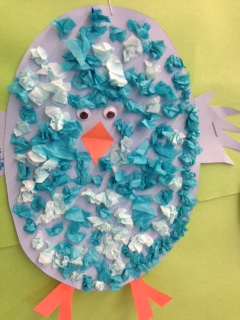
We’ve made more wonderful Spring crafts to decorate our classrooms.  We’ve said it before, but one of the things we love about creating art or crafts is breaking down the steps over a few days so we can all really enjoy each step of the process.  It gives us a natural way to delay gratification and creates anticipation for when we get to work on a particular project again. Blue Chicks: We made our blue chicks by crushing single squares of tissue and gluing them on with liquid glue to a construction paper backing.  We’re always looking for activities that allow our children to develop their fine motor skills and this one was great as the children had to pick up the tissue paper squares, rub them together to separate the layers and then individually crush each one to glue it on.  We took about three art classes to finish.  Working with our hands while listening to great music is a calming activity and very satisfying for our classes.

IMG_3781


Robins:
photo 2-8These cute robins were cut out earlier by ourselves and the children followed our direct instructions to draw in the eye, tummy and feathers as a class.  Later that week, in small groups, the children were very interested in watching us make a cut in the bird, using an exacto knife, for the wings.  The wings are a square piece of crepe paper which the children folded as a fan and we slipped through the cut.  They look really adorable hanging from the ceiling, fluttering in the spring breeze when our windows are open.

It’s hard to believe we’re almost at the end of April. We’re enjoying this time in the school year so very much with our students.

Be full of the joys of Kindergarten.

Math, the Kindergarten Way

Christy and I were both trained in Math Their Way early on in our teaching careers.  In a nutshell, Math Their Way advocates the use of concrete materials for the children to manipulate to develop and gain a deeper understanding of the Math concepts.  The children are then able to use their knowledge and understanding of the concepts to make meaningful learning connections between the concrete (manipulatives) and the abstract (symbols).  For more information, click on Math Their Way.

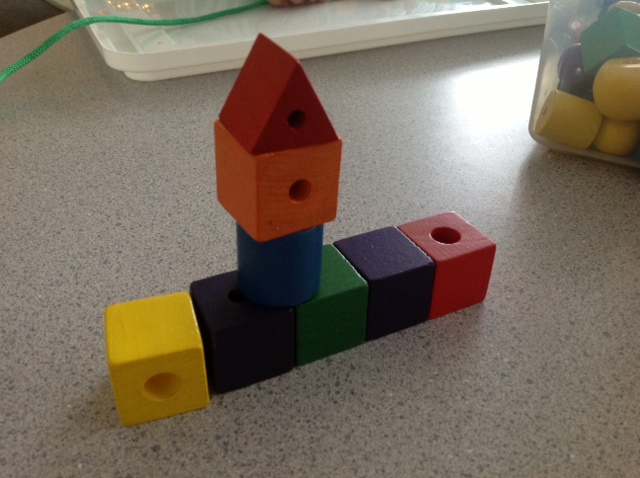
Despite the changes over the years in Math curriculum, the advent of new programs and our professional responsibility to remain current of new thinking and strategies, Math Their Way has always formed the core of our Math program in Kindergarten.  We teach a hands-on, child-centred, manipulative based Math program to ensure our students are developing a concrete understanding of Kindergarten Math concepts.  We use a wide variety of manipulatives including pattern blocks, multilinks, threading beads, links, and blocks.

photo 2-3

We start our school year with Free Exploration. This enables us to directly teach careful use of the manipulatives, working cooperatively in small groups and transitioning between the tables as we rotate our way through the Math Centres.  This is an important time for us as we are also establishing important classroom routines which we continue to reinforce for the remainder of the school year.

We assign the children to Math groups and based on our observations of the social interactions, will make adjustments as necessary.  The children play and explore with the Math manipulatives:  they are creating, building, patterning and counting with the many different kinds of materials we have in our classrooms.

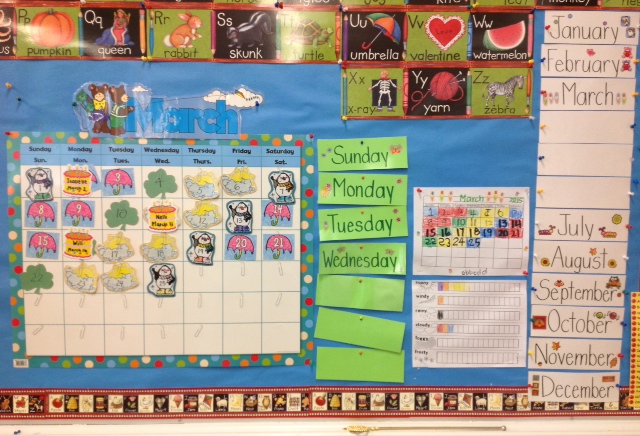
photo 1-2Our next big Math unit is Patterns.  Even when the unit is completed, we still explore and look for patterns all year.  Our Math Their Way calendar is another opportunity for us to create and play with patterns on a daily basis.  We have a special pattern for every month and try to incorporate patterning activities into most things we do.

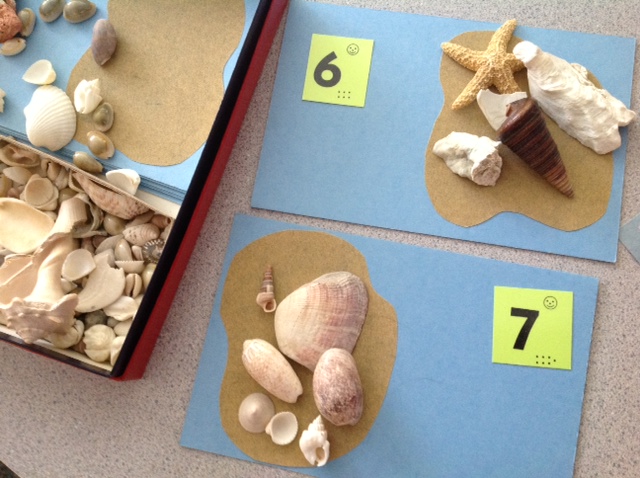
Now, we’ve just finished exploring number in Math.

According to the Ministry of Education Draft Curriculum for Kindergarten Math Concepts and Content, Kindergarten children must know and understand number concepts to 10 and be able to partition numbers to 10.

Over the years we’ve found that although many of our students can count easily by rote, the concept of number has proven to be more difficult for some of them.

Number includes:

  • Exploring patterns and number with manipulatives
  • Counting (eg., counting manipulatives to a specific number with one to one correspondence)
  • Exploring the processes addition and subtraction, multiplication and division with manipulatives (we don’t name these processes specifically, but refer to making “groups of” or “sets”)
  • Exploring number combinations of a specific number (partition) with manipulatives (eg., 5 = 0+5, 1+4, 2+3, 3+2, 4+1, 5+0)
  • Arrangements of numbers (eg., dice)
  • Connecting the concrete (manipulatives) with the abstract (symbols)
We have created a number combination, or partition, and ascribed a number to the sets.

We have created a number combination, or partition, and ascribed a number to the sets.

We have counted sets of numbers

We have counted sets of numbers


In these photos, we’re exploring the number 8.

We made patterns with sets of 8.

We made patterns with sets of 8.

We asked our students to count out sets of 8.

We asked our students to count out sets of 8.


Connecting the concrete to the abstract.

Representing our learning


We made a connection by creating a picture with wooden blocks and representing our learning by counting and matching the blocks with paper squares.


We hope in teaching Math this way, the Kindergarten way, through exploration, creativity and play, our children will appreciate and embrace the beauty of patterns and logic that make up their mathematical world.


The Parent Appreciation Tea

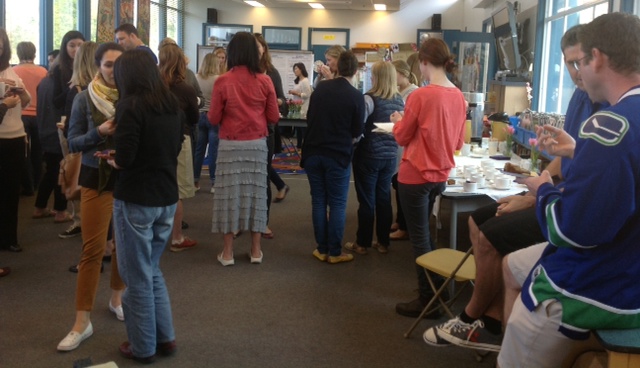
photo-2Today is a Special Day.  Today our staff celebrated our Ridgeview parents with a Parent Appreciation Tea.  We have a very involved and active parent group at our school.

Our Ridgeview Parent Advisory Council (RPAC) organizes many fundraisers and fun events for Ridgeview students and their parents, including:

  • Hot Lunch and Booster Juice Programs
  • Ridgeview’s Parent Gala
  • Ridgeview’s Mayfair (alternate years with the Gala)
  • Purdy’s Chocolates Sale
  • Christmas Poinsettia Sale
  • Spring Plant Sale
  • Bingo Night
  • Halloween Skate
  • EduPac School Supplies
  • Ridgeview Sportswear

This year, through their fundraising, our RPAC has already generously sponsored our school’s Cultural Events (such as “Axe Capoeira” which we saw at the end of March) and the “HighTouch HighTech” Science programs.  They are also subsidizing the Hip Hop Dance program Ridgeview students are receiving this week.

As classroom teachers, we receive annual funds from the RPAC to use for stickers, toys and games, books, decorations and special Science and craft supplies. We’re grateful and appreciative of our PAC’s generosity, as our students are able to enjoy participating in activities, and we are able to supply our classrooms, in a manner that otherwise may not have been possible.

We also want to express our appreciation to our classroom parents.  In the Kindergarten, and most other classes, the teacher has asked one or two parents to be the “room parent(s).”  These parents may assist the classroom teacher to organize parent volunteers for crafting activities, field trips or prepare food for a class party.  This year we’ve had many parent volunteers help us with these fun activities, which we would be unable to run without their participation:

So to all our parents, we say “thank you.”  We appreciate not only the time you volunteer at our school as part of the PAC and helping out in our classrooms, but also all the unspoken hours at home supporting and guiding your children to become the best learners they can be.  It is a privilege to be able to teach your children in Kindergarten, and a pleasure to work with you as a partner in your children’s education.  We truly appreciate you!

Why We Need to Say “Yes” to English Language Learning for Kindergarten Students

photo 4-2We were delighted to welcome Donna Neilson, West Vancouver District’s English Language Learning Resource Teacher to Ridgeview on Friday, January 23, 2015.  Donna spoke to our parents of English Language Learners on the Language Learning guidelines, learning supports in place for West Vancouver students and learning essentials for success through the elementary and high school years.

Donna’s presentation focused on answering some of the commonly asked questions by ELL (English Language Learners) parents.  We would like to share this valuable information with you, plus some of our own thoughts, and how it affects your Kindergarten child.

My child knows everything in Kindergarten.  Why can’t he leave ELL support?

Donna explained that many parents of English language learners say that their children know everything that is taught in Kindergarten, and some do.  These parents may choose to refuse ELL support.

But the thing is, is that while the children do know a great deal about Kindergarten, they do not have the necessary academic English language to succeed in later grades.  If the children leave ELL support, they will not have the background in the English language to help them in the next school year where the language expectations will be much higher.  As the classroom teachers, we know attending ELL classes is necessary.  There is so much more to learning English than just being under the classroom teacher’s direction.

If I send my child to tutoring, will he learn English faster?

No, Donna explained that your child will not acquire the academic English faster with a tutor.  He or she may acquire and perfect some specific skills, but learning language takes time and this cannot be fast paced.

Donna showed us a picture of an iceberg to illustrate this point.

photo

Above the waterline, the part of the iceberg we can see, are Levels 1-2, conversational or survival English, which takes 1-2 years to learn.

Below the waterline, the big base of the iceberg we cannot see, are Levels 2-4, academic English, which takes 3-7 years to learn.

While your Kindergarten child might know many things, he or she only knows the tip of the iceberg.  Your children have not been speaking or listening to English since they were born.  Young English-speaking children have the rich vocabulary, grammar and tenses to which they have been exposed to their whole life.

So imagine how fortunate ELL Kindergarten children are, to be receiving ELL support during their elementary school years, to learn the English language conversation skills, as well as the academic language.  This instruction will be of great benefit to them as they move through the secondary years in the West Vancouver School District (Grades 8-12).  We all need to think long term with regard to English language learning.

What are they missing?  When can my child take regular classes?

Parents often wonder what their child might be missing by going to ELL classes.  It’s a fair question, and one we are frequently asked as Kindergarten teachers.  For the Kindergarten students, we meet with our ELL teachers to discuss with them what our themes or topics of study might be so that the ELL program supports what is happening in the classroom.   Donna reassured us that your children are always taking regular classes, just with ELL support.  And some of that extra support will be given within the  Kindergarten classroom as both the ELL specialist and the classroom teacher collaborate or work together.

Our focus at school is on the success of your child.  We look at Assessment (testing), Placement and Program (how do we support your child?).  Each fall students are assessed and placed in an appropriate program for their level of English.

Our model of ELL support for the Ridgeview Kindergarten is :

  • the classroom teacher and ELL teacher working together so ELL students are receiving in-class support
  • small groups of ELL students receiving direct support in pull-out classes with the ELL teacher

At our school, and across the curriculum, supporting our English Language Learning students is a shared responsibility of all teaching staff.

We would like to thank Donna, and our Principal, Valerie Brady, for their guidance and feedback in the publication of this post.

My Family: Kindergarten Social Studies

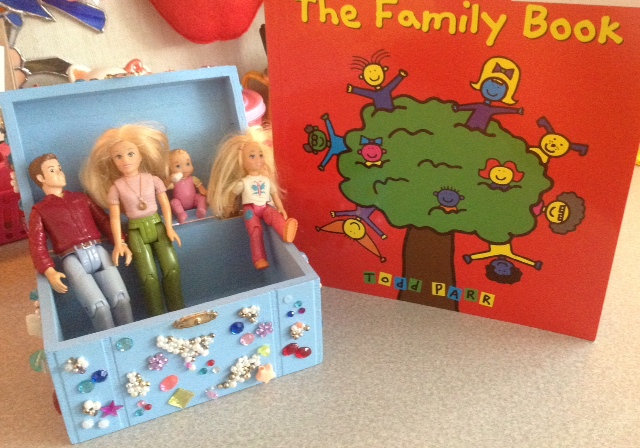
photo 1-1Last weekend we celebrated Easter.  We enjoyed this time with our families, relaxing, working in the garden and catching up on our busy week.  With the extra holiday days we were able to see our extended family members as well, over a family dinner.  This time spent with cousins, grandparents, aunts and uncles is truly a precious opportunity for our children to see the strength and love of the family connection,


It seems timely, then, to talk about our current Social Studies unit on My Family.  We want to preface this post by saying how much we appreciate everything you’ve done as parents to nurture your children’s sensitivity when talking about serious ideas.  We’ll explain below.

We love listening to our children share about their families.  The Kindergarten children really cannot wait to tell us about the most important people in their lives: their parents, brothers and sisters.

We introduced the concept of Family through a Mystery Box Inquiry.  As always, our children asked the most thoughtful questions and we tried to answer them honestly, as though there was a live family in the Mystery Box.  Here’s a sampling:

  • How does it move?
  • What does it eat?
  • What shape is it?
  • Where does it live?
  • At what age does it die?

We have admit, that last question caught us off guard.  The class became quite still, aware of the depth of this question.  We weren’t expecting anything so sophisticated, and there was definitely a pause as the adults in the classroom looked at each other and pondered what to say.

We looked at those innocent eyes and gently said, “Most of the time, it lives a long and healthy life….”  The children looked thoughtful as we waited for their response, but they seemed to accept what we said and we moved on.

We read the beautifully written book, The Family Book (2003), by Todd Parr.  Todd’s book tells of many different kinds of families, big families, small families, families of different colours, but his main message is that all families are unique and because of that, each family is special.

One important idea that came up for discussion is who stepbrothers and stepsisters are in a family.  Indeed, the blended family is very special, and the children of blended families in our classrooms were able to clearly articulate the role of each family member.  Charmingly, they made the comparison to Cinderella and the stepmother and stepsisters to help their classmates understand.  We also talked about being adopted and what that meant. One of the children brought up what it means to be an orphan and how an orphaned child would need a new family. We’re delighted with the the amazing connections our little learners make as they relate what they know, and the experiences they’ve had, to what we are learning about at school.

We brainstormed about family members, and it was fun to hear about the children’s stories (“My dad’s brother lives in an apartment!”).  Our students really love the time they spend with their extended family members, as they spoke enthusiastically of holiday meals, shared vacations and big family outings.

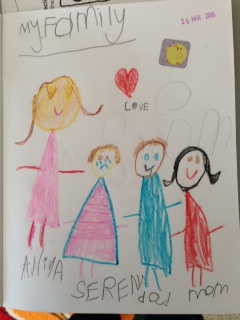
Following our discussion, we thought it was time for a family portrait.  The children started with

My Family Drawing

My Family Drawing

drawing themselves, “Me,” and from there we added our Moms, Dads and brothers and sisters.  We were amazed with how many children knew how to spell their brothers’ and sisters’ names already, or were able to figure out most of the letters from their knowledge of alphabet sounds!  Wow!

My Family Drawing

My Family Drawing

Although we’re focusing specifically on the topic of Family now as part of the Kindergarten Social Studies curriculum, we’ve tried to weave in learning about our families at other times of the year.


In December, we shared our family’s Christmas traditions and special decorations.  This past January we brought photos of our families to school, and shared our families’ favourite activities to do together.  We’ve also been learning about families during our Library time.

We’re going to be learning about Family Homes next, and then a Family’s Needs and

Wants.  We’ve started some preliminary discussions about these topics already,

We cannot underestimate, as a teacher or parent, how deeply you can be moved by the depth of understanding and language of a young child.  Even after our many years of teaching, events happen and things are said in your classroom that you are never fully prepared for.  That is probably one of the greatest joys in teaching.  You’re always learning life lessons from the best teachers you ever had:  your students.