This Week in Our Room, November 16-20, 2015

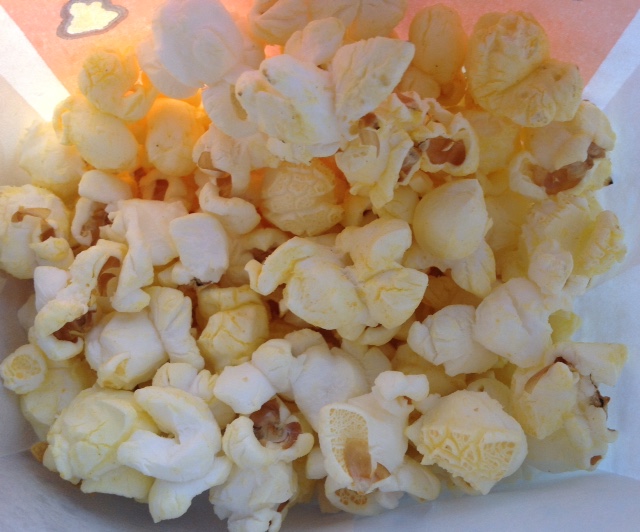
FullSizeRender-7We had a super successful Popcorn Day!  Thank you so much for supporting the Grade 7 Grad Committee.

Here is a blog post we wrote last year about Popcorn Day and self-regulation.

Scholastic Book Fair is coming to Ridgeview Library!  We just found out this week at Library. This is a very fun event for students, and parents looking to get ahead on their Christmas shopping.  We sent home the Scholastic Brochure this week.  The brochure has the raffle ticket coupon on the back so pleasure encourage your child to fill it in and drop it in the raffle box when you visit the Book Fair.

The Book Fair begins Monday, November 30 and runs until Friday, December 4.  Times are before school, recess, lunch and after school.  An official schedule will be out soon.  Mrs. Kennedy, our Teacher-Librarian, is looking for parent volunteers to run the cash desk (and tidy up the books following each opening) so here is a great way to help and and be part of our school community!

Kindergarten students will have an opportunity to visit the Book Fair with their teachers on their Library Day.  However, any purchases by our students need to be made with their parents so please plan a day and time so your children will know when they get to look and possibly buy.

We had fresh carrots this week for a snack as our school is part of the BC Schools Fresh Fruit and Vegetable Program.

As part of our Natural World studies in Science, we are learning about bears as part of our local animals in our area.  This week we also kicked off our Bears in Literature with the book, Corduroy by Don Freeman.  We will follow up with a booklist of our favourite Bear books in the coming weeks.  Mrs. Kennedy, our Teacher-Librarian, is also teaching us the meaning of the Bear according to the First People’s culture.

We have many children with stuffy noses, colds and coughs.  Please review with your children how to blow their nose (and washing hands promptly afterwards) and coughing into their elbow.  We’re trying very hard to manage the germ spread in our classes.  We have so many fun and exciting things upcoming we don’t want anyone to get sick.

Upcoming Events and Reminders

Wednesday, November 25:  Elmer the Safety Elephants visits the Kindergarten

Friday, November 27:  District Professional Day (school is not in session for students)

Monday, November 30-Friday, December 4:  Scholastic Book Fair in the Library

Wednesday, December 2:  Christmas Cracker Craft Event with our Buddies

Self-Regulation Tool: Frog’s Breathtaking Speech

IMG_2088The days are flying by right now.  From our Hallowe’en Centres Party and the Hallowe’en Assembly, we went straight to Remembrance Day activities and the Remembrance Day Assembly.  Although we’re going to be starting our theme on “Bears” for the next few weeks, we’ve already started planning ahead to Christmas which is going to be here in no time at all.

In between times we’re continuing with our Alphabet letter of the week (sound/symbol relationship and correct letter formation), writing pages for our class big books, and working on phonological awareness skills (phonemic awareness, syllable awareness, rhyme awareness, word awareness and sentence awareness).

We’ve seen our Buddies for seasonal craft-making and to start putting our Kindergarten scrapbooks together for our children’s special momentos of some of the best work they will have completed this year.

And in math, we are having a lot of fun with sorting and classifying, counting sets to 10 and we’re always working on the new pattern for each month (November is ABC) and being attentive to where we might see that pattern in everyday life.

Wow, we’ve been busy.  We think it’s time for a self-regulatory moment and a Crocodile breath.

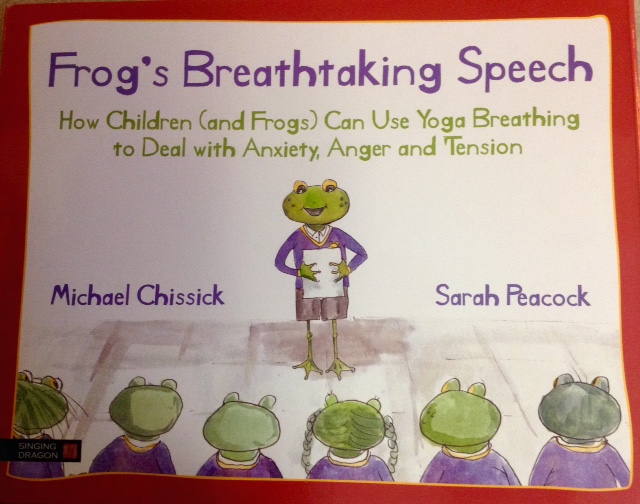
Here is a gorgeous book we want to share with you about breathing. Thank you to our Kindergarten teaching partner, Charity Cantlie, for bringing it to our attention!

FullSizeRender-6Frog’s Breathing Speech:  How Children (and Frogs) Can Use Yoga Breathing to Deal with Anxiety, Anger and Tension by Michael Chissick and Sarah Peacock, is a beautifully written book that tells the story of Frog, who must give a speech about breathing to his class.  He knows nothing about breathing, and so asks his friends for help. Crocodile, Lion, Humming Bee and Mr.Gumble the Woodchopper all explain how they use their breath for specific situations (calming, tension, headache, anger), what they do and why their breathing strategy works for them.  Frog becomes less scared as his friends teach him about breathing and of course, after reflecting and choosing the appropriate technique for his situation, he gives an excellent speech at school the next day.

We don’t want to give away the whole book, but as a brief example, Crocodile shows Frog how he breathes:  “I breathe IN through my nose, Then I breathe OUT through my nose.”  We love how he explains that this technique of breathing is for calming, and that if we are feeling “worried, anxious or even frightened about something, this way of breathing will help you deal with it better.”  The colourful illustrations show how the animals’ posture for breathing.

The author has also included a lot more valuable information about how to use the book in your teaching, including the postures and breathing techniques for the children.

Breathing is a very important self-regulation strategy we use daily in our classrooms.  We have a designated time, immediately after recess, where we intentionally practise our breathing.  Our routine has the children enter the classroom quietly and we meditate to quiet music.  Many children instinctively know to sit cross legged, spine straight, eyes closed and their palms on their knees.  Following the music we begin the core practise and we lead the children through a deep breathing sequence, being mindful of our breath, gently pushing sounds away, to listen to ourselves breathe.

In the afternoon, before we have a read aloud story, we deliberately practise our breathing again, using the breathing ball  (which we think is best suited for the Crocodile and Humming Bee breathing techniques).

We are going to start teaching the breathing techniques of Frog’s friends in the upcoming weeks.  We’re ready to deepen our learning and understanding of breathing so the children can continue adding to their toolkit of self-regulation strategies that work for them.

We would like to thank our Principal, Valerie Brady, for kindly purchasing this book (and others to be shared in a future post) for each of our classrooms.

For more on this book and others, visit http://www.yogaatschool.org.uk.


Remembrance Day Reflections-Art, Writing and Literature

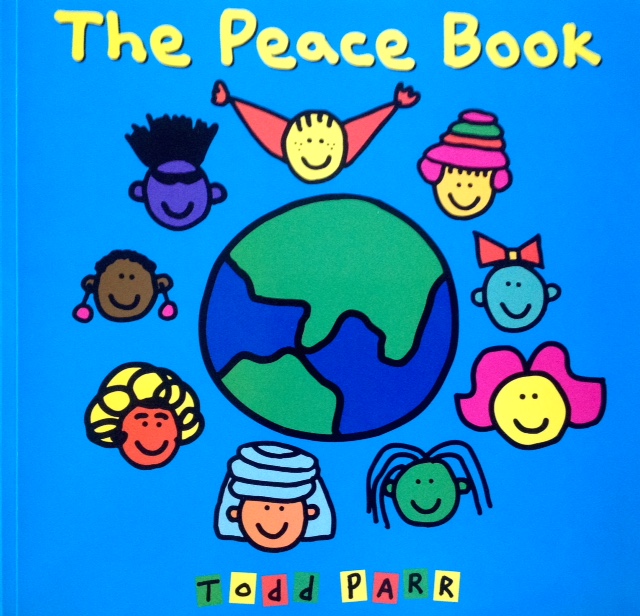
IMG_2145We read two very special books this Remembrance Day, A Poppy is to Remember by Heather Patterson and Ron Lightburn and The Peace Book by Todd Parr.

We read A Poppy is to Remember on Tuesday, before we headed off to our Remembrance Day Assembly.  It’s a gorgeous book, beautifully illustrated and an excellent jumping off point for our young students.

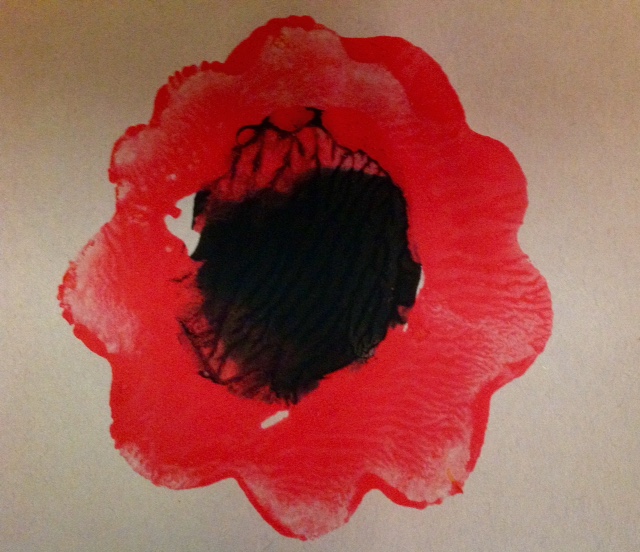
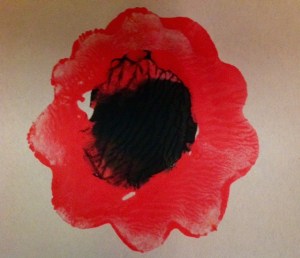
IMG_2094One of the art projects we worked on for Remembrance Day was to make a poppy using a block print made from an acorn squash.  The acorn squash had been hanging out in the classroom for a few days, along with a few other gourds.  Each time we passed them as we were lining up, two or three children were always touching them, feeling the deep grooves and ribs and bumps of these fascinating vegetables.

The children watched us cut it open (you don’t often get to see your teacher doing food prep) and a few children excitedly scooped out the seeds.  Then we cut the potato and we were ready to begin.

IMG_2117We painted the acorn squash red and printed it onto grey construction paper.

Then we painted the potato black and printed the centre of our poppy. Gorgeous!


FullSizeRender

Most of you know that we are huge Todd Parr fans and the The Peace Book is one of our favourites.

FullSizeRender-3

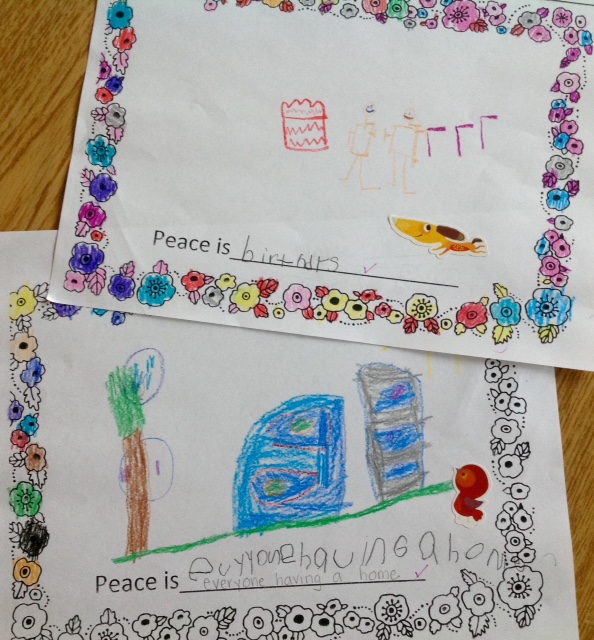
We introduced the book earlier this week, and started with a discussion about the topic of peace.  Here are some of the children’s thoughts:

FullSizeRender-5

And the work they completed for our class big book.

FullSizeRender-4

FullSizeRender-2With our Grade 7 Buddies we made our peace doves.  It’s been really fun with our Buddies over the past number of years because Christy and I taught these very children when they were either in Grade One or Kindergarten as that was the time of our job-share.  We can have a bit of a laugh with the Big Buddies as they remember the crafts from when they were little (and many of them still have their Kindergarten work) and we can all share some stories about their Kindergarten class.

This Week in Our Room:  November 8-13, 2015

Please ensure that everyday your child comes with a full kit of clothing for the wet, cold weather.  A warm jacket, hat, gloves and boots are necessities.  If your child wishes to have an addition fleece layer, we think that’s a great idea.

Some of the children have asked us if they can stay inside for the rainy recess times.  Unfortunately, we do not have enough staff for supervision of individual students.  If your child is not feeling well, and cannot manage all aspects of the full day of school, it’s probably best to stay home for a few days, rest and come back to school ready to play.

We’re still collecting wrapping paper, ribbon and clean, tissue-free paper rolls for our Christmas Cracker project.  Thank you for your donations.


Our Rights, Role and Responsibilities…as Canadian Citizens:  Kindergarten Social Studies

IMG_2120One of the Big Ideas from the new BC Social Studies Curriculum for Kindergarten is “Rights, roles, and responsibilities shape our identity and help us build healthy relationships with others.”

This month, as a prelude to our class work about Remembrance Day, we decided to start exploring this Big Idea through the lens of what it means to be a Canadian citizen and how our rights, roles and responsibilities as Canadians shape our personal identity.

In Kindergarten we begin with where the children are in their learning, and preferably shared learning, so that we all have the same common base from which to build knowledge.  The children then bring their personal experiences, which makes the discussions rich with language and images, as they connect their understandings to their new learning.

Our practice is built on schema theory, or how we make sense out of new experiences and new information by activating our prior, or background, knowledge.  The new experiences and information are interpreted by what we already know, our schema.  Schema refers to a person’s knowledge.  Our knowledge has been developing since we were infants, through our senses and growing with each new experience.  We need to have the appropriate schema to “hang” the new knowledge on, in order to make sense of what we do not know or understand. 

We make sense of our new experiences and learning through assimilation, which is (like the Borg) when we have to extend our prior knowledge to integrate the new knowledge or accommodation, when we change what we know to integrate the new knowledge. Schema theory is significant in the area of reading comprehension, as we need to bring the appropriate schema to new text in order to make sense and understand what we are reading.  The role of schema theory in reading comprehension is due to the work of educational psychologist, Richard Anderson.

That is why, so often, teachers will use brainstorming, KWL (what we Know, what we Want to know, what we have Learned) or a class provocation to build a common schema before starting a new unit of instruction.

Proud Canadians

A common experience for all of our Ridgeview school population is that we sing, “O Canada,” every day at school (we sing in French on Fridays).  In our classrooms we stand facing the Canadian flag.  The pride with which the Kindergarten sings the national anthem is extremely moving.

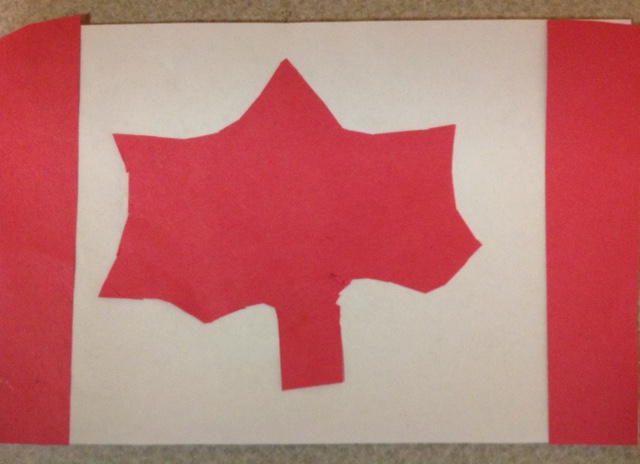
To create a common body of knowledge for our students, we started a provocation with a small Canadian flag and asked the children what it meant to be a Canadian citizen. Words and phrases such as “maple leaf,” “Canadian flag,” “maple trees” and “red and white” were among the first ideas to be shared.  Many children also knew that a Canadian citizen was someone who was born in Canada.

We introduced the concept of “role” to the children by asking them, “What do you think is one of your jobs as a Canadian citizen?”  Some of the children said they were proud of Canada.  When asked to “tell us more about that” one student said he was dreaming of the Toronto Blue Jays.  That led to more pride as we discussed the BC Lions, the Vancouver Canucks and totem poles.

We defined “rights” as something you “should” have, when talking about the children’s rights as Canadians.  They children responded quickly with “clean water to drink” and “healthy food.”  But just as important as those ideas, was the right to “having a great family.” A five-year old child can have a very wise soul….

Kindergarten children of today are socially very responsible.  The concept of recycling “pack out garbage; we recycle; we reuse” and water conservation “be careful with water use” are familiar to them, having been modeled and discussed by their parents and teachers their whole lives.

So what did we take away from our initial lessons?

We learned that right now our children see their role as Canadian citizens as being proud Canadians, proud of teams and symbols that represent their country.

We learned that right now our children see that their rights as Canadian citizens include a loving, supportive home and a healthy diet.

We learned that right now our children see that their responsibilities as Canadian citizens are to be good stewards of their planet Earth.

That’s about as Canadian as it gets, eh?
FullSizeRender-3Assemblies – Expected Behavior

Ridgeview has many assemblies during the school year.  Sometimes they are to celebrate an occasion such as Hallowe’en, other times they might commemorate a special day as in our Remembrance Day Assembly upcoming on Tuesday, November 10.

Each assembly has a different purpose; however, students are always expected to walk into the gym quietly, sit patiently while waiting for the speakers and applaud appropriately.  At no time will shouting, hooting or yelling be tolerated.  These are not games.  Rather, it’s an opportunity for our student school community to come together as one.

You can help prepare our Kindergarten children by discussing with them the expected behaviour  for this week’s assembly.  Your child’s self-regulation is important, and these are routines that we have practiced repeatedly during the first few weeks of school, and will continue to teach and reinforce throughout the school year:

  1. Walk quietly in line with their teacher, facing forward to pay attention to where the teacher is walking
  2. Stay together as a line, so there are no gaps
  3. Mouths are closed and hands are at our side
  4. In the gym, sit quietly on the Kindergarten bench, hands to self, feet are still and on the floor

Occasionally, parents are invited to the school assemblies.  We welcome your attendance and interest in our school activities! 

You can support us by not waving, calling or trying to get the attention of your children.  We have instructed the children not to wave, call out or respond to others while walking to, or during, assemblies.  Developing focus, patience and waiting without complaining, are life-long skills our children will need as teenagers, adults and in their social relationships.
Autumn’s Favourite Things

IMG_2100It’s been a lovely post-Hallowe’en week, kind of like the week after Christmas when the Big Day is done and now we’re just basking in the glow of having all the hard work behind us but we can still enjoy the decorations and eat the remaining cookies.

We’re settling into a beautiful autumn season and we thought we’d share with you some of our favourite things.


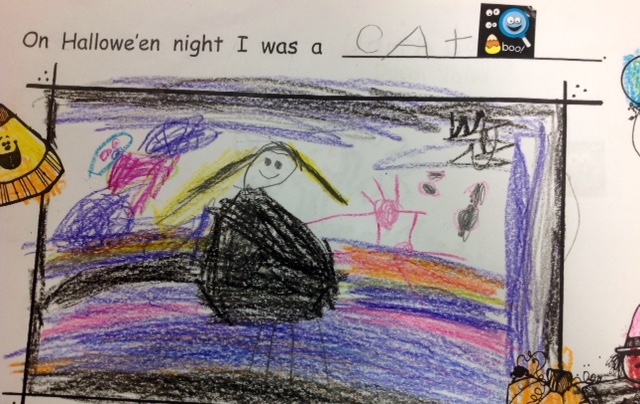
FullSizeRender-2We officially wrapped up Hallowe’en with a couple of class big books we wrote this week.  “On Hallowe’en Night,” is about our costumes and trick-or-treating, and the other is based on the counting book,
Little Beasties by Rebecca Emberley and Ed Emberley.  The children loved the geometric detail of the beasties, and were quite calm as one of the beasties ate the other nine.  For our class book, the children each created a beastie page with black and white construction paper with a little added colour detail.  Another great activity to improve the fine motor skills of cutting and pasting for small hands.
IMG_2098

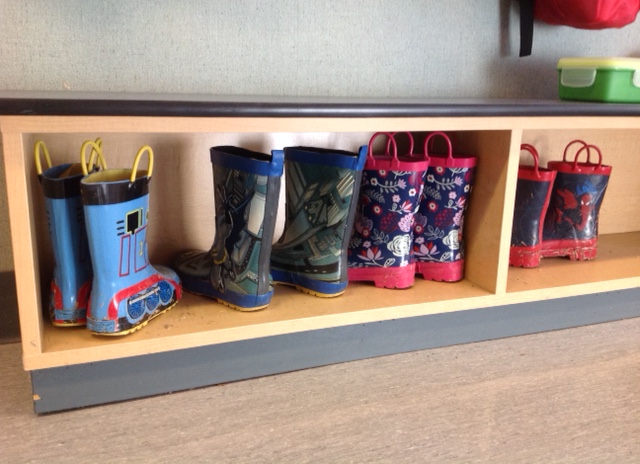
With the return of wet and rainy weather, our children are bringing their boots and raincoats.  We just love these cute little boots!  And we love watching our children plod their way through the puddles as we walk towards the playground.

IMG_2084Last week the children were playing and investigating the puddles
forming at the bottom of the swings.  We had some very wet and muddy faces-just adorable!

We’re enjoying some beautiful fall colour right now.  Nothing as IMG_2089gorgeous as the east coast, but in our own little spot here in West Vancouver we still get to see some brilliant colour.

Have you heard this amazing album? “Autumn” is one of four albums recorded by George Winston (among others) which focus on the seasons, including “Winter into Spring,” “Summer” and “December” (our personal favourite).  Each album is a collection of piano solos.  This is the music we listen to everyday after recess (depending upon the season, of course) for a few minutes, just to relax our bodies.  We turn off all the lights in the classroom (except for the fairy lights) and just sit peacefully listening to the music.  Afterwards, we do the core practice from the Mind-Up Curriculum.  It’s a lovely 7-8 minutes of pure calm and exceptional musicianship.


IMG_2112

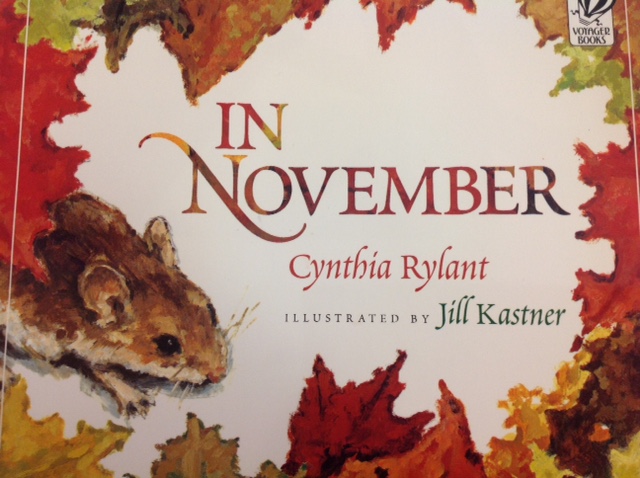
Our favourite autumn book is In November by Cynthia Rylant and illustrated by Jill Kastner. The paintings and text are sublime.  


“In November, the earth is growing quiet.

It is making its bed, a winter bed for flowers

and small creatures.  The bed is white

and silent, and much life can hide beneath

its blankets.”

This Week in Our Room: November 2-6, 2015

We’re back in our alphabet groove as we completed the letter “F” this week.  We will send home the children’s alphabet craft and their printing practise page next week.

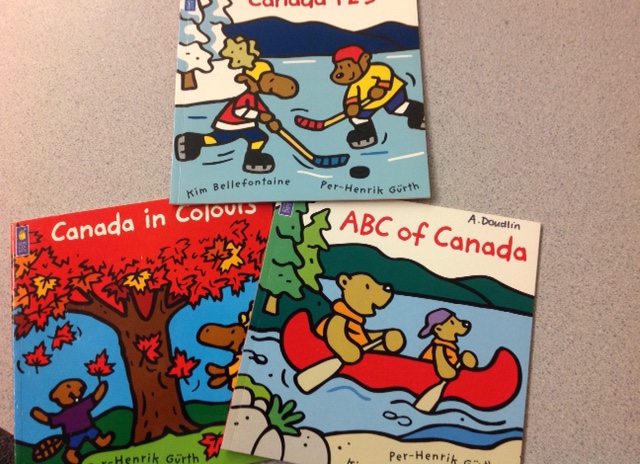
IMG_2097We’re beginning to discuss our rights, roles and responsibilities as Canadian citizens, from a child’s perspective. We read aloud some beautiful books by Per-Henrik Gurth and Kim Bellefontaine, ABC of Canada, Canada in Colours and Canada 123 to start our thinking. It seemed timely to revisit, with appreciation, all that living in Canada signifies, as we approach Remembrance Day.  We’ll be talking about the peace and freedom we have today, how it was achieved and what peace means to each of us as individuals, next week.

We got to see our Grade 7 Buddies this week to make our peace doves to hang in our classroom.  Being with our buddies is certainly one of the highlights in our Kindergarten day.

Upcoming Events and Reminders

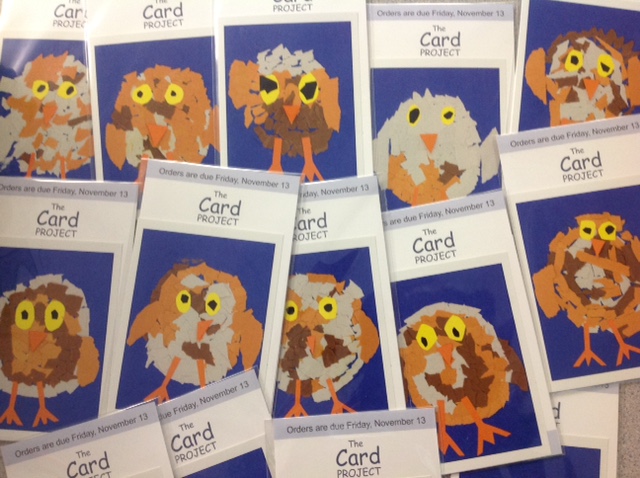
Card Project follow-up:  Our card samples arrived and we sent them home today! For more information, visit http://www.TheCardProject.ca. Please note that your orders must be placed by November 13.

IMG_2114

Our children will attend the Remembrance Day Assembly on Tuesday morning next week.  It’s a serious assembly, different from our Hallowe’en festivities, as there will be no talking or clapping by the audience.  We will review our school’s expectations for this assembly in Sunday’s post.

Remembrance Day is Wednesday, November 11, and school will not be in session.

Hallowe’en Fun in the Kindergarten: Part 2

FullSizeRender-12We’re going to share our Hallowe’en booklist for you in case you missed it.  It was buried deep in last week’s post.

A holiday post from us would not be complete without a booklist.  Here’s the best of what we’re reading to the Kindergarten for Hallowe’en.

  • Franklin’s Hallowe’en (Paulette Bourgeois and Brenda Clark)
  • The Fierce Yellow Pumpkin (Margaret Wise Brown and Richard Egielski)
  • Harriet’s Hallowe’en Candy (Nancy Carlson)
  • Ten Little Beasties (Rebecca Emberley and Ed Emberley)
  • Seed, Sprout, Pumpkin, Pie (Jill Esbaum)
  • A Day at the Pumpkin Patch (Megan Faulkner and Adam Krawesky)
  • The Pumpkin Book (Gail Gibbons)
  • It’s Pumpkin Time (Zoe Hall and Sheri Halpern)
  • The Littlest Pumpkin (R.A. Herman and Betina Ogden)
  • Little Goblins Ten (Pamela Jane and Jane Manning)
  • The Biggest Pumpkin Ever (Steven Kroll)
  • From Seed to Pumpkin (Wendy Pfeffer and James Graham Hale)
  • 10 Trick-or-Treaters (Janet Schulman and Linda Davick)
  • Big Pumpkin (Erica Silverman and S.D. Schindler)
  • One Spooky Night (Kate Stone)
  • Too Many Pumpkins (Linda White and Megan Lloyd)
  • The Little Old Lady Who Was Not Afraid of Anything (Linda Williams and Megan Lloyd)
  • The Pumpkin Blanket (Deborah Turney Zagwyn)

IMG_0435This Week in Our Room:  October 25-29, 2015

With everything that’s been going on for Hallowe’en, we did not work on our next letter, “F.”  We will be back to working on the alphabet next week.

Both of our classrooms had the protective film on our windows replaced this week.  It helps to reduce the light and glare off of our whiteboards which can make it difficult to see when the sun is shining really brightly.

We sent home the November homework calendar.  Please bring back October’s homework calendar next week for a sticker.

IMG_0437Hallowe’en Centres Party

We had a really fun and exciting time at our Hallowe’en Centres party on Wednesday!  First of all, we must say a big “thank you so very much” to the parent volunteers who helped to make this special event possible.  The children had a truly enjoyable morning making their bat craft and decorating their spider cupcakes, creating a Hallowe’en Math pattern, sculpting with play dough and drawing in their Hallowe’en colouring books.

IMG_2069Hallowe’en Parade and Assembly

The Kindergarten led the way through our school hallways as we led the Primary students in our costume parade.  Thank you so much for helping your child to prepare for our fun day!  The children all looked so wonderful.

During our Assembly, we sang Hallowe’en songs and reviewed the safety rules for trick-or-treating:

  1.  Light your way-make sure you can be seen.
  2.  Let’s talk about the route-be certain you know where you are going.
  3.  Don’t touch that-if you don’t know what it is, back away.
  4.  Follow the rules of the road-walk on the sidewalk and wear reflectors if necessary.
  5.  Don’t run-walk carefully so you don’t trip on your costume.
  6.  Get home safely, stay together-being safe is the most important part of the Hallowe’en night!
Party's over....

Party’s over….

Well, Hallowe’en celebrations are finished at school for another year.  We wish everyone a safe and happy Hallowe’en!


Upcoming Next Week:

Library Day for Division 15 is Monday, and Library Day for Division 16 is Tuesday.

We’re looking forward to seeing our Grade 7 Buddies next week and getting started on our Peace Doves and other art projects for Remembrance Day.

Dates and Reminders:

Wednesday, November 11 is Remembrance Day.  School is not in session.

Parent Volunteers in the Kindergarten Classroom

IMG_2041-1Our planned Hallowe’en Centres party for this week has generated a lot of excitement not just among the Kindergarten children, but for our classroom parents as well as it’s the first opportunity for them to volunteer for a classroom activity.

Most Kindergarten parents are very keen to volunteer in their child’s classroom.  They seem to have an innate sense that teaching a Kindergarten classroom can be very busy and wish to able to support their child’s teacher in any way they can, even if it’s just cleaning paints and brushes (and that is very much appreciated).  Many parents come from Parent Participation Preschool backgrounds so they are used to volunteering frequently in many capacities.  Sometimes parents wonder how their child is doing and wish to see them in action.  Although we know that everyone has different reasons for helping, what is most crystal clear to us is this:  parent volunteers can improve the quality of their child’s education, support the classroom teacher and the school, and model the importance of giving back to their community to their children.

The first time we ask for Kindergarten parent volunteers is at the end of October, although it can be later depending upon the children.  We’ve tried several times to ask for helpers in September; but the truth is, not all children are ready to have their parents come into the classroom in the early days of school.  We monitor separation issues between children and parents, and observe how the children interact with you before and after school.  We want your volunteer experience in the classroom to be positive one, and it can be hard if your child is clinging on to you and you are unable to fulfill your role.  We need to feel secure knowing that your children understand that when their mom or dad volunteers in the classroom, their parents are there to help the teacher.  The teacher is the one who is in charge and the class expectations are still to be followed.

There was a time when the classroom teacher needed parent helpers, she would post a sign-up outside the classroom.  But the problem with this method, as we found out both as teachers and working parents, was that the same parents would always get to volunteer as they would drop-off and pick-up their children so they could sign up first.  Back in our job-share days, when our children were still in elementary school, we often missed out ourselves to volunteer in the classroom because we happened to be teaching when the sign-up was posted.

We understood that the dates for classroom events might conflict with a teaching day for us; that’s just reality of the working parent.  It’s far easier for the teacher to hang up that sheet of paper, but the “first come, first served” model just doesn’t sit well with us.  We want to make volunteering more equal for all parents if we can.

When we plan a classroom event and require parent volunteers, we ask our classroom parents personally.  For each group of volunteers we have, we’re consciously trying to create a balance of new and former parents (of children we’ve taught previously), and parents with a second language to support the children who are learning English.  We try to accommodate parents’ work schedules, childcare for siblings and utilize parents’ talents, and we can only learn this through talking to them.  We try to give as much notice as we can for working parents so they can try to switch workdays if necessary.

Ridgeview, like many other elementary schools, has volunteer Room Parents for each division.  The Room Parents can support the classroom teacher in a variety of ways:  preparing teaching materials, sorting craft supplies for activities, asking for volunteers in the classroom or a field trip, or organizing the classroom parents to sponsor a school event (this last one is more for the older grades).

Because we speak to the parent volunteers ourselves, Christy and I ask our Room Parents to keep track of which parents have come in so we can be certain that each family has had at least one opportunity to volunteer for a classroom event during the school year.  Although we realize everyone would love to volunteer more, as long-time experienced professionals, we are quite accustomed to and truly enjoy planning, preparing and teaching everything ourselves.  But when we have a special activity for our students, and need more support, then we are able to provide an opportunity for parents helpers.

It’s important to remember that it’s a privilege to volunteer in your child’s classroom.  For many children, the classroom is a safe and special place, typically inhabited by just the teacher and the students.  We have our own rhythm, our own little jokes, our own way of doing things and an established set of expectations.  We’re like our own ecosystem where everything is in balance and it’s the classroom teacher’s responsibility to maintain that balance for each and every child.  But we also understand and value that parents want to, and should be, involved in the learning that happens in the classroom, and we want to include you.  

We expect that you will be involved with all the children you are working with, not just helping your own child.  It can be challenging because the teacher will probably have a task she wants you to accomplish with everyone and your child may want all your attention.  But as a classroom volunteer, your child will need to understand that you are there to assist everyone so that might be a conversation you have ahead of time at home.

Your classroom teacher is depending upon your discretion.  Sometimes the children in your group may have difficulty with their self-regulation.  Perhaps it’s hard for them to listen and follow your instructions.  Working with a small group of children in the classroom setting is not the same as having a play date at your house.  We are watching all the groups and will intervene as necessary.  But we’re trusting you not to talk about the children’s behaviour, nor their schoolwork, to the child’s parents or other parents.  

Please remember that in your role as a classroom volunteer, you are not there to compare your child to the other students.  It goes without saying that every child is unique, from a different background and a different set of early learning and parenting experiences.  As Kindergarten teachers, we love and accept every child where they are in their growth and development and try to nurture each one along from where they are through this special year in school.

Hallowe’en Fun in the Kindergarten: Part 1

FullSizeRender-13Five years ago was the beginning of a changing lens on Hallowe’en for Christy and I at school.  Our school hallways are traditionally decorated, and a grotesque figure in the main foyer one year upset a Kindergarten child.  She refused to walk past it, and we had to shield her view to usher her into the library which was our destination.  We’ve never forgotten that incident and it continues to shape much of what we do today.

Outside of school, the children have lots to be excited about on Hallowe’en. The idea of dressing up as your favourite character and collecting candy is very appealing.  But Hallowe’en has become noticeably scarier over the years, with more gore and hints of creepiness evident in costumes and commercial decorations.  We struggle every year as we try to focus on the best and most appropriate parts of Hallowe’en for our young students in the classroom.

Reconciling a calm, self-regulated learning environment and Hallowe’en has required some thoughtful planning and reflection on our part.

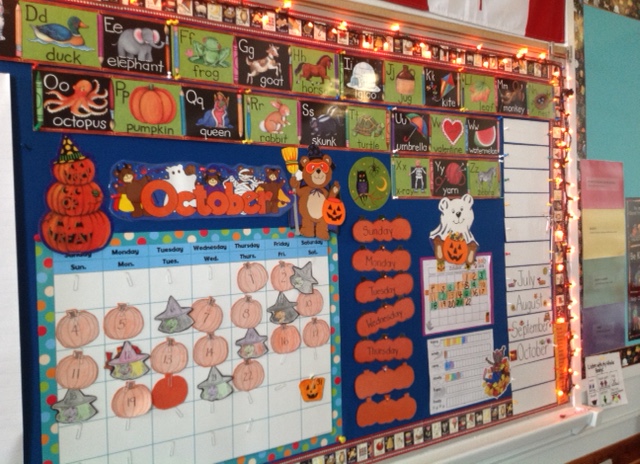
IMG_2027We’ve added some beautiful orange fairy lights along some of our bulletin boards. With the cloudy days being a little darker, the lights are warm and welcoming. We’ve actually just been enjoying looking at the lights and listening to a little Charlie Brown jazz music.  (True story:  as I was hanging up the lights during lunch, one of my students asked, “Mrs. Daudlin, why are you putting up Christmas lights already?”  While I was pondering my response, another student replied, “Oh, those are for Hallowe’en.  She’s going to put up rainbow lights at Christmas.”  How cute is that?)

IMG_2026We’re putting up far less Hallowe’en “stuff” on our walls.

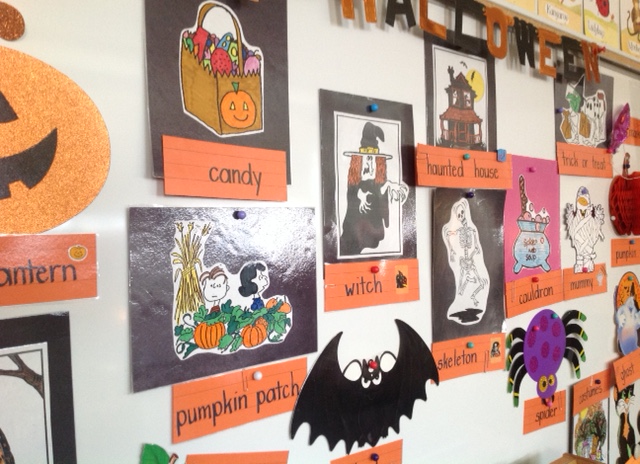
Instead, we brainstormed some familiar Hallowe’en vocabulary and created a Hallowe’en word bank with pictures and labels to support the children in their drawing and writing.

We’ll be learning about the life cycle of the pumpkin and the names of the various stages.

And we’re providing more opportunities for oral language as we sing FullSizeRender-15Hallowe’en songs and chant poems.

We’ve created some fabulous Hallowe’en themed art to decorate our classrooms.

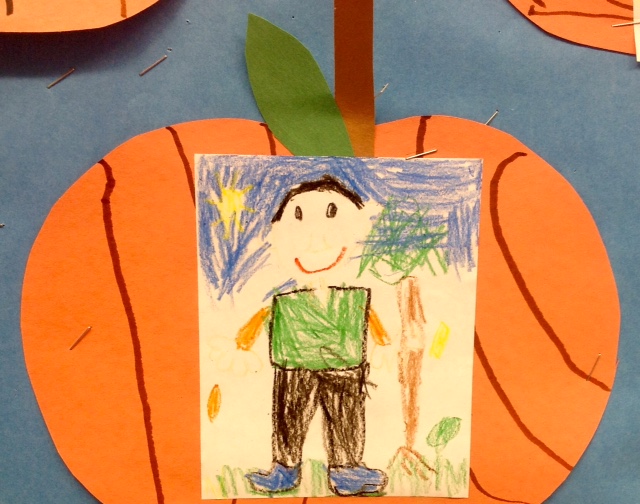
FullSizeRender-14We drew and coloured our beautiful monthly self-portraits.  We love looking back at the growth in maturity as the children’s drawings of themselves become more sophisticated over the school year.

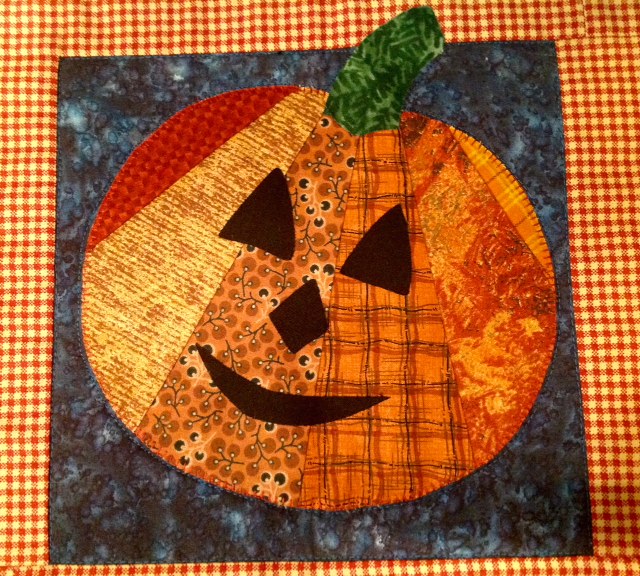
Deep Space Sparkle Pumpkins. We introduced warm colour mixing with red, yellow and orange on pumpkins we had drawn with white pastel. We mixed the paint right on the paper.  Then we were inspired by a photo of some pumpkin art from our Principal. We found ourselves cutting out our pumpkins to mount on black paper, then added painted paper stems, leaves and grass.  We’ve hung them up quilt style, and next week, we will add the Jack-o-lantern features for some Hallowe’en fun.  These are our favourite kinds of art projects as we love creating the anticipation for completion.  We will have taken three weeks from start to finish, and our children are learning the valuable lessons of patience, perseverance and delayed gratification.

FullSizeRender-11

Hallowe’en Wreaths.  Our wreaths are in progress as we make them with our Grade 7 Buddies.  Each Big and Little Buddy pair use tracers to trace and cut out the four shapes of pumpkin, bat, moon and ghost.  These are decorated simply with crayons, and glued onto a wreath shape.  Bows and stickers are the final details to complete our sweet project.

FullSizeRender-12Of course a holiday post from us would not be complete without a booklist.  Here’s the best of what we’re reading to the Kindergarten for Hallowe’en.


  • Franklin’s Hallowe’en (Paulette Bourgeois and Brenda Clark)
  • The Fierce Yellow Pumpkin (Margaret Wise Brown and Richard Egielski)
  • Harriet’s Hallowe’en Candy (Nancy Carlson)
  • Ten Little Beasties (Rebecca Emberley and Ed Emberley)
  • Seed, Sprout, Pumpkin, Pie (Jill Esbaum)
  • A Day at the Pumpkin Patch (Megan Faulkner and Adam Krawesky)
  • The Pumpkin Book (Gail Gibbons)
  • It’s Pumpkin Time (Zoe Hall and Sheri Halpern)
  • The Littlest Pumpkin (R.A. Herman and Betina Ogden)
  • Little Goblins Ten (Pamela Jane and Jane Manning)
  • The Biggest Pumpkin Ever (Steven Kroll)
  • From Seed to Pumpkin (Wendy Pfeffer and James Graham Hale)
  • 10 Trick-or-Treaters (Janet Schulman and Linda Davick)
  • Big Pumpkin (Erica Silverman and S.D. Schindler)
  • One Spooky Night (Kate Stone)
  • Too Many Pumpkins (Linda White and Megan Lloyd)
  • The Little Old Lady Who Was Not Afraid of Anything (Linda Williams and Megan Lloyd)
  • The Pumpkin Blanket (Deborah Turney Zagwyn)

One of the benefits of a simpler Hallowe’en has been to downsize our decorations.  We’ll be making the drive to the Salvation Army this weekend.

This Week in Our Room:  October 19-22, 2015

This week we learned the correct formation for the letter “E.”  As we are brainstorming ideas, segmenting words and labelling our pictures, the children are solidifying the sound/symbol relationship of each of the alphabet letters.

In Math, we’ve been creating AB, AAB, and ABC patterns using manipulatives during our Math rotations.  This week we represented our learning by choosing a pattern and creating a patterned frame around our name.

IMG_2021

Our school watched our first Cultural Event, “Marimba Muzuva” on Wednesday.  We were delighted with the children’s audience behaviour; they sat politely and listened for almost an hour in a very hot gym.  The children were able to enjoy some of the songs, stories and dances of Zimbabwe and participated with clapping, chanting and dancing with the rest of the student population. Thank you very much to our RPAC for sponsoring this event.

Reminders

It’s a Professional Day tomorrow and students are not in session.  We are attending the Canadian Self-Regulation Initiative Leadership Roundtable tomorrow, “Building School Capacity to Support Student Success:  Creating Quality Learning Environments Through a Self-Regulation Lens.”  We look forward to learning more about creating the best self-regulated learning environment we can for our students.

Library Day is Monday for Division 15, and Tuesday for Division 16. Please return your Library Book so you may borrow a new one.

Our classes are starting to catch colds and coughs and some children have had fevers.  It’s probably a good time to review the use of Kleenex, hand washing and coughing into your elbow at home again with your child.  If your children are sick, please keep them at home.  We know the children want to come to school but they simply do not have the stamina and energy required for the full day.  As their parents, you can and should make that decision for them.  The children need to stay at home, and come back to school rested and in good health.

Next Wednesday we are holding our annual Hallowe’en Centres party for our children, from 9-10:30. The children do not need to dress up in their costumes, but they may certainly wear their Hallowe’en t-shirts, black and orange, headpieces and jewelry.  They will be very busy participating in Hallowe’en themed activities!

All next week Ridgeview will also be collecting non-perishable food items for the “We Scare Hunger” Campaign, sponsored by our Grade 7 Me to We team.  Please send the donations to our classroom and your children will deliver them to the collection area in the main hallway.

Friday, October 30, is another great Ridgeview tradition:  Our annual Hallowe’en Parade and Assembly.  All students are invited to dress up in their Hallowe’en costumes.  Please remember not to send in any items that resemble weapons.  Our Principal will lead our costumed students through our hallowed hallways as we make our way to the gym for a fun assembly of Safety Information, songs and stories.  This will take place from 9:15-10:00.

Waste Management Revisited

We’re attending the Leadership Roundtable presented by the Canadian Self-Regulation Initiative, (@CSRI_SelfReg), “Building School Capacity to Support Student Success:  Creating Quality Learning Environments Through a Self-Regulation Lens,” on October 23, the Provincial Professional Day.  We’re looking forward to a day of shared learning on exploring meaningful change and the best teaching practices, supported by emerging research, in the area of self-regulated learning environments. We’ll be tweeting from @selfregteacher throughout the day to keep you informed.

Well, we’re back again to talk about garbage and waste management in the classroom.  This is an updated version of our original post, Waste Management, Kindergarten Style.

We find ourselves thinking and talking a lot about garbage because we do create some in our classrooms.  Nothing unreasonable, but certainly enough to give us pause and remind us to address this always timely topic.

For parents new to Ridgeview, here’s a brief overview of how we handle garbage at our school focusing specifically on the Kindergarten.

When we returned to school in September 2014, West Vancouver Municipality, like the rest of Metro Vancouver, had declared anything from plants and animals (and biodegradable) to be considered as organic waste and not garbage.  Therefore, organic waste must be separated from the regular garbage collection.

Similar to last year, we have 21 students in each of our Kindergarten classrooms, eating two to three times a day when you consider snacks and lunch.  However, we have increased the number of packaged hot lunches from four to five times a week this school year.  As you can imagine, we create a fair amount of waste.

As experienced teachers, Christy and I know, and greatly value, the importance of routines.  We cannot underestimate the power of how routines will affect us in our daily lives, from our organization, ability to be productive to our sense of accomplishment.  For our students, having routines provides them with a feeling of security, increases their confidence and contributes to their overall happiness and independence when they can say, “I know what to do and I can do it by myself!”  Truly, that is the sweetest song for their ears and our own.

So when we start any routines with our new class each year, we want to ensure we’ve done it right.

It is an expectation that our entire student body at Ridgeview, from Kindergarten to Grade 7, learn to separate organics, dry paper recyclables, and garbage/waste items at school.  

Under our Principal’s leadership, our school has implemented three main systems in our classrooms:  an Organic Waste can, the blue Recycling Bin and a Pack In/Pack Out Initiative for recess and lunch.

In our classroom there are two sorting bins:  

FullSizeRender-7Organic Waste Can 

In the Organic Waste can, only four items can be thrown in:
•Paper towels
•Wet paper
•Pencil shavings
•Tissue

We don’t have a monitor for our Organics Garbage Can, as our children are typically checking with us first if something can go in.  They are learning this routine well,
developing independence and looking to the other students if they are uncertain about what to do.

FullSizeRender-8Blue Recycling Bin for Mixed Paper 

We’ve noticed the children are very used to the blue recycling bin.  So much so that they are often asking if they can put plastic containers in it like they must do at home.  Unfortunately, we cannot do that at school.  It’s only for dry paper, paper scraps, and charts we’ve finished using in class.

Recess and Lunch–Pack In/Pack Out Initiative
This has been the most challenging of all the waste management initiatives because it’s one where all of us must work together.

Students are responsible for all food items that they bring into Ridgeview.

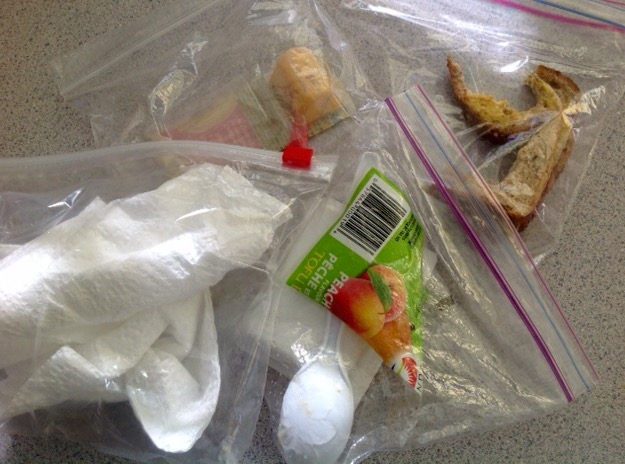
Essentially, any waste our students create from the food they’ve packed into school (food packaging, peelings and cores, napkins, leftover food) must be packed out at the end of each school day.  All waste must go home to be sorted.

We need you, the children’s parents, to support your child (and the classroom and school routines) by sending a ziploc, or plastic bag, everyday to school for your child’s pack out.  

Some parents have arranged with their children to simply put the food waste and packaging from the day’s food loose in the lunch kit and so far, that seems to going well.  If you do not send a lunch kit to school with your child, then you must send a ziploc or plastic bag for the food waste.

Other parents send snacks and lunch in reusable containers, thereby eliminating the food packaging, and any uneaten food stays in the container.

FullSizeRender-6
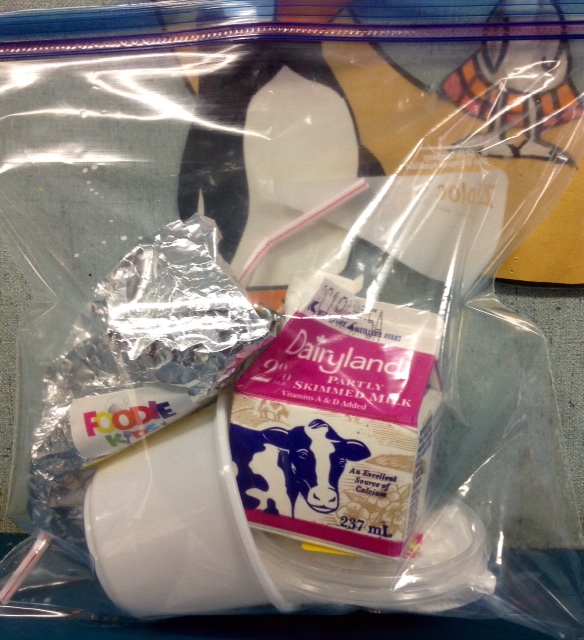
Here’s what your children are doing with the pack out of the food waste and packaging.

FullSizeRender-9
We have to say that the Kindergarten children have taken quickly to this system and are very proficient at getting their food and packaging waste into the ziploc.  They have shown considerable improvement at getting the bags “zipped” closed.

Hot Lunch
The Hot Lunch days have proven to be trickier.  There is a lot of packaging associated with this program.  

As you can see, sending your child with a large ziploc is better if he or she receives a hot lunch.

FullSizeRender-10

Food containers and paper wrapping are sent home everyday.

TCBY frozen yogurt and Max Frozen fruit bars, if not finished, are disposed of in the sink, and the packaging sent home.

Milk cartons, juice boxes and soup containers, if not finished, are disposed of in the sink, and the packaging sent home.

If the soup has not been open, and your child brought a ziploc bag, we try to tape the container closed and place it in the bag to go home.

We’re extremely proud of the Kindergarten.  The children know their lunch routines well; they know them as the only way to manage their food waste at school. The Kindergarten is also the only grade in the entire school which does not have to change habits of old because they are able to start fresh every year.

Change is healthy, but we all know change can be hard as well.  Therefore….we won’t comment specifically on how the teaching staff is coping with food waste and sorting in the staffroom, but let’s just say that old dogs can learn new tricks….albeit slowly.